Kremlin Succession Fight Already Underway as Putin’s Inner Circle Prepares for Power Struggle
Senior officials in Vladimir Putin's inner circle are already positioning themselves for a post-Putin era through secret asset movements and loyalty tests, signaling that a Kremlin succession fight has quietly begun. With Russia's economic pressures creating competition for shrinking resources, the elite are prioritizing self-preservation over regime unity.

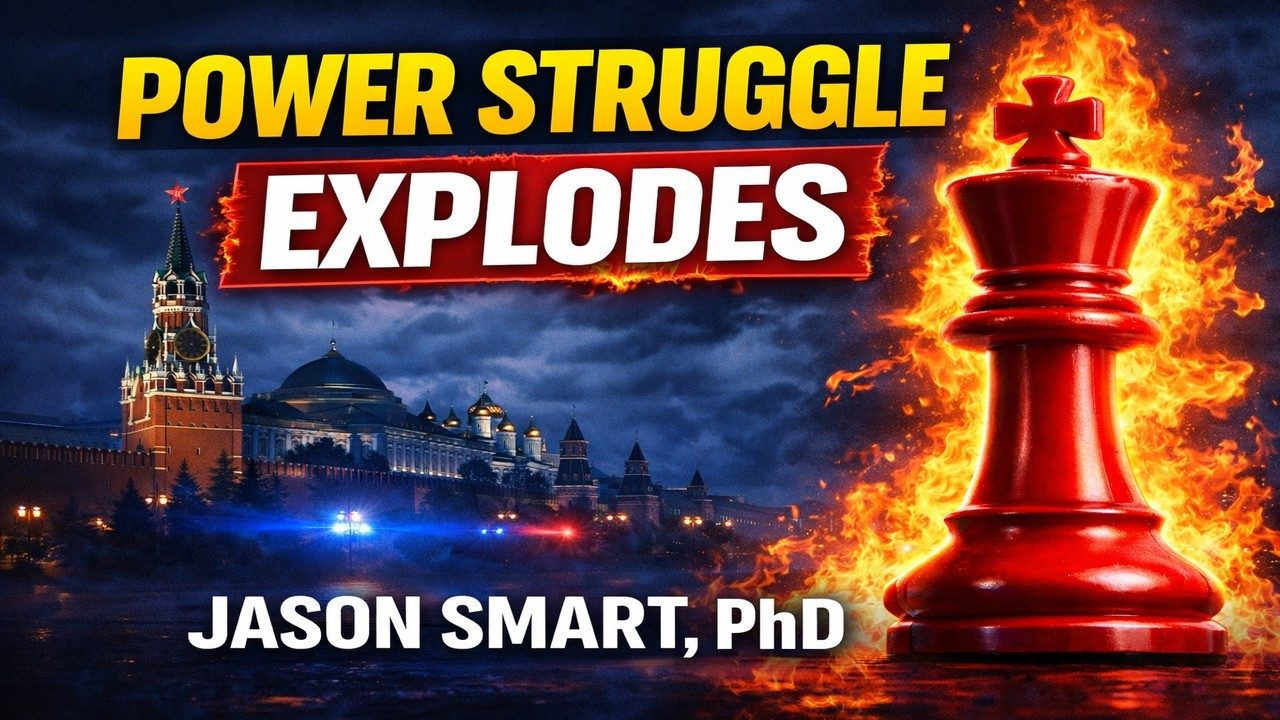
A power struggle within Vladimir Putin’s inner circle has quietly begun, with senior Kremlin officials already positioning themselves for a post-Putin era through asset movements and loyalty tests, according to national security analysts.
Early Signs of Succession Planning
Dr. Jason Smart, a national security advisor and correspondent specializing in Russia, reports that behavior within the Kremlin has fundamentally shifted. “Senior officials in the Kremlin behave as if time is short with early asset moves and early protection buying,” Smart observes. “Self-preservation now drives decisions with loyal network secured and money parked early.”
The most telling indicator of this internal power struggle isn’t found in public speeches or official statements, but in the shadow financial movements of Russia’s elite. “Follow the money because it is where the action is,” Smart emphasizes, noting that billions are flowing through Russia’s secret finance networks, bypassing official oversight to fund what appears to be a private power struggle.
Economic Pressures Intensify Competition
Russia’s economic challenges are creating a zero-sum environment among the elite. Oil and gas revenues fell to approximately $5.1 billion in January 2026, the lowest since July 2020 during the pandemic era. Russian oil is currently selling at around $24 per barrel at significant discounts, generating over a billion dollars weekly but insufficient to maintain the extensive patronage network that keeps Putin’s regime stable.
“Loyalty in Russia does not come for free. It does not come for ideology. It comes for cash,” Smart explains. “And today, Vladimir Putin has a lot less of it to dole out.”
This financial pressure has triggered what analysts describe as Russia’s biggest property redistribution since the 1990s. The prosecutor general’s office claims to have seized over $54 billion in assets, with approximately $28 billion coming from Forbes-listed billionaires. “There is less money to steal from the state. And so now they must steal from each other,” Smart notes.
Key Succession Contenders Emerge
Several names have emerged as potential successors, each with distinct power bases within Russia’s complex political structure:
Alexei Dyumin
Coming from Putin’s personal security circle, Dyumin serves as a presidential aide and holds power in the state council. His background as an enforcer rather than a traditional politician reflects the security-focused nature of Russia’s power structure.
Dmitri Patrushev
Currently deputy prime minister and former minister of agriculture, Patrushev’s real advantage lies in his family connections. His father, Nikolai Patrushev, ran Russia’s security council for years and has known Putin since their KGB days in the 1970s. This deep personal relationship with Putin provides special access and trust.
Boris Kovalchuk
As head of the accounts chamber, Kovalchuk oversees budgets and government expenditures, giving him the power to launch investigations and freeze funding. This position provides both wealth accumulation opportunities and leverage over other officials.
Military’s Diminished Role
Contrary to expectations, the military appears to be a weak contender in the succession struggle. The removal of former Defense Minister Sergei Shoigu from key positions following the Prigozhin uprising, combined with Russia’s military setbacks in Ukraine, has discredited military leadership.
“The military is not a serious contender right now,” Smart explains, noting that intelligence services have emerged as the dominant force in succession planning due to their business operations and global reach.
Nepotism and Family Networks
A recent analysis of 1,300 top Russian officials and 8,000 of their relatives reveals the extent of nepotism within the system. Key findings include:
- 84% of state deputies have relatives in public administration or state-contracted businesses
- 74% of senior presidential administration officials have family ties within government
- 86% of federation council members have relatives in government service
- 76% of senior officials overall have relatives connected to the state
Interestingly, Putin’s own relatives are not considered serious succession candidates. “They don’t come from the right background,” Smart explains. “To take the top, you have to be tight with the intelligence services and the military.”
War as Political Protection
The continuation of the Ukraine conflict serves multiple domestic purposes for Russia’s elite beyond territorial objectives. The war prevents accountability, keeps society mobilized, maintains information control, and preserves budget flows through emergency contracts that fund the patronage system essential to Putin’s rule.
Looking Toward 2026
The 2026 elections are expected to serve as a crucial indicator of succession planning. While these elections are neither free nor democratic, they will likely signal the Kremlin’s preferred leadership direction for the post-Putin era.
“The most dangerous moment for any authoritarian regime isn’t when a leader leaves, it’s when the inner circle stops believing in the future,” Smart warns. “And in Moscow right now, the Kremlin succession fight has already begun.”
The current situation represents what analysts describe as a specific type of silence that occurs before major political shifts. Russian elites are no longer behaving as a unified front but are actively positioning, jockeying, and consolidating power in preparation for succession scenarios that don’t include the current status quo.
As this internal power struggle intensifies, international observers are closely monitoring financial movements and loyalty shifts within the Kremlin, understanding that these indicators may prove more revealing than public statements about Russia’s political future.
Source: Kremlin Succession Fight Is Now Underway (YouTube)

Related Articles

Trump Warns of More US Deaths in Escalating Conflict
Former President Donald Trump issued a somber warning on Truth Social, stating that further U.S. service member deaths are "likely" as geopolitical tensions escalate. He condemned Iran's former supreme leader, Ayatollah Ali Khamenei, and vowed retribution for fallen soldiers.

Gulf States Caught in US-Iran Crossfire, Seek Stability
Gulf states are caught in the escalating US-Iran conflict, facing violations of sovereignty and national security threats. Leaders express a strong desire for stability and economic prosperity, contrasting with the unfolding scenes of regional instability.

Geopolitical Turmoil Bolsters Bitcoin Amidst ETF Inflows
Geopolitical tensions and strong Bitcoin ETF inflows are creating a resilient market. Analysts point to exhausted sellers and the potential for capital rotation into crypto, while regulatory clarity on the Clarity Act could unlock significant institutional investment.