Knight of the Seven Kingdoms: Episode 6 Details
The finale of 'A Knight of the Seven Kingdoms' wraps up the initial arc with rich lore, character insights, and significant plot divergences from the books. Details about Baratheon legacy, succession, and the mystery of Summerhall are explored, setting the stage for future adventures.

‘A Knight of the Seven Kingdoms’ Finale Delivers Rich Details and Lingering Questions
The highly anticipated finale of A Knight of the Seven Kingdoms: The Hedge Knight, Episode 6, has arrived, bringing with it a satisfying conclusion to the initial arc of Ser Duncan the Tall and Prince Aegon V Targaryen, affectionately known as Egg. The episode, titled ‘A True Knight,’ not only wraps up the immediate narrative but also layers in a wealth of subtle details and foreshadowing that fans of George R.R. Martin’s A Song of Ice and Fire universe will undoubtedly appreciate. From character nuances to significant historical nods, the finale is a treasure trove for those who love to delve deep into the lore of Westeros.
Baratheon’s Legacy and Symbolism
One of the standout details highlighted in the episode’s closing moments is the poignant symbolism surrounding the Baratheon family. Ser Duncan the Tall’s master-at-arms, Ser Arlan, carries a distinctive stag-themed cane, a clear visual cue to the Baratheon sigil. This item, present even in Arlan’s final scene, serves as a subtle reminder of the house’s most cherished animal and its formidable presence in Westerosi history. The Baratheons, known for their strength and pride, are a house whose legacy is deeply intertwined with the events of the Targaryen dynasty.
The Weight of Succession: Prince Daeron and Prince Aelor
The episode offers a deeply affecting exchange between Duncan and Daeron Targaryen, the eldest son of King Aerys I. The dialogue, largely mirroring the novellas, underscores the tragedy of Daeron’s death. While Daeron himself was only briefly seen before this, his character leaves a lasting impression. He was one of King Aerys’s two sons, the other being Maekar, who is not featured in this series. Daeron’s position as the first son of the king’s heir makes his claim to the throne particularly significant, a plot point that echoes the importance of succession struggles seen in later A Song of Ice and Fire books, such as the story of Young Griff in A Dance with Dragons.
Sir Raymond the Green Apple and a New House
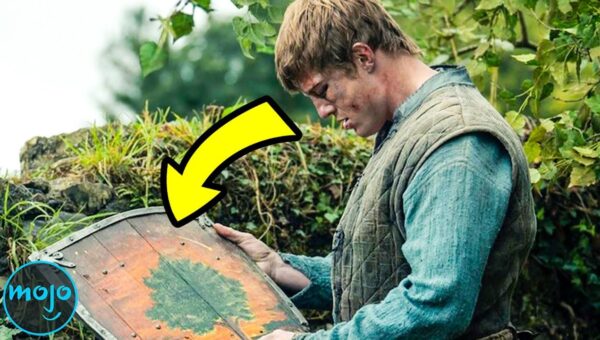
Sir Raymond’s distinctive green apple shield is hard to miss, but its deeper meaning might have been overlooked. This isn’t merely a personal emblem; it signifies the creation of an entirely new, breakaway house. By adopting this new sigil, Raymond is symbolically leaving his brother, Steffon, behind. The line, “It’s better to be an unwrapped green apple than a wormy red one,” speaks volumes about his intent and his perceived justification for this schism. The descendants of Raymond’s house go on to play roles in the main Game of Thrones series, aligning themselves with figures like Renly Baratheon and later Stannis Baratheon, highlighting the long-term ripple effects of these seemingly minor character choices.
A King’s Funeral and Targaryen Ancestry
King Daeron II Targaryen’s funeral, though relatively modest for a king’s heir, is attended by several significant Targaryens. Most notable among them is King Aegon IV, who travels from King’s Landing. Aegon IV is remembered as one of Westeros’s greatest rulers, largely credited with bringing Dorne under Targaryen rule, a feat that had eluded the dynasty for centuries. He was also the victor of the historically crucial First Blackfyre Rebellion. His reign was largely peaceful, cementing his legacy as an admired monarch.
The Shadow of Summerhall
The mention of Summerhall, the ill-fated royal castle, continues to be a recurring motif. While only Egg has visited it so far, its significance to both Duncan and Egg is immense. The castle, recently built during Egg’s lifetime, would later be famously destroyed by the time of Game of Thrones. The mystery surrounding the cataclysm that befell the Targaryen holiday home has long captivated fans, with many speculating about its cause. Future seasons or the final books of the main series may finally shed light on this enduring enigma.
Pennytree’s Origins and Traditions
Ser Eustace hails from Pennytree, a village north of Riverrun. The show expands on his origins by introducing a new scene where he explains the village’s titular tree. It’s a custom for each man called to war to nail a penny to the oak tree in the village square, removing it upon their safe return. This new detail, absent in the novellas, hints at a potential future visit for Duncan and Egg to Pennytree and suggests George R.R. Martin may have future plans for this location, possibly revealed in sequels or discussed with the showrunners.
Duncan’s Knighthood: An Unanswered Question
The question of why Ser Duncan the Tall was never formally knighted remains a point of intrigue. A conversation between Duncan and Ser Arlan, whether a dream or a memory, directly addresses this. Arlan’s question, “Why did you never knight me? Did you think I’d leave you?” suggests a deep-seated reason tied to their bond. While fans have speculated for decades, the show’s emphasis on this topic earlier than the novellas leaves it more ambiguous. The scene where Duncan asks if there were witnesses to his dubbing adds another layer of uncertainty, leaving the audience to ponder the full truth.
Aemon Targaryen’s Journey East
Prince Aemon Targaryen’s future is set to take him east to Essos. While the exact destination is unspecified, it’s highly probable he’s heading to Lys, as per the novellas. A period in the Free Cities could lead to significant character development for Aemon. Lys is a southern Free City that appears in the novels, serving as the setting for the first chapter of Quentyn Martell’s storyline and a brief stop for Young Griff before his march on Westeros. If the series continues to cover another decade, Aemon might reappear in the Seven Kingdoms, and we could potentially see scenes from his time in Essos, such as his service with the Second Sons.
The Nine Kingdoms of Westeros?
Egg hilariously corrects a common misconception: there are not seven, but nine kingdoms in Westeros. The seven established kingdoms are the Crownlands, Westerlands, Stormlands, Riverlands, Iron Islands, the North, the Reach, and the Vale of Arryn, and Dorne. The episode clarifies that the Riverlands were once unified with the Iron Islands, and the Crownlands originated from the Stormlands. Dorne, a principality, and the other six lordships, alongside a principality, make the name “Seven Kingdoms” technically inaccurate, but it has stuck due to historical precedent, originating from the seven kingdoms before Aegon’s Conquest.
Egg’s Departure: A Change from the Books
The season finale introduces a significant divergence from the books regarding Egg’s departure. While the show implies Egg may have lied to Duncan about being sent to serve Prince Maekar, the novellas are clear: Maekar himself ordered Egg to serve Duncan, even providing him with a signet ring that acts as a ‘get out of jail free’ card. The show omits this detail, along with the order for Egg to keep his head shaved at all times. These changes could lead to future conflicts and alter the dynamic between the characters, making their journey forward a point of keen interest for fans.
The Ending Explained: A New Path for Duncan and Egg
The closing moments of the episode reveal that Duncan and Egg must now go into hiding from the crown, as Prince Maekar hunts for his runaway son. The duo is seen riding south towards Dorne, heading for Tanza, a puppeteer. The trial at Tourney ended with the death of the heir to the Iron Throne and injuries to his nephews, effectively splintering the royal family. Duncan, having proven his worth as a knight in an unconventional manner, now takes on the role of protector for Egg, much like Arlan did for him. Together, they are free to explore Westeros, embarking on a new adventure with the promise of future discoveries and challenges.
Source: Top 10 Things You Missed in A Knight of the Seven Kingdoms Episode 6 (And The Ending Explained) (YouTube)

Related Articles

Hedge Knight Premiere Delights Game of Thrones Fans
The highly anticipated "A Knight of the Seven Kingdoms: The Hedge Knight" has premiered, delighting fans with its faithful adaptation of George R.R. Martin's "Tales of Dunk and Egg." The series offers a grounded, character-driven narrative set decades before Game of Thrones, focusing on the charming hedge knight Dunk and his squire, Egg.

A Knight of the Seven Kingdoms: The Ending Revealed!
The season finale of 'A Knight of the Seven Kingdoms' concludes with Dunk and Egg on the run from the Crown, setting the stage for new adventures. The trial's fallout reshapes Westeros' political landscape, solidifying Dunk's role as protector and Egg's path towards destiny.
A Knight of the Seven Kingdoms: Every Hidden Detail
Dive into the rich tapestry of 'A Knight of the Seven Kingdoms: The Hedge Knight,' as we uncover the hidden details, easter eggs, and subtle lore woven into the upcoming HBO series. From character nuances to symbolic imagery, discover what even dedicated fans might have missed.