King Charles Urges Space Peace Ahead of Artemis 2 Moon Mission
NASA's Artemis 2 mission is set to launch, sending four astronauts on a journey around the Moon and further into deep space than any humans have gone before. King Charles III has called for space to be a shared resource, emphasizing peaceful scientific discovery ahead of the historic flight.

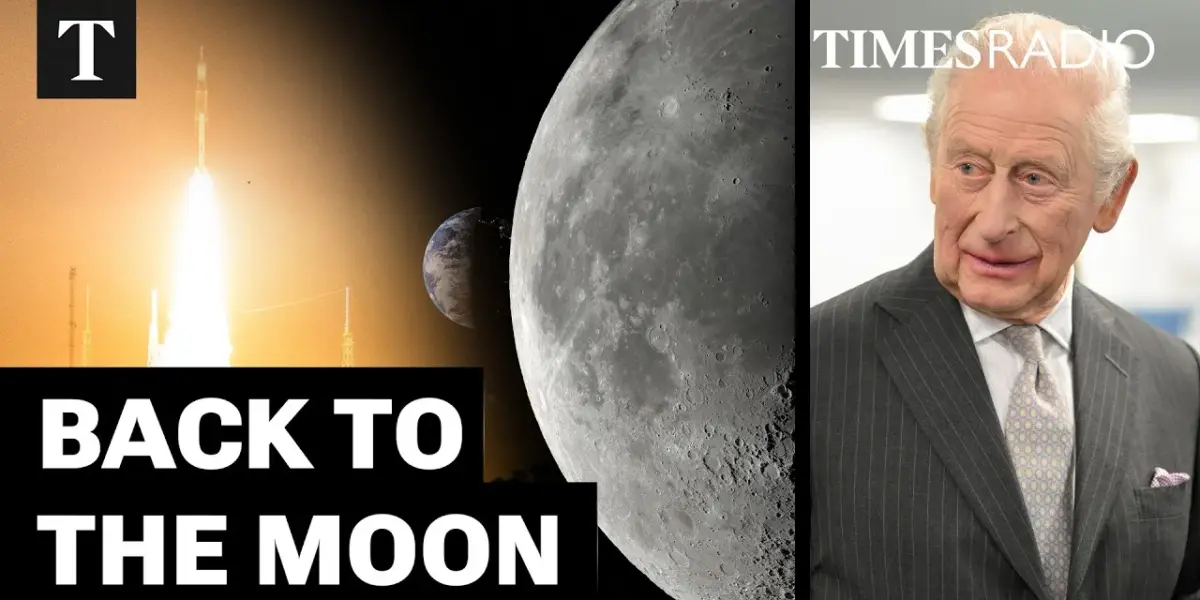
Artemis 2 Set for Historic Launch, Carrying Humans Beyond Moon Orbit
NASA’s Artemis 2 mission is poised to make history, launching astronauts further from Earth than any humans have ever traveled. Liftoff is scheduled for 11:24 p.m. UK time from the Kennedy Space Center in Florida. This mission marks a significant step in humanity’s return to deep space, with a crew of four astronauts set to orbit the Moon.
A New Era of Lunar Exploration Begins
The Artemis program aims to re-establish a human presence on the Moon and eventually send astronauts to Mars. Artemis 2 follows the successful uncrewed Artemis 1 mission, which tested the Orion spacecraft and Space Launch System (SLS) rocket. Unlike Artemis 1, this mission will carry a human crew, a milestone not achieved in lunar exploration since the Apollo program concluded over 50 years ago.
Countdown Underway at Kennedy Space Center
Ka Burgess, science correspondent for The Times, is reporting live from the Kennedy Space Center. She described the scene, noting a large countdown clock nearing the final hours before launch. Behind her, the imposing SLS rocket stands ready, with technicians currently fueling it with liquid hydrogen and oxygen. This fueling process is a critical stage where technical issues could cause delays.
Precise Launch Windows: The Moon’s Position Matters
Launch windows for missions like Artemis 2 are highly specific, dictated by orbital mechanics. The rocket first enters Earth’s orbit, then performs a ‘trans-lunar injection’ to propel the spacecraft towards the Moon. This maneuver requires the Moon to be in a precise location. Experts say there are only about five to six days each month suitable for such a journey, ensuring the spacecraft doesn’t simply drift into the vastness of space.
A Message of Shared Space: King Charles’s Vision
King Charles III has sent a letter to Canadian astronaut Jeremy Hansen, who is part of the Artemis 2 crew. The King emphasized that space should be a ‘shared inheritance to be cherished and preserved,’ rather than a territory to be conquered. He stressed the importance of the Moon remaining a ‘beacon of peaceful scientific discovery.’ This message is particularly relevant as nations like China increase their space activities.
Treaties and the Future of Lunar Exploration
Burgess highlighted that even during the Cold War space race of the 1960s, international treaties were established. These agreements prevent any single nation from claiming ownership of territory in space. This principle remains vital today, especially with growing interest from multiple countries. The goal is to ensure that space exploration benefits all of humanity, focusing on science and discovery rather than territorial claims.
A Diverse Crew Makes History
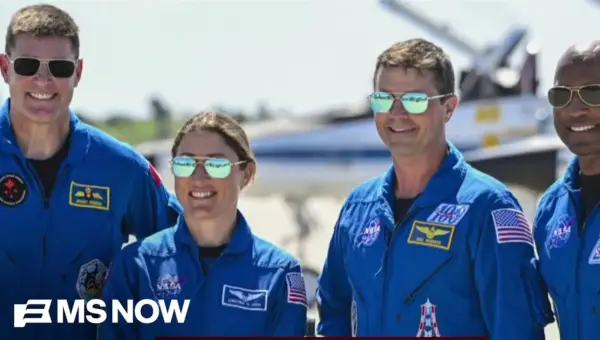
The Artemis 2 crew consists of three American astronauts and one Canadian. Commander Reid Wiseman, Pilot Victor Glover, and Mission Specialist Christina Koch are joined by Mission Specialist Jeremy Hansen. This crew represents several significant ‘firsts’: Koch will be the first woman to travel into deep space, Glover will be the first non-white astronaut to journey this far, and Hansen will be the first non-American astronaut on a deep space mission. The four-person crew will spend approximately 10 days in space, a similar number to the crew size of the Apollo missions, though they will share a much smaller living space.
The Mission: Testing Technology and Life Support
Unlike missions to the International Space Station (ISS), which functions as a dedicated orbiting laboratory, Artemis 2’s primary objective is not to conduct extensive scientific experiments onboard. Instead, the mission itself is the experiment. The crew will rigorously test the Orion spacecraft’s life support systems, communication capabilities, and engines to ensure they can keep four astronauts alive, healthy, and comfortable for the 10-day duration. The astronauts are also equipped with specialized space suits that can serve as survival suits for up to six days in case of emergencies.
Stepping Stones to the Lunar Surface
Artemis 2 is a crucial step towards future lunar landings. The next mission, Artemis 3, is planned for next year and will focus on testing landers in orbit around the Moon. Artemis 4, targeted for 2028, aims to land astronauts on the lunar surface, fulfilling the program’s ultimate goal of returning humans to the Moon.
Witnessing History: A Global Event
The Kennedy Space Center is buzzing with activity, attracting media from around the world. News organizations have set up elaborate broadcasting facilities to cover the launch. The excitement is palpable as the world prepares to watch this historic journey into deep space unfold.
Looking Ahead: The Future of Human Spaceflight
The success of Artemis 2 will pave the way for further exploration, not just of the Moon, but potentially of Mars and beyond. The mission underscores a renewed global commitment to human spaceflight, emphasizing collaboration and peaceful scientific endeavor as humanity ventures further into the cosmos.
Source: King Charles Encourages Space Collaboration Not Competition As Artemis 2 Set To Launch (YouTube)

Related Articles

Astronauts Head to Moon Amidst Divided Nation
The Artemis II mission has launched, sending four astronauts towards the Moon in a journey that highlights both humanity's drive for exploration and the current divisions within society. While the launch captured global attention, it also sparked conversations about how fragmented media impacts shared national experiences.


Moon Missions Spark New Space Race: Fuel & Power
Renewed moon missions are fueling a new space race, driven by the potential for rocket fuel production and strategic control. However, concerns about space weaponization and the lack of clear property rights in this lawless frontier add a complex geopolitical layer to lunar ambitions.

Astronaut Chris Hadfield on Artemis Prep & Space’s Human Heart
Former astronaut Chris Hadfield emphasizes that space exploration's greatest challenge is mental, not physical. He discusses the intense preparation required for missions like Artemis and reflects on the deeply human emotions involved in spaceflight, comparing it to our innate drive to explore.