Kim Jong Un Displays Daughter During Missile Test
North Korea has revealed footage of a ballistic missile test observed by leader Kim Jong Un and his teenage daughter. This display, seen as a response to US-South Korea military drills, intensifies speculation about the daughter's succession. Analysts suggest Kim is planning long-term, navigating complex internal politics and global uncertainties.

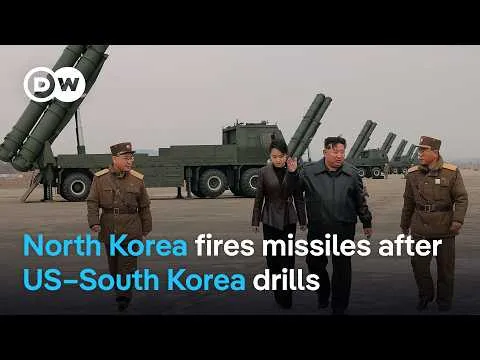
North Korea Conducts Ballistic Missile Test With Kim Jong Un and Daughter Present
North Korea has broadcast footage of a ballistic missile test, reportedly conducted off its eastern coast on Saturday. The launch was observed by the nation’s leader, Kim Jong Un, alongside his teenage daughter, an event widely interpreted as a direct response to ongoing joint military exercises between the United States and South Korea. Pyongyang views these drills as a rehearsal for invasion.
State media, quoting Kim Jong Un, reported that the tested missile could obliterate enemy military infrastructure within a 420-kilometer range. This distance is sufficient to reach any target in rival South Korea, underscoring the escalating tensions on the Korean Peninsula.
Succession Speculation Intensifies Around Kim Jong Un’s Daughter
The prominent presence of Kim Jong Un’s teenage daughter at the missile test has fueled widespread speculation about her potential role as his successor. Aiden Foster Carter, a career analyst at Leeds University, believes this is the most logical explanation for her increasing visibility over the past two to three years.
“No other explanation of his conduct or what’s been happening over the past nearly two or three years now makes sense, which is that uh typical North Korean fashion, they don’t do anything by chance.”
While the daughter’s name is believed to be Kim Ju, this has not been officially confirmed, with information reportedly stemming from comments by former NBA player Dennis Rodman. Despite the lack of formal naming, she has been seen frequently by her father’s side, including at a recent military parade following a party congress where some had anticipated her official designation.
Historical Precedents for North Korean Succession
Foster Carter noted that North Korea, while technically a communist state, operates as a hereditary monarchy. The succession from Kim Il Sung to Kim Jong Il reportedly took about 20 years of preparation. In contrast, Kim Jong Il did not introduce his son, the current leader Kim Jong Un, to the North Korean people until less than a year before his death.
Given Kim Jong Un’s reported unhealthy lifestyle, including smoking in public spaces and his physical size, Foster Carter suggests he is taking no chances with long-term succession planning. However, he also indicated that Kim Jong Un could potentially have another 30 years if he lives as long as his father and grandfather.
Internal Power Dynamics and Potential Rivals
While the hereditary nature of the leadership suggests a lack of overt opposition, Foster Carter cautioned against assuming a smooth transition. He drew parallels to medieval monarchies, where succession is often fraught with challenges.
“Succession is always difficult. There’s always somebody else who wants it. In this particular case, it’s his sister Kim Yo Jong. She’s clearly very powerful. Uh she was promoted at the last Congress. She’s often a spokesperson chosen to be rude about South Korea particularly.”
The analyst raised questions about Kim Yo Jong’s potential reaction to her niece’s ascendancy, noting that the young girl, believed to be around 13, lacks the established power base to command authority at this stage. Foster Carter concluded that complex internal court politics are likely at play, though they remain opaque to outside observers.
North Korea’s View of the Iran Conflict and Global Instability
The conversation also touched upon North Korea’s relationship with Iran, with some analysts describing them as part of an “axis of upheaval.” Foster Carter suggested that Kim Jong Un views the ongoing conflict in Iran with considerable alarm, though perhaps not to the same extent as his father did during the US-led invasion of Iraq under the “axis of evil” doctrine.
Kim Jong Un’s public appearances during missile tests are seen as a deliberate contrast to his father’s period of withdrawal. However, the current global geopolitical climate, particularly the perceived difficulties faced by the US in Iran, might cause Kim Jong Un to reconsider his own actions.
“But if you’re Kim Jong-un, you see all this happening, you would think twice, wouldn’t you? You’d be you’d be careful. you would worry.”
The presence of nuclear weapons in North Korea, which Iran does not yet possess, is considered a significant deterrent against any potential US military action. This factor, coupled with the challenges in Iran, is believed to encourage caution in Pyongyang.
Global Powers and the Korean Peninsula
Regarding the possibility of North Korea using the current international focus on the Middle East to its advantage, Foster Carter dismissed the idea. He firmly stated that China and Russia would never permit such a distraction on the Korean Peninsula, citing historical precedent and their desire to avoid another devastating conflict.
“Short answer, no. Access of upheaval or not, China or Russia would never allow it. They they do not want distractions on the Korean Peninsula. That his grandfather dragged them into a terrible war in the early 50s. They’re not having that happening again. That will not happen.”
This assertion provides a degree of reassurance that major powers would act to prevent instability on the Korean Peninsula, regardless of global events elsewhere.
Looking Ahead: Succession and Regional Security
The unfolding events in North Korea, particularly the increasing public role of Kim Jong Un’s daughter, will be closely watched for further clues regarding the future leadership. The nation’s continued ballistic missile tests, framed as responses to perceived external threats, highlight the persistent security challenges on the Korean Peninsula. The role of regional powers like China and Russia in maintaining stability remains a critical factor.
Source: North Korea fires ballistic missiles in response to US military exercise | DW News (YouTube)

Related Articles

G7 Allies Clash Over Iran War Strategy, Urge Focus on Russia
G7 foreign ministers met in Paris, revealing deep divisions over the U.S. war with Iran. European allies urged the U.S. to pressure Russia, linking its actions to the conflict and fearing support for Ukraine will wane.

Iran Blocks China Ships, Exposing Beijing’s Weak Grip
Iran's recent decision to block Chinese ships at the Strait of Hormuz is exposing the limits of Beijing's influence in the Middle East. This action is causing delays and cancellations for Chinese manufacturers, turning a perceived geopolitical win into an economic strain.
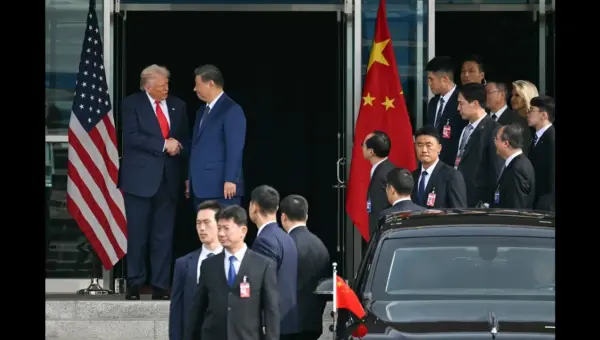
Trump’s “Walk Away” Tactic Signals Tougher Stance on China
Retired Air Force Brigadier General David Stillwell believes President Trump's strategy of being willing to walk away from negotiations puts pressure on China. This tactic, combined with US global actions and strengthened alliances, signals a more assertive American foreign policy.