Kilimanjaro Ascent Reveals Boiling Point’s Altitude Secret
An expedition up Mount Kilimanjaro scientifically measures how water's boiling point decreases with altitude, offering a tangible demonstration of atmospheric pressure's impact and highlighting the challenges of high-altitude physiology.

Kilimanjaro Ascent Reveals Boiling Point’s Altitude Secret
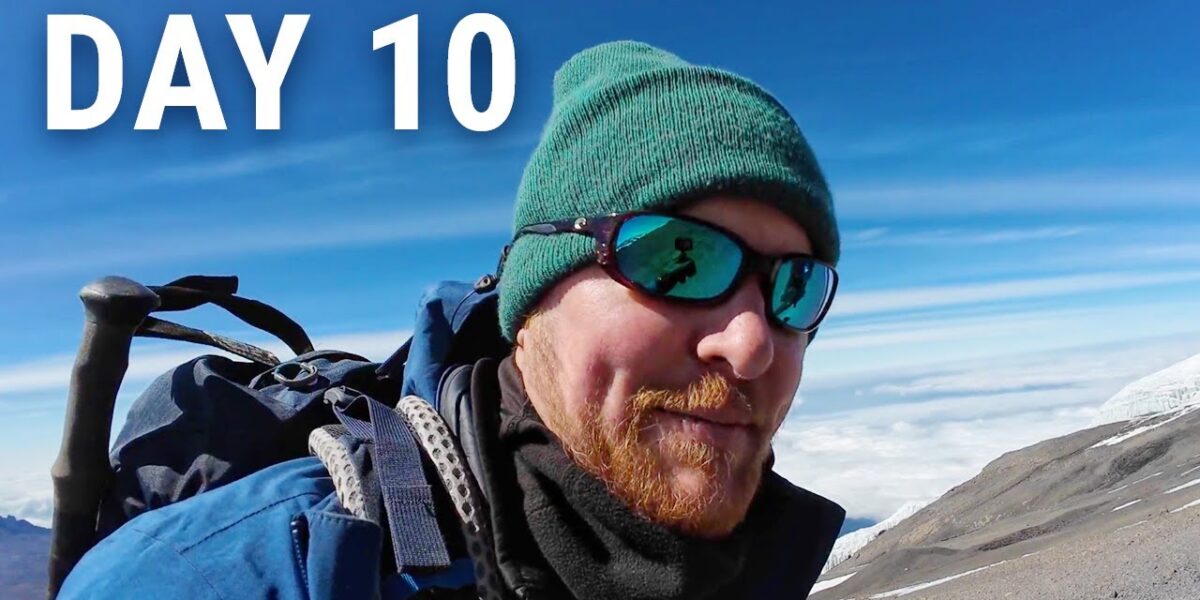
Mount Kilimanjaro, Africa’s tallest peak, is not just a monumental challenge for climbers but also a living laboratory for scientific inquiry. In a recent expedition, explorer Destin, known for his educational YouTube channel Smarter Every Day, embarked on a journey up Kilimanjaro, not only to conquer its summit but also to meticulously document a fascinating scientific phenomenon: how the boiling point of water changes with altitude. Inspired by a previous experiment on Mount Everest, this trek aimed to gather empirical data on atmospheric pressure’s effect on water’s phase transition, offering a tangible demonstration of physics in action amidst breathtaking scenery.
The Boiling Point Phenomenon
At sea level, water boils at 100 degrees Celsius (212 degrees Fahrenheit). This is the temperature at which the water’s vapor pressure equals the surrounding atmospheric pressure, allowing it to turn into steam. However, as altitude increases, atmospheric pressure decreases. This lower pressure means that water molecules need less energy to escape into the gaseous state. Consequently, the boiling point of water drops as one ascends. This principle is not just an abstract concept; it has practical implications for cooking and even for the human body’s ability to function in thinner air.
A Trek Through Ecological Zones
The expedition began at an elevation of 8,170 feet, where the initial boiling point was recorded at 92.7 degrees Celsius. The team, guided by seasoned local guides like Shedrack, planned to conduct boiling point measurements at each camp along their route, eventually aiming for the summit at 19,341 feet. The journey traversed Kilimanjaro’s distinct ecological zones, starting in the lush rainforest, characterized by dense vegetation and towering trees. As they climbed, they transitioned into the heather zone, named after the dominant Erica arborea and Philippia excelsia trees. Further up, the landscape shifted to the moorland, resembling arid, high-altitude plains reminiscent of parts of the American Southwest. Finally, they entered the alpine desert, a stark, rocky terrain before the final push to the summit.
Data Collection and Observations
With each increase in altitude, the recorded boiling point of water consistently decreased. At First Camp (9,200 feet), the boiling point was 91.8 degrees Celsius. By the time they reached approximately 10,000 feet, it had dropped to 89.7 degrees Celsius. The trend continued, with measurements at 11,500 feet showing 89.4 degrees Celsius, and at 13,700 feet, it was recorded at 86.9 degrees Celsius. This steady decline illustrates the inverse relationship between altitude and boiling point. The experiment also highlighted potential variables, such as the mineral content of different water sources, which could slightly affect the readings. At the summit, 19,341 feet, the water boiled at a mere 81.0 degrees Celsius, a significant drop from sea-level conditions.
The Human Element: Altitude Sickness and Acclimatization
Beyond the scientific experiment, the trek underscored the profound physiological challenges of high-altitude climbing. The expedition team monitored oxygen saturation levels, with readings dipping as low as 79% at extreme altitudes. Destin recounted personal experiences of his heart rate soaring and the intense physical exertion required for each step, describing it as “like walking in loose gravel.” The guides emphasized the critical importance of acclimatization, a process of allowing the body to adjust to lower oxygen levels. They followed a strategy of ascending to a certain altitude and then descending to sleep at a lower elevation, a practice known as ‘climb high, sleep low.’ This, coupled with the mantra “Pole, pole” (slowly, slowly), was crucial for managing energy and preventing severe altitude sickness, a condition that can affect individuals differently and can be life-threatening.
Historical Context and Future Implications
This endeavor echoes the pioneering work of scientists and explorers who have long studied the effects of altitude. The inspiration from Brady Haran’s earlier video on Everest highlights a lineage of curiosity-driven exploration. The data gathered contributes to our understanding of atmospheric science and human physiology at extreme altitudes, knowledge vital for mountaineers, aviators, and astronauts. NASA’s own research into hypoxia, the condition of oxygen deprivation, further contextualizes the challenges faced by the expedition. The success of such expeditions relies not only on scientific methodology but also on the expertise of local guides and porters, whose knowledge of the mountain and its environment is invaluable.
Looking Ahead: The Importance of Thoughtful Content
The expedition also served as a platform to discuss the importance of supporting thoughtful, intelligent content in the digital age. The creator highlighted the challenges faced by content creators who aim for depth and accuracy over sensationalism, especially in the face of algorithmic pressures. The initiative to support such creators through organizations like the Independent Media Initiative (IMI) was presented as a crucial step towards fostering a media landscape that prioritizes substance and education. The journey up Kilimanjaro, with its blend of physical challenge, scientific observation, and human resilience, serves as a powerful reminder of what can be achieved when curiosity, careful planning, and a commitment to understanding our world are combined.
The data collected on Kilimanjaro provides a clear, experiential demonstration of fundamental physics principles. It reinforces the understanding that our planet’s atmosphere is a dynamic system, and its properties, such as pressure, directly influence everyday phenomena like the boiling point of water. For those who embark on high-altitude adventures, this knowledge is not just academic; it’s a component of safety and preparedness. As humanity continues to explore extreme environments on Earth and beyond, the lessons learned from expeditions like this one remain invaluable.
Source: Climbing Kilimanjaro – Smarter Every Day 302 (YouTube)

Related Articles


White Dwarf Dyson Spheres: A Tiny Star’s Big Energy Solution
Astronomers are exploring the possibility of building Dyson spheres around compact white dwarf stars, which offer a long-lasting and stable energy source. Meanwhile, the Vera Rubin Observatory promises near real-time astronomical discovery, and new data challenges models of supermassive black hole formation in the early universe.

NASA’s Asteroid Mission: From Mars Dream to Lunar Gateway
NASA's ambitious Asteroid Redirect Mission (ARM), designed as a stepping stone to Mars, aimed to capture a small asteroid boulder and tow it to lunar orbit for astronaut testing. Though cancelled, its advanced propulsion and robotic technologies live on in NASA's Lunar Gateway and future deep space exploration plans.

NASA’s Evolving SLS Rocket Hints at New Upper Stage
NASA's Artemis program may be adopting a new upper stage for its Space Launch System (SLS) rocket, potentially utilizing the commercially available Centaur V. An updated infographic reveals design changes and hints at evolving mission strategies, including advanced lunar lander operations.