Kerbal Space Program Challenge: 1600 Kerbals Aim for the Moon
Everyday Astronaut attempted an ambitious Kerbal Space Program challenge: transporting 1,600 Kerbals to the Moon and back in a single mission. The stream also featured a preview of new music and served as a fundraiser for the Cancer Research Institute.

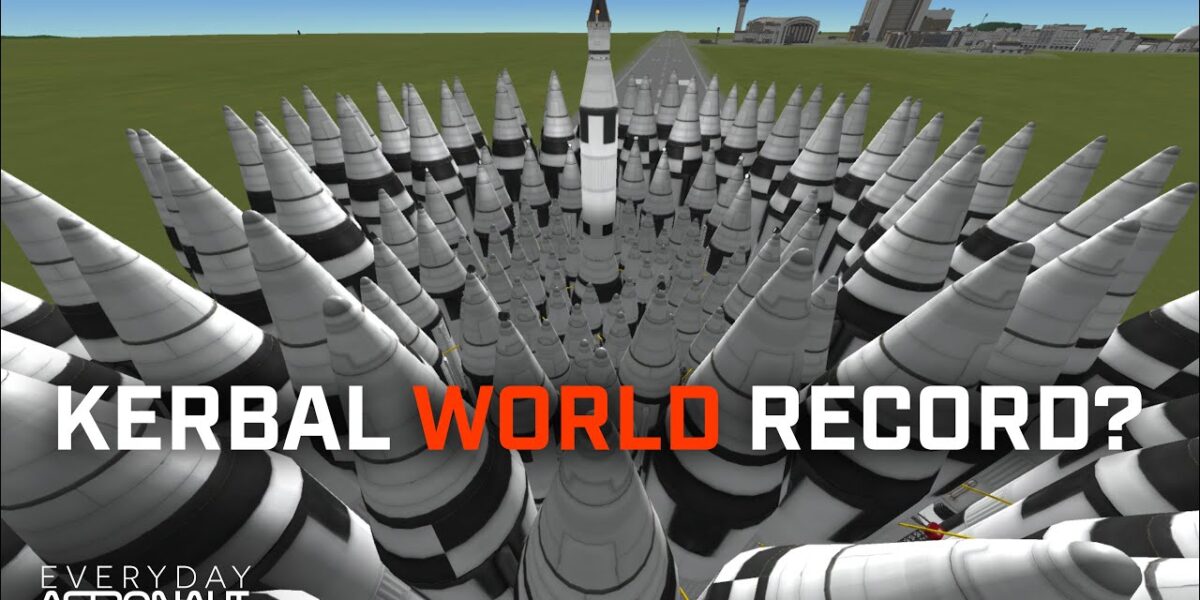
Kerbal Space Program Challenge: 1600 Kerbals Aim for the Moon
In a recent live stream that blended gaming, music, and philanthropy, the popular YouTube channel Everyday Astronaut embarked on an ambitious and hilariously self-imposed challenge: to land the maximum number of Kerbals on the Moon and return them safely in a single mission within the Kerbal Space Program (KSP).
While the ultimate goal of setting a new unofficial world record for Kerbal passenger capacity on a lunar mission was not definitively achieved by the stream’s end, the endeavor highlighted the intricate design, engineering, and sheer absurdity that makes KSP such a beloved simulation. The stream also served as a fundraiser for the Cancer Research Institute, with the creator expressing personal grief over the recent loss of a friend’s father to cancer.
The Grand Ambition: A Lunar Ark
The core of the challenge was to construct a single vehicle capable of transporting a colossal number of Kerbals to the Moon. The streamer, after some initial experimentation, settled on a target of 1,600 Kerbals, building upon a modular design that could be replicated to achieve this staggering passenger count. The initial modular unit, dubbed “99 Kerbals in Southwest Airlines” (later corrected to “JetBlue” in spirit), was designed to house 99 Kerbals. By radially attaching multiple of these units, the plan was to construct a massive lunar lander that could accommodate thousands of the game’s iconic green astronauts.
The process of assembling such a colossal craft was fraught with the typical KSP challenges: clipping parts, managing scale, and ensuring structural integrity. As the vehicle grew, the frame rate began to suffer, a common issue in KSP when dealing with extremely high part counts. The builder opted to use the largest diameter fuel tanks and command pods available in stock KSP (with the Breaking Ground and History & Science DLCs) to maximize internal volume.
Engineering for the Void (and Return)
Beyond simply cramming Kerbals into pods, the design had to account for the practicalities of spaceflight. A significant portion of the stream was dedicated to engineering a landing and ascent system capable of operating on the Moon. This involved selecting appropriate engines, ensuring sufficient thrust-to-weight ratio for lunar operations, and crucially, planning for a safe re-entry and landing back on Kerbin.
The team experimented with various engine configurations, including large clusters of engines on specialized plates. A key concern was ensuring that the engines would function correctly when attached to heat shields, a critical component for surviving atmospheric re-entry. The streamer devised a workaround involving couplers and staging to manage the heat shields and engines, aiming for a capsule-like re-entry profile reminiscent of SpaceX’s Starship tests.
Delta-V calculations were a constant consideration. The initial design boasted over 3,500 meters per second of delta-V, deemed sufficient for a round trip to the Moon from low Earth orbit. However, the sheer mass of 1,600 Kerbals (each weighing approximately 45 kg, totaling 72 tons of Kerbal mass alone) was a significant factor that had to be accounted for in the vehicle’s performance and stability.
A Soundtrack for Space and a Cause for Hope
Adding another layer to the stream was the premiere of new music from the Everyday Astronaut’s upcoming album, “Direct to Orbit.” The full album was played throughout the stream, offering listeners a unique sneak peek ahead of its official release on January 13th. A new single, “Retreat,” was also available on streaming platforms on the day of the broadcast.
The stream was more than just a gaming session; it was a fundraiser for the Cancer Research Institute (CRI). Donations were actively encouraged, with the streamer highlighting the personal impact of cancer, dedicating the stream to the memory of a recently deceased friend’s father. The community responded generously, with numerous donations contributing to the cause.
Historical Context and Future Endeavors
Kerbal Space Program has a rich history of community-driven challenges and record-breaking attempts. While official world records are not formally tracked by the game’s developers, the community often sets its own benchmarks for speed, efficiency, and sheer audacity. Previous attempts have involved sending hundreds or even thousands of Kerbals to other celestial bodies like Duna (KSP’s equivalent of Mars). This challenge, focusing on the Moon and a return journey, adds a specific orbital mechanics and re-entry hurdle.
The future of KSP itself is also evolving. While KSP 1 remains a beloved title, the development of KSP 2 continues, with a focus on improved physics engines and greater scalability. Furthermore, the emergence of spiritual successors like “Kitten Space Agency” (KSA) promises new platforms for complex space simulations, potentially addressing some of the performance limitations encountered in KSP with massive part counts.
What Comes Next?
Although the 1,600-Kerbal lunar mission didn’t culminate in a definitive record-breaking launch during the stream, the foundation was laid. The engineering challenges were explored, the design principles were tested, and the community’s engagement was palpable. Future attempts could involve refining the design for even greater Kerbal capacity, optimizing the ascent and descent profiles, or even attempting such a feat on Duna.
The stream underscored the enduring appeal of KSP as a platform for creativity, scientific exploration (albeit simulated), and community building. It demonstrated that even in the face of overwhelming complexity and potential failure, the pursuit of ambitious goals, combined with a good cause and a soundtrack to match, can make for an incredibly engaging and meaningful experience. The journey to push the boundaries of what’s possible in KSP, and by extension, our understanding of spaceflight, continues.
Source: Can we break a Kerbal World Record?…. nope! but still fun Fundraiser!!! (YouTube)

Related Articles
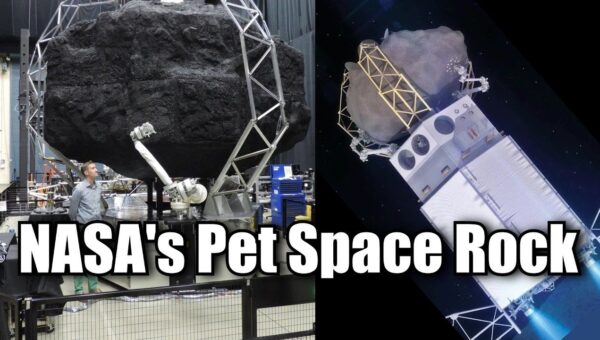
NASA’s Asteroid Mission: From Mars Dream to Lunar Gateway
NASA's ambitious Asteroid Redirect Mission (ARM), designed as a stepping stone to Mars, aimed to capture a small asteroid boulder and tow it to lunar orbit for astronaut testing. Though cancelled, its advanced propulsion and robotic technologies live on in NASA's Lunar Gateway and future deep space exploration plans.
NASA’s Evolving SLS Rocket Hints at New Upper Stage
NASA's Artemis program may be adopting a new upper stage for its Space Launch System (SLS) rocket, potentially utilizing the commercially available Centaur V. An updated infographic reveals design changes and hints at evolving mission strategies, including advanced lunar lander operations.


SpaceX Starship V3 Nears First Flight Amidst Major Artemis Shakeup
SpaceX eyes March for Starship V3's maiden flight as new testing reveals design improvements. Meanwhile, NASA's Artemis program faces delays and strategic shifts, with Artemis III repurposed as a LEO test mission.