Karoline Leavitt’s Waning Spark: Trump Press Secretary Shows Strain Amidst Policy Controversies and Staff Departures
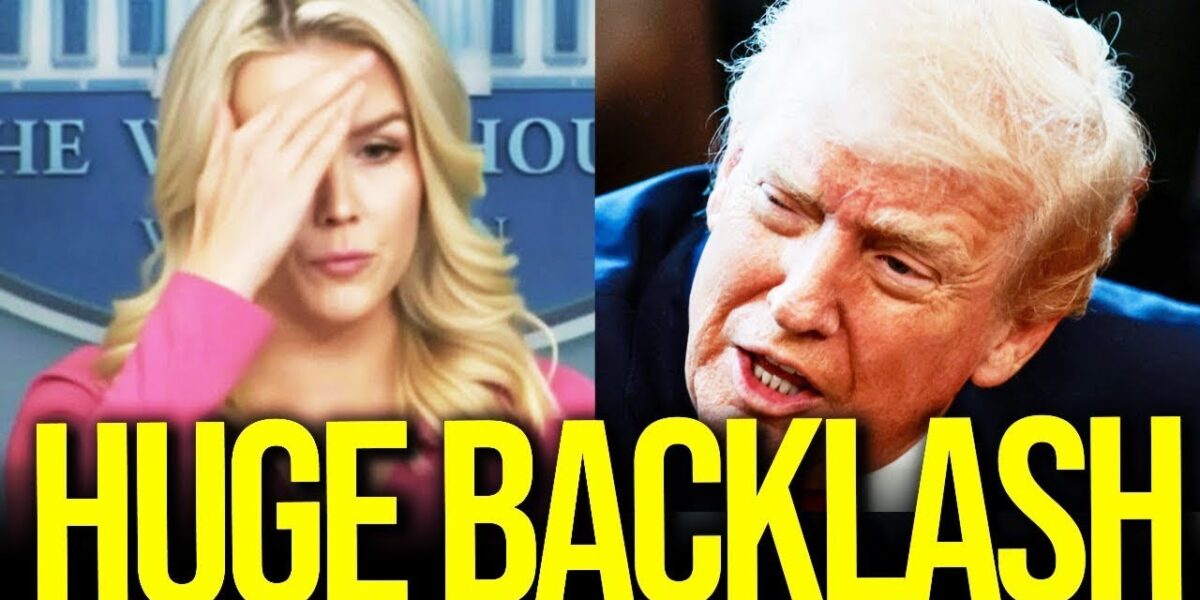
Karoline Leavitt, Donald Trump's press secretary, appears increasingly strained, exhibiting a "resigned vibe" amid controversial foreign policies, domestic issues, and staff changes. Her recent "no updates" responses to critical questions signal a potential erosion of her characteristic unwavering resolve and highlight the immense pressures of her demanding role.

Karoline Leavitt’s Waning Spark: Trump Press Secretary Shows Strain Amidst Policy Controversies and Staff Departures
In the often tumultuous world of political communication, few roles are as demanding and publicly scrutinized as that of a presidential press secretary. Tasked with articulating and defending the administration’s policies, actions, and sometimes even the President’s controversial statements, these individuals operate under immense pressure. For Karoline Leavitt, a prominent figure in Donald Trump’s press operations, recent appearances suggest a notable shift in demeanor, signaling a potential erosion of the unwavering resolve that has characterized her tenure. Once a steadfast defender, seemingly capable of ‘inverting reality’ on the administration’s most challenging days, Leavitt now appears to be exhibiting a ‘resigned vibe,’ a subtle but significant change that points to deeper strains within the Trump orbit.
Leavitt has been a loyalist, navigating the complexities of an administration known for its unconventional communication style. From contentious foreign policy decisions to domestic issues impacting millions, she has consistently been at the forefront, offering explanations and rebuttals. However, a series of recent press conference exchanges has unveiled a less assertive, more evasive Karoline Leavitt. Her responses, such as “I honestly don’t have any updates for you on that today” and “I don’t have any announcements or updates. I haven’t even read the full Wall Street Journal article that you’re talking about,” mark a departure from the typically robust defenses expected from a high-profile press secretary. This shift raises questions about the internal dynamics of the Trump team, the sustainability of its communication strategy, and the personal toll exacted by such a high-stakes role.
The Echo of Departure: A Colleague’s Exit and Its Impact
The perceived change in Leavitt’s disposition may not be an isolated phenomenon but rather a ripple effect from recent staff movements. Just prior to her noticeably subdued appearances, Trisha McLaughlin, the Department of Homeland Security’s (DHS) spokesperson, departed her post. McLaughlin, described as a counterpart to Leavitt in her communication style and demographic profile within conservative circles, was known for her ability to articulate and defend the administration’s often hardline policies, particularly on immigration. Her departure, reportedly coinciding with a period when “public opinion has turned on the administration’s hardline immigration policy,” might have left Leavitt feeling more exposed and isolated in her demanding role.
Staff turnover is a common feature of any political administration, but the departure of key communicators can have a disproportionate impact, particularly in an environment where message discipline and unwavering loyalty are paramount. For a press secretary, a network of like-minded colleagues can provide crucial support, sharing the burden of defense and contributing to a cohesive communication front. When such a colleague exits, especially under circumstances linked to public discontent over policy, it can amplify the pressure on those who remain. Leavitt, now seemingly “out there fighting for her life on her own,” faces the formidable task of single-handedly navigating a barrage of critical questions and defending policies that are increasingly under fire.
Navigating the Labyrinth of Foreign Policy: Iran, Gaza, and Cuba
A significant portion of the recent press conference focused on foreign policy, an area where the Trump administration has often pursued an ‘America First’ approach, sometimes leading to unpredictable and controversial outcomes. Leavitt found herself attempting to reconcile past presidential statements with present realities, a task that proved challenging across multiple fronts.
Iran: The Peril of Contradictory Narratives
One of the most immediate challenges involved questions regarding potential US strikes against Iran’s nuclear facilities. Reporters pressed Leavitt on the apparent contradiction between President Trump’s past claims that “Operation Midnight Hammer” had “totally obliterated Iran’s nuclear facilities” six months prior, and the current contemplation of renewed strikes. Leavitt’s response, that “there are many reasons and arguments that one could make for a strike against the against Iran” and that “diplomacy is always his first option and Iran would be very wise to make a deal with President Trump,” highlighted the difficulty of maintaining a consistent narrative.
This exchange underscores the broader complexities of US-Iran relations under Trump. The administration’s withdrawal from the Joint Comprehensive Plan of Action (JCPOA), commonly known as the Iran nuclear deal, in 2018, and the subsequent re-imposition of sanctions, significantly heightened tensions. Trump’s rhetoric, at times conciliatory and at other times bellicose, created an environment of uncertainty. The transcript further highlights a critical incident: President Trump’s past True Social post encouraging Iranian citizens to protest against their regime, with a promise of US backing. The tragic outcome, with reports of 38,000 civilians allegedly killed by the Iranian government after widespread protests, and no subsequent US intervention, exposed a profound disconnect between rhetoric and action. This episode, framed as a series of “missteps and blunders,” placed countless lives at risk based on what critics described as “false expectations.” For a press secretary, defending such a record, especially when the human cost is so high, presents an almost insurmountable ethical and communicative hurdle.
Gaza: The Illusions of a ‘Board of Peace’
The discussion then shifted to the Middle East, specifically the humanitarian situation in Gaza and the administration’s proposed “Board of Peace” to manage a $5 billion aid package. Leavitt explained that the President would chair the board, with member parties having votes and a “technocratic layer underneath.” However, the transcript’s critique reveals the highly controversial nature of this initiative.
The “Board of Peace” was described as comprising figures like Donald Trump, Israeli Prime Minister Benjamin Netanyahu, and Hungarian Prime Minister Viktor Orbán, conspicuously excluding leaders like French President Emmanuel Macron. This composition, if accurate, paints a picture of a body dominated by specific political ideologies, rather than a broad-based, neutral peace-keeping or aid-managing entity. Critics lambasted the concept, suggesting it made Donald Trump the “de facto ruler of the Gaza Strip” despite his perceived inability to effectively govern the United States. This initiative followed a previous Trump-era peace deal between Israel and Gaza that reportedly dissolved almost immediately, with continued violence, Israeli strikes, and illegal settlements in the West Bank. The proposal of a new “Board of Peace” under such circumstances, and its composition, invites skepticism about its genuine intent and efficacy. Defending such a plan, particularly in light of the ongoing humanitarian crisis and ethnic cleansing allegations in Gaza, requires a suspension of disbelief that even a seasoned press secretary might struggle to maintain.
Cuba: Echoes of Past Interventions
The foreign policy barrage continued with questions on Cuba, specifically regarding the country’s humanitarian crisis and the US’s desired outcome. Leavitt’s response, echoing sentiments from Secretary Rubio and President Trump, expressed a desire “to see flourishing and prosperous democracies all over the world, especially in our own hemisphere.” This statement, while seemingly benign, immediately drew comparisons to past US foreign policy doctrines, such as President George W. Bush’s push to “spread democracy” in the Middle East, which often led to prolonged conflicts and destabilization.
The critique within the transcript suggests that before focusing on “nation building in other countries,” the US should prioritize improving its own democratic system, implying that figures like Trump and Elon Musk can “game it.” This perspective highlights a perennial debate in US foreign policy: whether interventionism or internal reform should take precedence, and the potential hypocrisy of advocating for democracy abroad while facing internal challenges at home. For a press secretary, articulating a consistent and ethically sound foreign policy vision becomes increasingly difficult when the administration’s actions and statements are perceived to contradict its stated ideals.
The Domestic Front: Racism Allegations and Administrative Priorities
Beyond foreign policy, Leavitt also fielded questions on sensitive domestic issues, particularly allegations of racism against President Trump and the administration’s broader priorities.
The Persistent Shadow of Racism Allegations
A particularly charged exchange involved President Trump’s statement about Jesse Jackson, where he claimed to be “falsely and consistently called a racist.” When asked where and when he believed he had been falsely accused, Leavitt responded with indignation: “You’re kidding, right? I will pull you plethora of examples.” She then referenced an upcoming Black History Month event as a counter-narrative.
This moment encapsulates the deeply entrenched nature of racism allegations against Donald Trump. Critics argue that such accusations are not baseless but stem from a documented history of controversial statements and actions, including questioning Barack Obama’s birth certificate, sharing an AI-generated video depicting the Obamas as gorillas, past housing discrimination lawsuits by the Department of Justice, and his role in the Central Park Five case. The question posed to Leavitt specifically asked when Trump had been *falsely* called racist, a distinction that proved challenging to address. For a press secretary, defending a principal against such a long and public record of contentious racial rhetoric is one of the most arduous tasks, requiring not just rhetorical skill but often a willingness to dismiss well-documented facts.
Prioritizing Foreign Over Domestic?
The pattern of questioning, heavily skewed towards foreign policy (Iran, Gaza, Cuba), prompted an observation within the transcript that Donald Trump’s administration appeared to have “deprioritized domestic policy.” This critique suggested a lack of “massively beneficial policies for the American people,” and instead, a focus that “screwing over the most vulnerable Americans while focusing disproportionately on foreign policy.” While a comprehensive analysis of an administration’s policy priorities requires extensive data, the emphasis on foreign affairs in press briefings can indeed signal a particular strategic focus or a deflection from domestic challenges. For a press secretary, balancing these perceptions and articulating the administration’s broader agenda is a constant tightrope walk.
Even lighter domestic queries, such as a Fox News reporter’s question about the Potomac River smelling like “poop” for the America 250 celebrations, were met with a straightforward, if uninspiring, response that the federal government intended to fix it. The lack of laughter from the room, in contrast to earlier, more serious questions, perhaps subtly underscored the prevailing mood of seriousness and the absence of lightheartedness.
The ‘Resigned Vibe’: A Sign of Exhaustion or Strategic Retreat?
The most telling moments of Leavitt’s recent press appearances, however, were her recurring “no updates” responses to several key questions. When pressed about the Fulton County affidavit and whether DNI Gabbard (likely referring to the Director of National Intelligence or a specific individual in that capacity, like Tulsi Gabbard, though she was not DNI) had uncovered foreign election interference in Georgia or Puerto Rico, Leavitt replied, “I don’t have any updates for you on that today. I would defer you to the director’s office herself.” Similarly, regarding a Wall Street Journal report on a US arms sale package for Taiwan being in limbo, she stated, “I haven’t read the full Wall Street Journal report. I will just say with respect to an arms sale to Taiwan, I don’t have any announcements or updates on that for you today.”
These responses, interpreted as an inability to “spin it” or offer “any lies,” are significant. A press secretary’s primary function is to provide information, contextualize policy, and articulate the administration’s stance. When they repeatedly resort to “no updates,” it can signal several things: a genuine lack of information, a strategic decision to withhold details, or, more tellingly, an exhaustion of viable rhetorical strategies. In Leavitt’s case, after months or years of vigorously defending contentious policies and statements, the shift to a more passive, non-committal stance could reflect the immense pressure of the role, the growing difficulty of maintaining a consistent and credible narrative, or even a personal toll from the relentless demands of the job.
Conclusion: The Enduring Challenge of Political Communication
Karoline Leavitt’s recent appearances offer a poignant glimpse into the relentless demands and inherent contradictions of political communication at the highest levels. Her perceived ‘resigned vibe’ and repeated “no updates” responses, set against a backdrop of controversial foreign policy decisions, persistent domestic challenges, and the departure of a key colleague, suggest a turning point. Whether this signals a personal exhaustion, a strategic recalibration, or a broader challenge within the Trump communication apparatus remains to be seen. However, it underscores the immense psychological and professional burden on press secretaries, particularly those tasked with defending an administration known for its dynamic, often unpredictable, and frequently polarizing approach to governance.
In an era where information travels instantly and public scrutiny is constant, the role of the press secretary is more critical than ever. Their ability to convey confidence, clarity, and consistency directly impacts public perception and administrative credibility. Leavitt’s current struggle to maintain that unwavering front serves as a powerful reminder of the profound challenges faced by those who stand at the intersection of power and public discourse, particularly when the ground beneath them appears to be shifting.
Source: Karoline GIVES UP as her Friend GETS FIRED (YouTube)

Related Articles

Trump’s SCOTUS Tirade Backfires, Alienating Key Allies
Donald Trump's aggressive attacks on the Supreme Court following a tariff ruling are backfiring, alienating justices and potentially undermining his own legal and political standing. The unprecedented personal assaults are seen as a self-destructive tactic with significant implications for the judiciary's independence.


Canada’s Quiet Rise: A New North American Superpower?
As the United States grapples with internal issues, Canada is strategically positioning itself as a new North American superpower. With a focus on resource security, defense independence, and pragmatic leadership, Ottawa is forging new alliances and economic strengths, challenging America's traditional dominance.


Ghislaine Maxwell’s Legal Maneuvers Hint at Trump Clemency Plot
Ghislaine Maxwell's legal strategy, including her bid to block 90,000 documents and claims of poverty, raises suspicions of a coordinated effort to secure a pardon from Donald Trump. The inconsistencies in her legal claims fuel speculation of a deliberate delay tactic to benefit from potential political intervention.