Karoline Leavitt’s Presser Meltdown Exposes Truth Deficit
A heated exchange between White House Deputy Press Secretary Karoline Leavitt and CNN's Caitlyn Collins has exposed a troubling pattern of deflection and alleged dishonesty. The incident raises serious questions about the administration's transparency and its approach to reporting on military casualties.

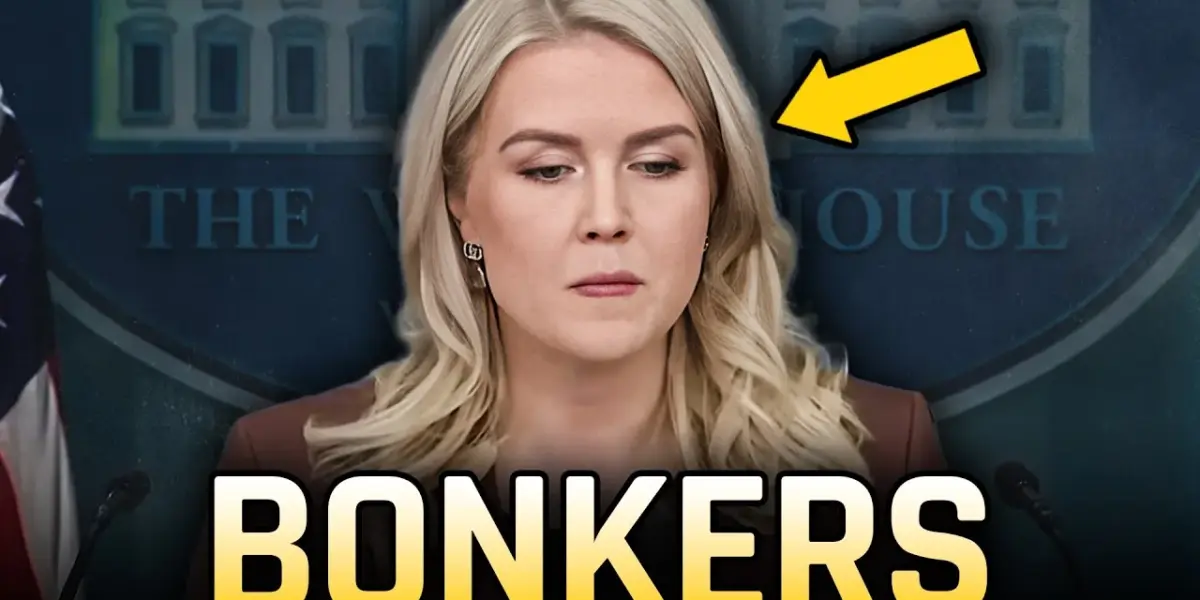
Karoline Leavitt’s Presser Meltdown Exposes Truth Deficit
In the high-stakes arena of White House press briefings, clarity, consistency, and a firm grasp of facts are not merely desirable traits; they are the bedrock of public trust and governmental accountability. When these pillars falter, the ensuing chaos can reveal more about the administration’s vulnerabilities than any prepared statement. Such was the case this week during a particularly volatile exchange between White House Deputy Press Secretary Karoline Leavitt and CNN correspondent Caitlyn Collins, an interaction that has ignited a firestorm of criticism and underscored a growing concern about the administration’s handling of challenging questions, particularly those concerning the loss of American lives.
A Question of Coverage, A Response of Deflection
The exchange began with a seemingly straightforward, yet profoundly important, question from Collins: “Is it the position of this administration that the press should not prominently cover the deaths of US service members?” This query arose in the context of recent military actions and the subsequent casualties, a topic that naturally warrants public discussion and journalistic scrutiny. The question was not an attack, but an attempt to understand the administration’s perspective on how sensitive national security issues, and the human cost associated with them, should be reported.
Leavitt’s response, however, veered dramatically from a direct answer. Instead, she pivoted sharply, framing the issue not around the coverage of fallen soldiers, but around the perceived threat posed by Iran. “No, it’s the position of this administration that the press in this room and the press across the country should report on the success of Operation Epic Fury and the damage it is doing to the rogue Iranian regime that has threatened the lives of every single American in this room,” Leavitt stated. She further emphasized the sacrifices of service members, urging gratitude for an administration and military willing to protect the nation.
The Unraveling of a Narrative
The core of the controversy lies in the administration’s apparent discomfort with the prominent coverage of American casualties, a sentiment seemingly contradicted by its own officials. Collins pressed further, referencing a complaint from Secretary of Defense Lloyd Austin regarding front-page coverage of six service members killed. This point of contention highlighted a perceived hypocrisy: while Leavitt urged coverage of military successes, an administration official had apparently expressed displeasure with the media’s focus on the very casualties she invoked to justify the military action.
Leavitt’s reaction to this factual challenge was telling. She vehemently denied that Secretary Austin’s remarks were as presented, accusing Collins of being disingenuous. However, Collins, armed with the exact quote, interjected, effectively disproving Leavitt’s assertion. This moment marked a critical turning point in the exchange, revealing a clear instance of factual inaccuracy on Leavitt’s part, and it was at this juncture that her demeanor reportedly shifted from defensive to visibly agitated.
Accusations and Emotional Outbursts
The subsequent remarks from Leavitt escalated the situation considerably. She accused the press, and CNN specifically, of consistently seeking to undermine the President, framing this as an “objective fact.” She asserted that the press’s focus on the deaths of US service members was inherently an attempt to make the President look bad, a claim that Collins calmly refuted, stating that covering troop deaths is not an act of political sabotage.
Leavitt’s response to Collins’s measured rebuttal was described as an “angry unhinged psychotic outburst.” In a statement that appeared to lose coherence, Leavitt invoked CNN’s ratings and suggested the American people would disagree with the notion that the network’s coverage is not negative towards Donald Trump. The transcript suggests a severe lack of composure, with the speaker attributing Leavitt’s behavior to emotional immaturity and an inability to handle the demands of her position, exacerbated by what is described as an overly fervent loyalty to Donald Trump.
Historical Context and the Role of the Press
The dynamic between government officials and the press, particularly concerning military actions and casualties, has a long and often contentious history. Throughout American history, the media has played a crucial role in informing the public about the costs of war, from the Vietnam War’s televised images to the reporting from Iraq and Afghanistan. While administrations often seek to control the narrative and highlight successes, the public’s right to know about the sacrifices made by service members is a cornerstone of democratic accountability. The press’s role is not to be a propaganda arm of the government but an independent observer and reporter of facts, including the difficult and somber ones.
The transcript’s critique of Leavitt touches upon a broader concern about the increasing politicization of government communication. When press secretaries become defensive or accusatory rather than informative, it erodes transparency. The expectation that the press should *only* cover the positive aspects of military operations, while downplaying or reframing the human cost, runs counter to the principles of a free press. The administration’s apparent frustration with coverage of troop deaths, rather than engaging with the reasons behind it, suggests a potential disconnect from the public’s desire for full disclosure.
Why This Matters
This incident is significant for several reasons. Firstly, it highlights the challenges faced by government spokespersons in navigating complex and sensitive issues under media scrutiny. Secondly, it raises questions about the administration’s strategy for communicating about military operations and their consequences. The refusal to directly address the premise of the question, coupled with accusations of media bias and factual inaccuracies, does little to build confidence.
The performance also speaks to the broader trend of increasingly adversarial relationships between political figures and journalists. In an era where trust in institutions is already fragile, such public displays of animosity and perceived dishonesty can further alienate the public and undermine the credibility of both government communication and the news media. The transcript’s assertion that Leavitt’s response was driven by emotion rather than reasoned argument suggests a potential lack of preparedness for the rigors of the press briefing room, a space that demands intellectual agility and emotional control.
Implications, Trends, and Future Outlook
The implications of this exchange extend beyond a single press briefing. It signals a potential continuation of a combative approach to media relations, where deflection and personal attacks may be prioritized over substantive answers. This trend, if sustained, could lead to an even greater erosion of transparency and a more polarized information environment. The administration’s ability to effectively communicate its policies and actions, especially regarding matters of national security, will be severely hampered if it consistently alienates the very outlets tasked with informing the public.
Looking ahead, the White House press briefing room will likely remain a battleground. The success of any administration in managing public perception hinges on its ability to engage with difficult questions honestly and respectfully. The incident involving Karoline Leavitt serves as a stark reminder that in the arena of public discourse, truth and transparency are not optional; they are the currency of credibility. The administration’s approach to these interactions will undoubtedly be closely watched, not just for the information conveyed, but for the manner in which it is conveyed.
Source: Karoline Leavitt Goes NUTS After Being Caught Lying (YouTube)

Related Articles

Karoline Leavitt’s Press Briefings Expose a Deep Divide
Karoline Leavitt's recent press briefing exchange with CNN's Kaitlan Collins has ignited debate over the administration's communication strategy regarding military actions and the coverage of service member deaths. The incident highlights tensions between official messaging and public demand for transparency.


Karoline Leavitt’s War Spin Crumbles Under Scrutiny
Karoline Leavitt faces mounting pressure to spin escalating US-Israel military actions against Iran, struggling with shifting justifications and contradictory claims about threats and preparedness. The analysis delves into the administration's messaging, historical precedents, and the implications for 'America First' policy.

Leavitt Demands Propaganda, Ignites Press Freedom Debate
Karoline Leavitt's call for the press to focus on military "success" rather than casualties has sparked a debate on propaganda and press freedom. This incident revisits historical tensions between government narratives and journalistic independence, with significant implications for public discourse.