Kansas’s Cruel Game: Targeting Trans Lives for Political Gain
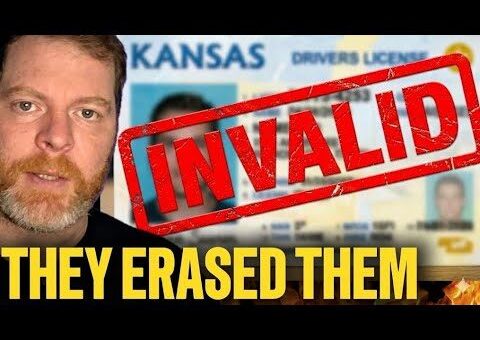
Kansas's new law invalidates transgender individuals' previously updated driver's licenses, forcing them to reapply and pay fees. Critics decry the move as politically motivated cruelty targeting a marginalized community, creating unnecessary hardship and fear.


Kansas’s Cruel Game: Targeting Trans Lives for Political Gain
In a move that has sent shockwaves through the transgender community and drawn sharp criticism from civil liberties advocates, the state of Kansas has enacted legislation that effectively invalidates the driver’s licenses and state IDs of transgender individuals who had previously updated their gender markers. This decision, implemented without warning, forces thousands of Kansans to reapply for new identification, incurring out-of-pocket expenses and facing potential legal repercussions if caught driving with outdated documents. The legislation, Senate Bill 244 (SB244), passed by the Republican-controlled legislature and overriding Governor Laura Kelly’s veto, represents a targeted effort to create administrative hurdles and financial burdens for an already marginalized population.
The Mechanics of SB244: A Deliberate Hassle
The core of SB244 is deceptively simple yet profoundly impactful. It declares that any previous gender marker change on a Kansas driver’s license or ID card is now void. This means that transgender individuals who legally updated their identification to reflect their gender identity before the law’s effective date are now driving with invalid licenses. The law does not, however, prohibit individuals from changing their gender marker on a new license; it simply invalidates all prior changes. This peculiar nuance suggests the legislation’s primary aim is not to prevent gender marker changes altogether, but rather to force transgender Kansans to go through the process again, pay for new identification, and navigate bureaucratic obstacles.
The consequences of this law are immediate and severe. As of Wednesday night into Thursday morning, thousands of Kansans found their primary form of identification suddenly rendered useless. Driving with an invalid license is classified as a Class B misdemeanor, punishable by fines of up to $5,000 or up to six months in jail. This places transgender individuals in a precarious position, potentially jeopardizing their ability to commute to work, attend medical appointments, or simply conduct daily life without fear of legal penalty.
“The Cruelty Is The Point”: An Analysis of Intent
The transcript’s author posits a chilling interpretation of SB244: “The cruelty is the point.” This perspective argues that the legislation is not designed to solve any tangible problem or improve the lives of Kansans, but rather to inflict hardship and assert political power over a vulnerable group. The author contends that the average Kansan, whether a farmer, construction worker, or office employee, has seen no benefit to their personal lives from this law. In fact, the law actively harms a small segment of the population—estimated to be around 1,500 individuals—without offering any societal advantage.
This viewpoint frames the action as a classic example of a political strategy that weaponizes culture war issues to mobilize a base. By focusing on a highly visible, albeit small, minority group like transgender individuals, politicians can create a sense of grievance and shared purpose among their supporters, diverting attention from more pressing economic or social issues. The implication is that the legislature’s actions are driven by a desire to provoke and antagonize, rather than to govern effectively.
Historical Context: A Pattern of Discrimination
The passage of SB244 in Kansas is not an isolated incident but part of a broader, escalating trend across the United States. In recent years, numerous state legislatures have introduced and passed bills targeting the rights and well-being of transgender individuals. These legislative efforts often focus on access to healthcare, participation in sports, use of public facilities, and, as seen in Kansas, identification documents. Historically, marginalized communities have often been subjected to laws that create barriers to full participation in society, serving to reinforce existing power structures and inequalities.
The use of identification as a tool for control or exclusion has a long history. From poll taxes designed to disenfranchise voters to discriminatory practices in housing and employment, creating bureaucratic obstacles has been a common tactic to limit the freedoms of targeted groups. In this instance, the targeting of transgender identification reflects a broader societal debate and, in some political circles, a rejection of the validity of transgender identities themselves.
The Broader Implications: Erosion of Rights and Trust
The Kansas law raises significant questions about the role of state government and the protection of civil rights. By forcing transgender individuals to repeatedly update their identification, the state is not only imposing financial and administrative burdens but also implicitly questioning the legitimacy of their identities. This can lead to increased anxiety, fear of discrimination, and a breakdown of trust between citizens and their government.
Furthermore, the law could have ripple effects beyond driving. Identification documents are often required for employment, housing, access to services, and voting. If these documents are rendered invalid due to arbitrary legislative changes, it could create cascading problems for transgender Kansans in various aspects of their lives. The author of the transcript expresses deep frustration with this pattern, lamenting that a significant portion of the electorate appears susceptible to political rhetoric that demonizes minority groups, believing that such actions will somehow improve their own lives.
Why This Matters
The events in Kansas underscore a critical juncture in the ongoing struggle for LGBTQ+ rights. This legislation demonstrates that even when transgender individuals have legally obtained identification reflecting their gender, their rights and identities can be retroactively challenged through legislative action. It highlights the vulnerability of marginalized communities to political whims and the power of state governments to enact policies that, while appearing administrative, carry profound social and personal consequences. The law serves as a stark reminder that the fight for equality requires constant vigilance and advocacy, as gains can be threatened by legislative maneuvers driven by prejudice rather than public good.
Future Outlook: A Continued Battleground
The situation in Kansas is likely to be a precursor to further legal challenges and political debates. Advocates are already condemning the law, and it is probable that lawsuits will be filed to contest its legality and constitutionality. The broader trend suggests that transgender rights will remain a significant battleground in state legislatures across the country. The effectiveness of political rhetoric that targets minority groups, coupled with the varying levels of legal protections for LGBTQ+ individuals in different states, will continue to shape the landscape of rights and access for transgender people.
The narrative presented in the transcript is one of profound disappointment and anger at what is perceived as a deliberate act of cruelty for political expediency. It calls into question the motivations of lawmakers and the susceptibility of voters to divisive rhetoric. As these legislative battles unfold, the focus remains on whether states will prioritize the protection of all citizens’ rights or continue to enact policies that marginalize and harm specific communities.
Source: Kansas Just Ruined THOUSANDS Of Lives (YouTube)

Related Articles

Kansas Law Sparks Outrage by Revoking Transgender IDs
Kansas lawmakers have enacted a law retroactively invalidating IDs for approximately 1,700 transgender residents, sparking outrage and concerns over civil rights. The legislation also includes a controversial bathroom ban with citizen enforcement provisions.


Are You Seeing Discrimination? Your Mindset Might Be the Cause
A Dartmouth College study revealed how the expectation of being judged can lead individuals to perceive discrimination, even when no bias exists. This highlights the power of our mindset in shaping social reality and offers insights into managing perceived victimhood.


Trump’s Iran War: Public Outcry Meets GOP Defense
A new poll shows low public support for U.S. military action in Iran, fueling a debate over whether these are "strategic strikes" or an "unlawful war." Congressional efforts to assert oversight face strong Republican opposition, exposing deep partisan divides on presidential war powers and the justification for conflict.