Kagan Questions Trump Lawyer on Obscure Sources for Citizenship Claim
Supreme Court Justice Elena Kagan questioned a lawyer's use of obscure historical sources to argue against birthright citizenship. The arguments focused on the definition of "jurisdiction" within the 14th Amendment. The case could redefine who is considered an American citizen.

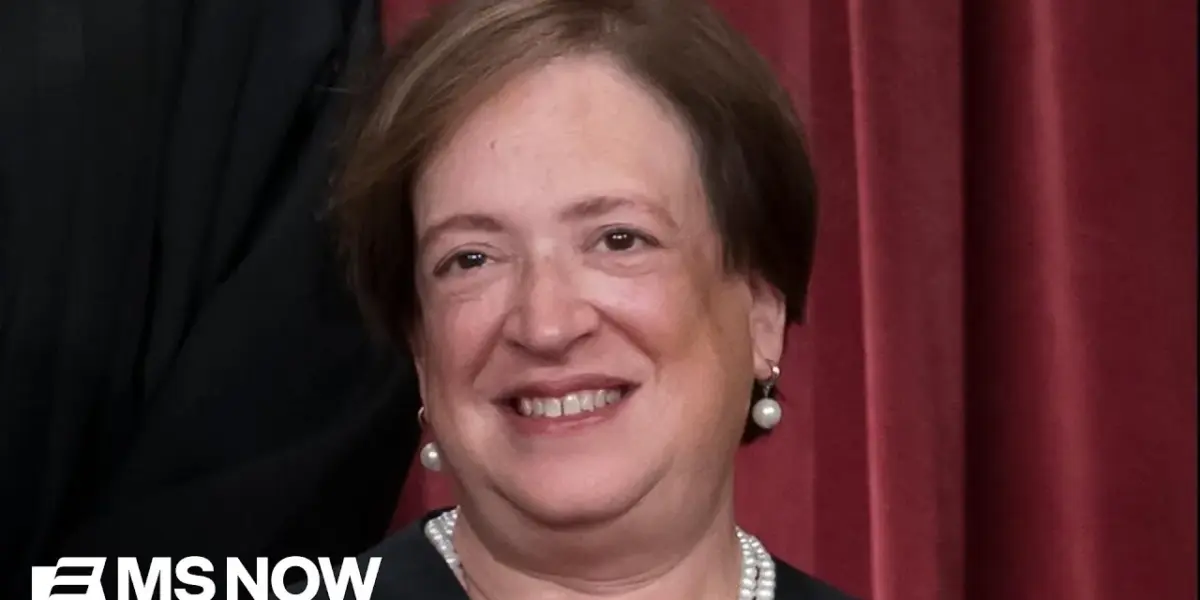
Supreme Court Clash Over Citizenship Definition
Supreme Court Justice Elena Kagan sharply questioned a lawyer representing former President Donald Trump on Tuesday, challenging the basis of his legal arguments regarding birthright citizenship. During oral arguments for a case involving state tax laws and federal employees, General Sauer, the attorney for Trump, presented a legal theory that Kagan suggested relied on obscure historical sources. The exchange highlighted a fundamental disagreement about the meaning of the 14th Amendment’s citizenship clause.
Challenging the Legal Foundation
Justice Kagan pointed out that much of Sauer’s legal brief focused on individuals temporarily present in the United States, not on the broader category of undocumented immigrants. She argued that this focus contradicted the legal theory Justice Samuel Alito seemed to be exploring, which might allow for a different interpretation of citizenship. Kagan pressed Sauer on whether his case relied on a principle established at the time of the 14th Amendment’s adoption.
“You don’t get to talking about undocumented persons until quite later, and at much lesser━you know, I think it’s like 10 pages to 3 pages or something like that,” Kagan stated, indicating a shift in emphasis within the legal arguments presented.
The Principle of Domicile and Allegiance
General Sauer agreed that a principle existed at the time of the 14th Amendment concerning “jurisdiction means allegiance.” He explained that the allegiance of a person in another country is determined by their domicile, or where they permanently live. Sauer cited historical cases and legal discussions from the 19th century, including the Pizarro case and the Fong Yue Ting decision, to support this interpretation.
However, Justice Kagan expressed skepticism about this line of reasoning. She questioned the origin of this “domicile allegiance” principle and noted that Sauer’s primary example seemed to be a Lincoln funeral speech. Kagan suggested that this was not the common understanding of “jurisdiction,” which typically means being subject to a government’s authority.
Obscure Sources vs. Clear Text
Kagan directly challenged Sauer’s use of historical sources, stating, “You’re using some pretty obscure sources to get to this concept.” She contrasted this with the plain text of the 14th Amendment, which states that all persons born or naturalized in the United States are citizens. Kagan implied that Sauer was seeking a more technical or esoteric meaning to fit his argument.
Sauer defended his position by referring to statements from key figures involved in the adoption of the 14th Amendment and related civil rights legislation. He mentioned Senator Trumbull, a framer of the Civil Rights Act of 1866, who reportedly defined “jurisdiction” as meaning “not owing allegiance to anybody else.” Sauer also referenced arguments made by Representative Bigham and congressional debates that, according to him, reflected this understanding.
Debating Historical Interpretation
The core of the debate revolved around how to interpret historical legal language. Sauer pointed to a specific oration by George Bancroft and other sources, claiming over a dozen examples that specifically addressed “temporary sojourners” in the decades following the amendment’s enactment. He asserted that these sources indicated children of temporary visitors were not intended to be included as citizens under the 14th Amendment.
The legal team’s argument, as presented by Sauer, rested on the idea that “jurisdiction” in the 14th Amendment was understood to require a connection of allegiance, primarily through domicile, and that temporary residents did not meet this standard. This interpretation, however, faced significant pushback from Justice Kagan, who found the supporting evidence to be less than convincing and the legal reasoning to be based on less common understandings of the term.
Broader Implications for Citizenship
The discussion touches upon a critical aspect of American law: birthright citizenship. The 14th Amendment, ratified after the Civil War, was intended to grant citizenship to formerly enslaved people. However, its exact meaning, particularly regarding the children of non-citizens, has been debated throughout history.
The arguments presented in this case could have far-reaching consequences, potentially impacting immigration policy and the definition of who is considered an American citizen. The Supreme Court’s decision will clarify the scope of the 14th Amendment’s citizenship clause, addressing whether it applies universally to all individuals born within U.S. borders, regardless of their parents’ immigration status.
What’s Next
The Supreme Court is expected to issue its ruling in the coming months. The justices will weigh the arguments presented, the historical evidence cited, and the text of the 14th Amendment. The outcome will likely reaffirm or redefine the understanding of birthright citizenship in the United States, settling a long-standing legal and political debate.
Source: 'You're using some pretty obscure sources': Justice Kagan questions Trump litigator (YouTube)

Related Articles


GOP Lawmaker Demands ‘Aggressive’ AG Replacement
GOP lawmakers are divided over border security funding as one representative calls for a more "aggressive" Attorney General. The debate over funding and the upcoming replacement for AG Pam Bondi highlight internal party struggles. Meanwhile, concerns about birthright citizenship and FEMA's low disaster fund add to the political landscape.


Iran’s Regime Faces Pressure as US Focuses Inward
The U.S. faces a dual challenge: navigating complex foreign policy in Iran while grappling with deep domestic political divisions. The administration's strategy towards Iran is under scrutiny, with questions about its clarity and effectiveness. Simultaneously, the Supreme Court is hearing a pivotal case on birthright citizenship, potentially reshaping constitutional law.


Birthright Citizenship: Is the 14th Amendment Outdated?
The 14th Amendment's guarantee of birthright citizenship is under intense debate. Panel guests discuss whether the long-standing interpretation is outdated and explore the practical challenges and historical context surrounding this core American principle.