Justices Grill Solicitor General on Domicile in Citizenship Case
Supreme Court justices questioned the U.S. Solicitor General about the definition of "domicile" and its impact on birthright citizenship. Justices Gorsuch and Barrett pressed for clarity on historical versus modern interpretations of domicile and whose status should matter. The arguments explored whether unlawful presence of parents should preclude citizenship for their U.S.-born children.

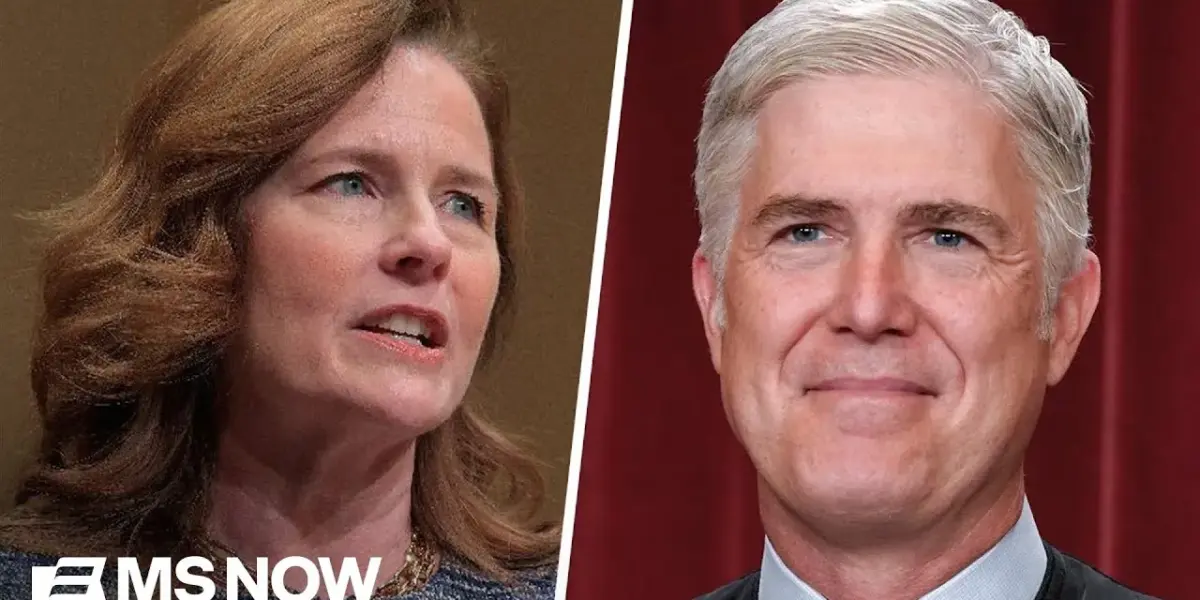
Supreme Court Justices Question Citizenship Argument
The U.S. Supreme Court heard arguments in a key case that could impact citizenship for children born in the United States. Justices Elena Kagan, Neil Gorsuch, and Amy Coney Barrett pressed the U.S. Solicitor General on the definition of “domicile” and its role in determining citizenship, particularly for children born to parents who may not be lawfully present in the country.
Defining Domicile: Then vs. Now
Justice Gorsuch zeroed in on the historical understanding of domicile. He asked whether the Court should consider how domicile was understood in 1868, when the 14th Amendment was ratified, or how it is understood today under the Immigration and Nationality Act (INA).
The Solicitor General suggested there wasn’t a significant difference. However, Justice Gorsuch pushed back, noting that immigration laws today are far more restrictive than they were in the 19th century. He questioned why, if someone established domicile in 1868 without violating immigration laws, their current immigration status should matter for citizenship.
“So if somebody showed up here in 1868 and established domicile, that was perfectly fine without respect to any immigration laws. They’re they were. And so why wouldn’t we even if we were to apply your own test, come to the conclusion that the fact that someone might be illegal is immaterial?”
The Solicitor General referenced a case, “Wong Kim Ark,” from 1898, which stated that individuals are subject to U.S. law so long as they are permitted to be in the country. But Justice Gorsuch pointed out that this case was decided after 1868, raising questions about its relevance to the original understanding.
Parental Domicile and Citizenship
Justice Barrett then turned the focus to whose domicile matters. She asked whether the domicile of the child, the parents, the husband, or the wife should be the determining factor. The Solicitor General explained that the executive order in question draws a distinction, often focusing on the mother’s domicile.
However, the Court seemed concerned about the practicalities of determining domicile for every individual. Justice Barrett questioned whether contemporary sources or 1868 legal understanding should be used. The Solicitor General maintained that the concept of domicile has remained consistent, requiring lawful presence with the intent to remain permanently and become part of the political community.
Historical Context of the 14th Amendment
The discussion delved into the historical context surrounding the 14th Amendment. Justice Kagan highlighted that the debates at the time focused on the child’s citizenship, not the parents’, and that the term “domicile” was not explicitly mentioned.
The Solicitor General countered that historical sources from the 19th century suggest a newborn child lacks the capacity to form their own domicile and thus inherits the domicile of their parents. This understanding, the General argued, is deeply rooted in 19th-century legal thought and reflected in various court decisions and congressional records.
Evidence was presented from President Andrew Johnson’s veto of the first Civil Rights Act, where he expressed concern about extending citizenship to children of “all domiciled aliens.” This, the Solicitor General argued, shows that the concept of parental domicile was indeed part of the discussion, even if the specific term “domicile” wasn’t always used.
Children of Slaves and Lawful Presence
A significant portion of the argument focused on the status of children born to enslaved people brought to the U.S. unlawfully. The Solicitor General stated that under 19th-century law, even if their entry was unlawful, their presence was not considered unlawful. Instead, they were considered to have an “indefeasible domicile” in the U.S.
This point was crucial because it addressed the idea that unlawful presence could preclude citizenship. The Solicitor General argued that for enslaved people, U.S. domestic law, even before the Civil War, treated them as domiciled. Therefore, their children born in the U.S. should be citizens.
Justice Gorsuch pressed on this point, asking if the reasoning applied to the children of illegally trafficked people today. The Solicitor General clarified that it would hinge on whether the parents are lawfully domiciled in the United States. The key, the General stated, is the lawfulness of their presence, not necessarily the lawfulness of their initial entry.
The Core Question: Lawful Presence
The arguments consistently circled back to the definition of lawful presence and its connection to domicile and citizenship. The Court is grappling with whether the original public meaning of the 14th Amendment requires a child born in the U.S. to have parents who are lawfully present to be considered a citizen.
The Solicitor General’s position is that historical context shows that even those whose initial entry was unlawful could be considered lawfully domiciled, especially if U.S. law treated them as such. This contrasts with individuals who actively cross the border unlawfully today.
Looking Ahead
The Supreme Court’s decision in this case will have significant implications for immigration law and the rights of children born in the United States. The justices’ pointed questions suggest a deep dive into the historical understanding of citizenship and the evolving definition of domicile. The outcome will likely clarify whether “birthright citizenship” is solely dependent on the parents’ current immigration status or if historical legal interpretations of domicile and lawful presence play a more nuanced role.
Source: Justices Gorsuch and Barrett question U.S. Solicitor General's argument (YouTube)

Related Articles


Iran’s Regime Faces Pressure as US Focuses Inward
The U.S. faces a dual challenge: navigating complex foreign policy in Iran while grappling with deep domestic political divisions. The administration's strategy towards Iran is under scrutiny, with questions about its clarity and effectiveness. Simultaneously, the Supreme Court is hearing a pivotal case on birthright citizenship, potentially reshaping constitutional law.


Birthright Citizenship: Is the 14th Amendment Outdated?
The 14th Amendment's guarantee of birthright citizenship is under intense debate. Panel guests discuss whether the long-standing interpretation is outdated and explore the practical challenges and historical context surrounding this core American principle.

AG Battles Attorney Over Trump SCOTUS Visit Impact
A Supreme Court case on birthright citizenship is sparking debate. Legal experts clash over former President Trump's attendance at oral arguments and California AG Rob Bonta's criticisms. The ruling, expected by June, could impact immigration policy and labor markets.