Justice Pushes Back: Judges Rebuke Trump in Historic Standoff
Key figures in the Federal Reserve and the judiciary have publicly pushed back against Donald Trump in a historic 48-hour period. These actions signal a strong defense of institutional independence against perceived political pressure.


Justice Pushes Back: Judges Rebuke Trump in Historic Standoff
In a remarkable 48-hour period, key figures in America’s justice system and economic leadership have publicly pushed back against Donald Trump. This rare display of unified critique from the Federal Reserve chair, the Supreme Court Chief Justice, and the Chief Judge of the D.C. Federal Court signals a significant moment where institutions are standing firm.
Federal Reserve Chair Defends Independence
Federal Reserve Chair Jay Powell, a frequent target of Trump’s criticism, found himself at the center of a legal battle. Trump had reportedly sought Powell’s ouster and pressured him to lower interest rates, actions the Federal Reserve views as political interference. Trump’s Department of Justice even initiated a criminal investigation into Powell over alleged cost overruns on building renovations at the Federal Reserve.
However, this move backfired. Chief Judge James Boasberg of the D.C. Federal Court dismissed the grand jury subpoenas against Powell. Boasberg ruled that the investigation was brought in “bad faith,” noting Trump’s repeated attempts to pressure Powell. This ruling effectively cleared Powell and highlighted the independence of the Federal Reserve.
During a press conference following the court’s decision, Powell firmly stated his intention to remain in his position. He emphasized that the Federal Reserve bases its decisions on economic conditions, not political pressure. This stance was seen as a strong defense of the institution’s autonomy from presidential influence.
The legal challenges against Powell also had unintended consequences for Trump’s own agenda. A Republican senator has blocked the confirmation of Trump’s potential replacement for Powell, leaving the Federal Reserve leadership in limbo and preventing Trump from installing his preferred candidate.
Supreme Court Chief Justice Addresses Attacks on Judiciary
Around the same time, Supreme Court Chief Justice John Roberts addressed the increasing personal attacks on federal judges. Speaking at an event, Roberts acknowledged that criticism is a normal part of the judicial process. However, he drew a line when criticism turned into personal hostility directed at judges themselves.
Roberts stated, “personally directed hostility is dangerous.” He stressed that judges work hard to make sound decisions, and while their opinions can be scrutinized, personal attacks can undermine the judiciary. This was widely interpreted as a direct response to Trump’s persistent criticism of judges, including Supreme Court justices, who ruled against him.
Trump has a history of attacking judges who preside over cases involving him, often questioning their impartiality and competence. Roberts’ remarks, though not naming Trump, served as a powerful statement from the head of the judicial branch defending its integrity.
Chief Judge Boasberg’s Actions Against Trump Administration
Adding to this chorus of institutional pushback was Chief Judge James Boasberg. Besides his ruling regarding Jay Powell, Boasberg has a history of dealing with actions by the Trump administration. He previously initiated proceedings to find the Trump administration in criminal contempt for actions related to sending personnel to El Salvador without due process.
Boasberg’s decision to dismiss the subpoenas against Powell, citing bad faith, was particularly noteworthy. Such a finding by a federal judge is rare and indicates a strong belief that the prosecution was not based on legitimate legal grounds but rather on political motives.
Why This Matters
This convergence of events is significant because it demonstrates a coordinated defense of institutional independence and the rule of law. The Federal Reserve chair protecting the Fed’s economic decision-making, the Chief Justice defending the judiciary from personal attacks, and a chief judge calling out a politically motivated investigation all signal that these branches of government are not passively accepting external pressure.
Historically, such public rebukes from these high-level positions are uncommon. They suggest a growing concern among those in positions of power about the potential erosion of democratic norms and the independence of critical institutions. The actions taken by Powell, Roberts, and Boasberg, though distinct, collectively send a message that the integrity of their respective domains is being actively protected.
Implications, Trends, and Future Outlook
The immediate implication is a potential weakening of Trump’s ability to influence key institutions like the Federal Reserve and to intimidate the judiciary. The rulings and statements suggest that legal and judicial bodies are increasingly willing to push back against what they perceive as overreach or improper political pressure.
This could set a precedent for future challenges. As political polarization continues, the independence of institutions like the Federal Reserve and the judiciary will be increasingly tested. The events of this 48-hour period suggest a trend towards these institutions actively defending their autonomy rather than remaining silent.
Looking ahead, the resilience of these institutions will be crucial. The public’s trust in the Federal Reserve’s economic stewardship and the judiciary’s impartial application of law depends on their ability to operate free from undue political interference. The recent pushback offers a sign of hope that these checks and balances remain functional, even under intense pressure.
Source: Trump CRUSHED by ONCE-IN-A-LIFETIME Legal REBUKE (YouTube)

Related Articles
Trump’s Name Everywhere: A ‘Stain’ on GOP Legacy?
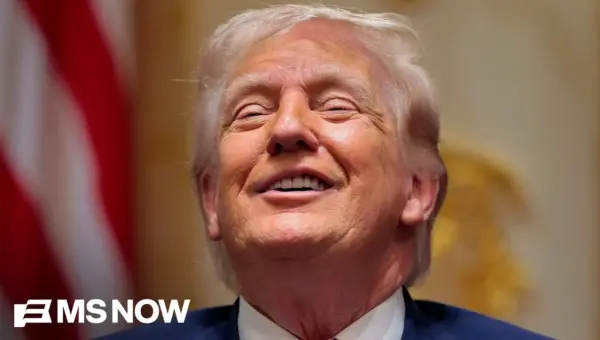
Former President Donald Trump's efforts to brand national symbols, including a proposed signature on dollar bills, spark debate. Critics view this as an authoritarian attempt to embed his legacy, potentially staining the Republican Party's history and contrasting with democratic ideals of public ownership.

Trump’s War Talk Stuns Financial Crowd
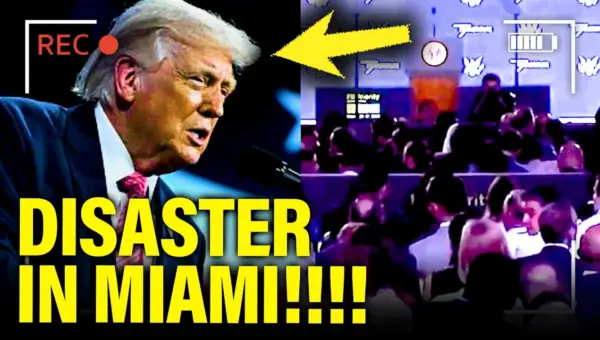
Donald Trump's recent speech in Miami focused on his foreign policy, particularly his critical views on NATO and his vision for international relations. He declared the U.S. would no longer defend NATO allies, questioned the value of existing alliances, and suggested renaming the Strait of Hormuz. The speech also touched on his personal views of success, his allies, and his perceived role as a global peacemaker.
Trump’s Warpath: New Threats Signal Imperial Ambitions
Recent statements from Donald Trump reveal a potential embrace of increased military action and interventionist foreign policy. This approach, characterized by critics as "imperialism 2.0," contrasts with his past promises of peace and has even drawn criticism from parts of his own base. The implications for U.S. global engagement and domestic priorities are significant.