Justice Denied: 10 Cases Where Investigations Went Awry
Investigative blunders, prejudice, and media frenzy have led to devastating consequences in notorious criminal cases. From the O.J. Simpson trial to the West Memphis Three, these stories reveal critical flaws that denied justice and prolonged suffering.

Justice Denied: 10 Cases Where Investigations Went Awry
In the pursuit of justice, law enforcement agencies often face immense pressure to solve complex crimes. However, when investigations falter due to errors, prejudice, or external pressures, the consequences can be devastating, leading to wrongful convictions, prolonged suffering for victims and their families, and the escape of true culprits. From high-profile celebrity cases to chilling serial killer hunts, a closer look at infamous investigative blunders reveals the critical importance of meticulous procedure, unbiased judgment, and robust communication in the justice system.
The Centennial Olympic Park Bombing: A Hero Tarnished
The 1996 Atlanta Olympics were marred by tragedy when a pipe bomb exploded in Centennial Olympic Park. Security guard Richard Jewell was initially lauded as a hero for discovering the backpack containing the explosives and helping to evacuate the area. However, his past as a former sheriff’s deputy and his prominent role in the discovery quickly made him a person of interest. Leaks to the press, fueled by public and media pressure, led to a trial by media. Jewell was eventually cleared of all suspicion when anti-government extremist Eric Rudolph was apprehended years later for other bombings. The ordeal left Jewell’s life in ruins, serving as a stark reminder of the human cost of rushing to judgment. Ten years after the bombing, Georgia formally recognized Jewell as a hero.
The West Memphis Three: Prejudice and Coerced Confessions
The brutal murders of three young boys in West Memphis, Arkansas, in 1993 became a chilling case that highlighted the dangers of prejudice in investigations. The authorities, swayed by speculation of a satanic ritual, focused on three teenage outsiders, Jason Baldwin, Damien Eckles, and Jesse Misskelley Jr. Despite a lack of concrete evidence linking them to the crime and the eventual confession of the actual killer, Matias Reyes, the three teenagers were convicted based on coerced confessions and poor crime scene handling. After years of appeals and advocacy, they were released in 2011, but the true perpetrators were never brought to justice.
The Disappearance of Madeleine McCann: A Botched Response
The 2007 holiday of the McCann family in Portugal turned into a nightmare when their three-year-old daughter, Madeleine, vanished from their holiday apartment. The initial response by Portuguese authorities was heavily criticized for failing to secure the crime scene promptly and for prematurely suspecting the parents of staging the abduction. Despite years of investigation, numerous leads, and mistaken witness statements, Madeleine’s whereabouts remain unknown. In 2023, Portuguese police issued an apology to the McCanns for their inadequate initial handling of the case, acknowledging the profound impact their failures had on the family and the ongoing search for answers.
The O.J. Simpson Trial: A Crime Scene and a Nation Divided
The 1994 murders of Nicole Brown Simpson and Ron Goldman captivated the nation and led to one of the most sensational trials in American history. The investigation was immediately compromised by disoriented first responders and a failure to properly secure the crime scene. The subsequent charging of Nicole’s ex-husband, football superstar O.J. Simpson, turned the case into a media circus. While the evidence against Simpson was substantial, his defense team successfully exploited the police’s procedural errors and questionable conduct, leading to his acquittal. The verdict remains a point of contention, with many believing it was influenced by racial tensions in Los Angeles at the time, underscoring how investigative missteps can undermine even seemingly conclusive cases.
The Murder of JonBenét Ramsey: A Family Under Suspicion
The shocking death of child beauty queen JonBenét Ramsey in her Colorado home on Christmas Day 1996 became an immediate media sensation. Boulder police focused heavily on the possibility of a cover-up by the Ramsey family, leading to a compromised investigation from the outset. Critical errors included failing to immediately interview the family and allowing visitors to contaminate the scene. Crucial evidence was lost or shared with the family, and the investigators’ tunnel vision, coupled with false confessions and inter-agency disputes, muddied the waters. DNA evidence later cleared the Ramseys, leaving the circumstances of JonBenét’s death unresolved and a source of enduring public fascination and frustration.
The Evans Family Tragedy: A Miscarriage of Justice and the Death Penalty
In 1949 London, Timothy Evans was convicted and later executed for the murders of his wife, Beryl, and their infant daughter. Evans confessed to poisoning his wife, but later changed his story, only to be convicted based on the eyewitness testimony of a neighbor, John Christie. Tragically, Christie himself later confessed to murdering Beryl and at least four other women. This profound miscarriage of justice, stemming from prejudiced police work and a failure to thoroughly investigate, was a pivotal factor in the abolition of the death penalty in the UK. It serves as a grim reminder of how haste and bias can lead to irreversible, tragic errors.
The Night Stalker: A Press Conference’s Perilous Leak
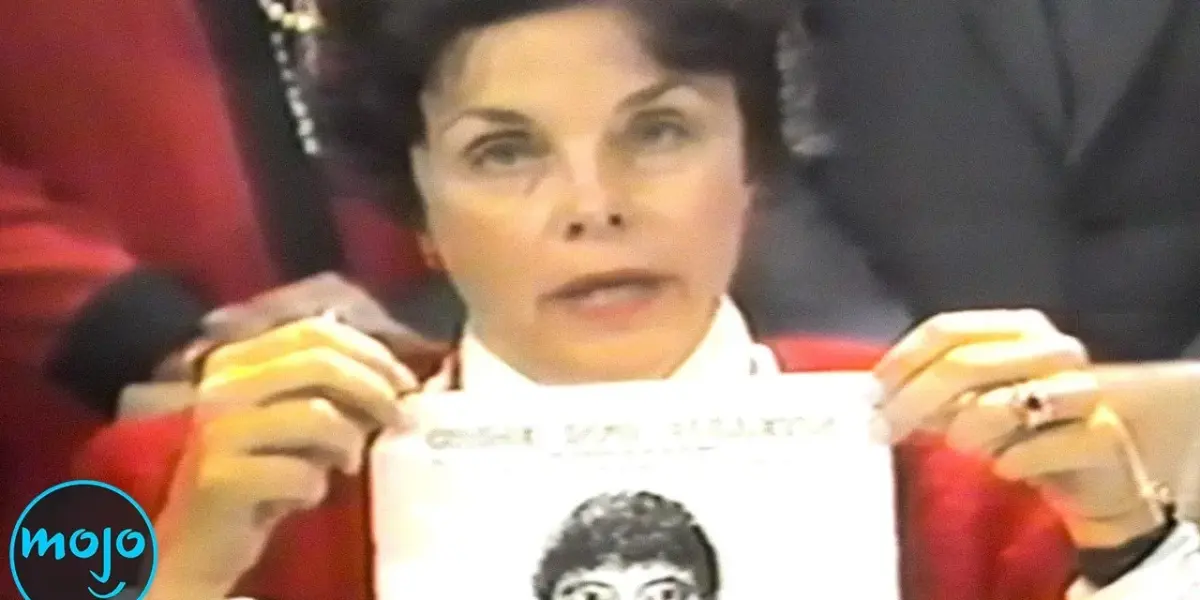
In 1985, the fear gripping Los Angeles was palpable as serial killer Richard Ramirez, dubbed the ‘Night Stalker,’ terrorized the city, committing at least 13 murders. A press conference held by San Francisco Mayor Diane Feinstein, intended to reassure the public, inadvertently revealed crucial details about the killer’s weapon and distinctive sneakers. This leak allowed Ramirez to dispose of the evidence, though he was eventually apprehended by vigilant civilians who recognized him from descriptions. The incident highlighted the delicate balance between informing the public and compromising an investigation, even as the subsequent manhunt was a testament to inter-agency cooperation and public involvement.
The Unabomber: A 17-Year Cat-and-Mouse Game
For 17 years, Ted Kaczynski, the ‘Unabomber,’ eluded capture, unleashing 16 mail bombs that terrorized universities and airlines across the United States. The FBI’s extensive investigation was hampered by the evolving nature of the bombings, leading to theories of multiple perpetrators. Kaczynski’s intellectual prowess allowed him to remain a ghost, with investigators initially profiling suspects incorrectly based on bomb materials. The break came in 1996 when Kaczynski’s brother recognized his brother’s distinctive writing style in a published manifesto, leading to his arrest. This case underscored the importance of meticulous evidence analysis and the crucial role of familial recognition in bringing elusive criminals to justice.
The Yorkshire Ripper: Multiple Chances Missed
Peter Sutcliffe, the ‘Yorkshire Ripper,’ terrorized Northern England for five years, claiming 13 lives. Astonishingly, Sutcliffe was interviewed by police nine times during his killing spree but was never identified as the primary suspect. Investigators were misled for over a year by false tapes and letters from an individual known as ‘Wearside Jack,’ which diverted crucial resources. A report released years after Sutcliffe’s arrest revealed that numerous opportunities to apprehend him were missed due to poor evidence handling, misinterpretation of suspect descriptions, and a failure to connect the dots. Sutcliffe eventually confessed in 1981, ending one of the most infamous and tragically flawed investigations in UK history.
The Atlanta Child Murders: Racial Bias and Lingering Doubts
Between 1979 and 1981, Atlanta was gripped by fear as dozens of children and young adults were murdered. The investigation was slow to connect the crimes, with racial bias believed to have impeded efforts to solve cases within the city’s Black community. It took civilian pressure and federal involvement to form a dedicated task force. Wayne Williams was ultimately convicted of two murders and linked to many of the child abductions. However, lingering doubts about whether Williams was a scapegoat for a larger conspiracy or social crisis persist. Williams himself continues to proclaim his innocence, asserting that the police were more focused on finding a culprit than on a thorough investigation.
Source: 10 Criminal Investigations That Went Horribly WRONG (YouTube)

Related Articles

Man Trapped Upside Down in Cave Dies After 27 Hours
A Thanksgiving caving trip turned into a 27-hour nightmare for John Edward Jones when he became trapped upside down in a narrow passage at Nutty Putty Cave. Despite extensive rescue efforts, his body could not be safely extricated, leading to a tragic end.


Silent Warnings: When Ordinary People Foresee Disaster
Explore the chilling accounts of ordinary individuals whose warnings about impending crimes were tragically ignored. From financial fraud to mass violence, these stories highlight the critical importance of heeding early signs.

Cryptic Note, Impossible Fall: The Unsolved Death of Rey Rivera
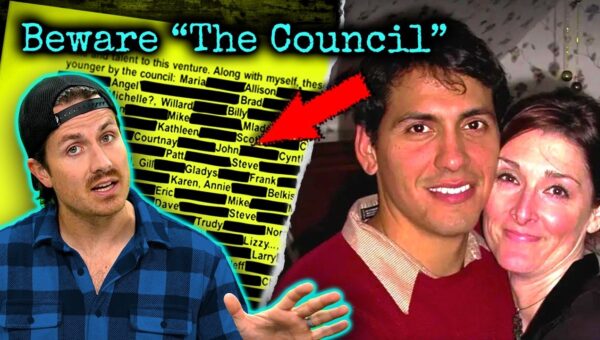
Rey Rivera's death is shrouded in mystery, marked by a cryptic note, an impossible fall from a building, and a police investigation that hit insurmountable obstacles. The case remains officially unsolved, leaving more questions than answers.