Julian Lloyd Webber’s ‘Rage’ Saved Music Education Program
Renowned cellist Julian Lloyd Webber details how his passionate plea, fueled by "controlled rage," saved the "In Harmony" music education program from closure. His autobiography, "Bows and Arrows," also explores his musical upbringing, a bet that led to his brother's hit "Variations," and his profound connection with a Stradivarius cello.


Cellist Julian Lloyd Webber Recounts Dramatic Defense of Music Education
Renowned cellist Julian Lloyd Webber recently shared details of a pivotal moment where his passionate, controlled anger helped save a vital music education program. In an interview discussing his new autobiography, “Bows and Arrows,” Webber described a tense meeting with then-Education Secretary Michael Gove in 2011. The program, known as “In Harmony,” was facing closure despite its proven success in bringing music to children in deprived areas.
A Childhood Steeped in Music
Webber’s early life was immersed in music. He grew up in a bohemian household in South Kensington, London, where his father was a music professor and his mother a musician. The family home was filled with the sounds of music, pets, and even a monkey. Despite the musical environment, his father advised both Julian and his famous brother, Andrew Lloyd Webber, against pursuing music professionally, suggesting it was too difficult. Webber believes this was reverse psychology, encouraging them to truly want a career in music more than anything else.
From Royal College to Leighton Town
Webber began learning the cello at the young age of three or four. He credits his progress to excellent teachers, like Runa Martin at the Royal College of Music’s junior department. He noted that in his youth, most students at the junior department came from state schools, a stark contrast to today’s situation where access to music education has diminished.
Beyond his musical pursuits, Webber revealed a surprising passion for football. He is a devoted supporter of Leyton Orient Football Club, a passion ignited in childhood. He explained how he started following the team after accompanying a family friend from the area. While concerts often interfered with attending matches, his dedication to the team remained strong.
A Bet, a Brother, and a Hit Album
Webber’s connection to Leyton Orient also led to a significant musical creation. His brother, Andrew Lloyd Webber, wrote the famous “Variations” for him as the result of a bet. The bet was made on the last game of the season, with Leyton Orient needing at least a draw to avoid relegation. When they secured a 1-1 draw, Andrew had to fulfill his promise to write the piece, which had been long-awaited. “Variations” became a massive hit, selling half a million copies and reaching number two on the album charts, famously only beaten by ABBA. The piece was also recognized as the theme tune for “The South Bank Show” for many years.
The Priceless Stradivarius Cello
A significant part of Webber’s career involved playing a rare Stradivarius cello, crafted by the legendary Antonio Stradivari. He described this instrument as the longest relationship of his life, playing it for 30 years. He explained that a great instrument like the Stradivarius doesn’t simply do what it’s told; it requires a partnership. “If you push it too hard, it complains,” he said, highlighting the need for a delicate, collaborative approach to draw out its best sound. He sadly noted that the cello is now with a consortium in Europe and he prefers not to know its current status, emphasizing his deep personal connection to the instrument.
Defending “In Harmony” Against Cuts
The “In Harmony” initiative, inspired by Venezuela’s El Sistema program, aims to provide all children with access to music education. Webber played a crucial role in its establishment in the UK under a Labour government. He described the program’s profound impact in deprived areas, reducing absenteeism and boosting children’s engagement with school. However, in 2011, the program faced potential closure.
Webber recounted his forceful intervention during a meeting with Michael Gove. Feeling the program was about to be scrapped, he entered the meeting in a state of “controlled rage.” He passionately argued for the project’s merits, urging Gove to witness the transformative effect it had on children and schools. “I was in such a controlled state of rage that I made possibly the best speech to anyone I’d ever made in my life,” Webber stated.
His impassioned defense was effective. Instead of closing the program, Gove agreed to expand it to four more schools. Webber expressed satisfaction that “In Harmony” continues to thrive and advocates for its nationwide rollout, emphasizing its power to empower young people.
A Moving Experience for All
Michael Gove himself later recalled visiting an “In Harmony” project in Everton when he was a minister. He described it as one of the most emotional experiences of his life. He was struck not just by the musical development but by the immense self-confidence the program instilled in the children. He also witnessed the pride of parents and grandparents seeing their children perform, a testament to the program’s far-reaching positive effects.
Webber echoed these sentiments, recalling the “In Harmony” anniversary concert at the Royal Albert Hall. He saw parents crying as their children performed on stage, a powerful demonstration of how music education can uplift and provide children with something invaluable.
A Comeback Performance
Despite a 12-year hiatus from playing due to injury, Webber is preparing for a comeback concert. Inspired by a comment from his daughter, he will perform at the Wigmore Hall. He acknowledged that returning to the stage after such a long break will be an achievement in itself. The concert, scheduled for a Tuesday evening, is reportedly already sold out, underscoring the enduring public interest in his music and career.
Source: Julian Lloyd Webber: How My ‘Rage’ Made Michael Gove Protect Music Education (YouTube)

Related Articles

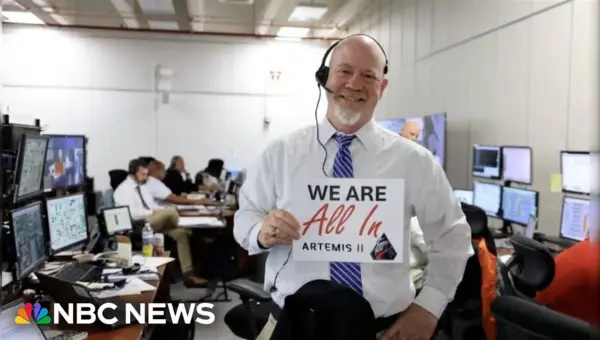
Texas Engineer Leads Artemis II Heat Shield Effort
Texas engineer Ronnie Backus discusses his critical role in developing the Orion spacecraft's heat shield for the Artemis II mission. After over a decade of work, Backus and his team have implemented new strategies to ensure a safe return to Earth, addressing concerns from previous missions. The mission represents a significant step in human space exploration, fulfilling a childhood dream for the West Texas native.


UK Offers Iran Negotiation Insight to Aid Trump’s Stalled Deal
The UK is offering its diplomatic expertise to the US to help President Trump navigate complex negotiations with Iran. As talks loom amidst uncertainty and strained UK-US relations, London believes its experience can aid in achieving a settlement and reopening the Strait of Hormuz. Discussions also highlight the UK's defense readiness and its role in regional stability.


Iran Nuclear Talks Heat Up Amid Ceasefire Concerns
The White House is clarifying its stance on Iran's nuclear program, emphasizing that enrichment is off the table. Meanwhile, a high-level delegation is heading to Pakistan for critical talks amid reports of continued hostilities and the alleged closure of the Strait of Hormuz, testing a fragile ceasefire.