Judicial Earthquake: Supreme Court Strikes Down Trump Tariffs, Reasserting Congressional Authority and Reshaping U.S. Trade Policy
The Supreme Court has delivered a monumental blow to Donald Trump's tariff policies, declaring his emergency tariffs illegal and potentially triggering over $150 billion in refunds to American businesses. The ruling, a significant rebuke of executive overreach, reportedly sparked outrage from Trump during a breakfast with governors, where he lashed out at the courts and claimed a "backup plan." This decision not only dismantles a core tenet of his economic agenda but also reaffirms Congress's constitutional role in trade legislation, with far-reaching implications for the American economy and future presidential power.

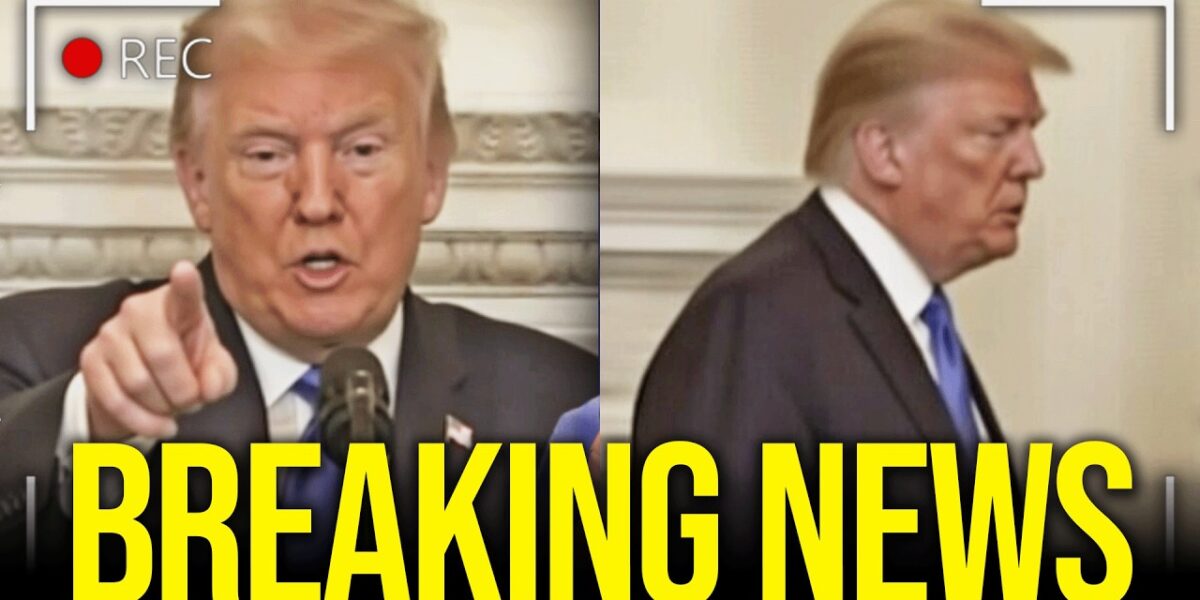
A Storm Breaks at the Governors’ Breakfast
In a dramatic turn of events, a routine breakfast meeting with state governors reportedly descended into chaos for Donald Trump following a bombshell Supreme Court ruling that effectively dismantled his administration’s tariff regime. The high court’s decision, delivered during the gathering, declared his emergency tariffs illegal, triggering an immediate and furious reaction from the former President, who reportedly lashed out at the courts and abruptly expelled the press from the room.
The ruling represents a monumental setback for a policy cornerstone of Trump’s economic agenda, heralded by critics as a "liberation day" for American consumers and businesses. It carries sweeping implications, not only for the U.S. economy but also for the delicate balance of power between the executive and legislative branches of government.
The Landmark Supreme Court Decision: A Blow to Presidential Power
The Supreme Court’s decision to strike down President Trump’s use of emergency tariffs marks one of the most significant economic cases to reach the high court in years. According to reports from CNN’s chief legal affairs correspondent Paula Reed, the ruling declared President Trump’s implementation of these tariffs "illegal," carrying "sweeping implications for the economy and of course for presidential power."
This judicial pronouncement is particularly notable as it is "the first time that the 6-3 conservative court has ruled against President Trump in one of these major cases that have gone before the court since he returned to power in January," as reported by CNN. This detail underscores the profound nature of the rebuke, coming from a court with a conservative majority, including three justices appointed by Trump himself during his presidency.
At stake are "billions of dollars in revenue that have already been collected by the government." The financial repercussions are immense, with estimates suggesting that the U.S. government could owe more than $150 billion, potentially up to $175 billion, in refunds to American businesses that have already paid these tariffs. This massive potential refund, produced at the request of Reuters, would impact a broad range of companies, signaling a significant financial reversal for importers who bore the brunt of these policies.
The Economic Fallout: Unpacking the Burden of Tariffs
President Trump’s tariff policies were often touted as a means to protect American industries and compel foreign nations to renegotiate trade deals. However, critics vehemently argued that these tariffs were implemented with "zero precision, zero regard for the average American business or consumer." The Supreme Court’s decision appears to validate these concerns, affirming the legal and economic flaws inherent in the unilateral imposition of such measures.
Economically, the transcript highlights several critical impacts attributed to the tariffs:
- Inflation and Unemployment: The policies reportedly "led to more inflation, more unemployment." Tariffs, essentially taxes on imported goods, typically increase the cost of those goods for domestic businesses and, subsequently, for consumers. This can fuel inflation as businesses pass on higher costs.
- Choked Businesses: "It has choked businesses so much so that they don’t have extra money to reinvest and grow their business." Higher input costs due to tariffs can reduce profit margins, limiting a company’s ability to innovate, expand, or hire new employees.
- Consumer Burden: A new study cited in the transcript revealed a "$1,000 price hike for the average American family solely due to Donald Trump’s tariffs in 2025," projected to rise to "$1,300 in 2026." This directly illustrates how the cost of tariffs is ultimately borne by the consumer through higher prices for goods and services.
- Stock Market Volatility: The transcript points out an inverse relationship between tariffs and market performance: "How come every single time Trump placed tariffs, the stock market collapsed and every single time Trump removed tariffs, the stock market continued to grow? It’s It kind of tells you that tariffs are awful for the US economy." This suggests that investors viewed tariffs as detrimental to economic stability and corporate profitability.
- Contradictory Actions: The example of beef prices is particularly telling: "How come when beef prices rose way too high, Trump removed tariffs on beef? Why would he do that if tariffs didn’t raise prices?" This highlights a perceived inconsistency in the administration’s tariff strategy, suggesting that even proponents recognized their inflationary impact in specific sectors.
- Who Pays: A crucial clarification from the transcript is that "not countries" pay the tariffs, but "companies." American importers pay the tariffs to the U.S. government, and these costs are then typically passed down the supply chain to consumers.
These economic arguments underscore the sentiment that the Supreme Court’s ruling is not just a legal victory but "a huge, huge win for the American people," potentially alleviating significant financial pressure on households and businesses.
Reaffirming Constitutional Boundaries: Gorsuch and the Legislative Process
The Supreme Court’s decision is deeply rooted in the principle of separation of powers, particularly the constitutional authority of Congress to regulate commerce and levy taxes. Justice Gorsuch’s opinion, as directly quoted in the transcript, serves as a powerful defense of the legislative process:
"For those who think it’s important for the nation to impose more tariffs, I understand that today’s decision will be disappointing. All I can offer them is that most major decisions affecting the rights and responsibilities of the American people, including the duty to pay taxes and tariffs, are funneled through the legislative process for a reason. Yes, legislating can be hard and take time. And yes, it can be tempting to bypass Congress when some pressing problem arises, but the deliberative nature of the legislative process was the whole point of its design."
Gorsuch’s words emphasize that the legislative process, despite its perceived inefficiencies like gridlock, is a deliberate design to prevent unilateral decision-making by a single individual or faction. He highlights that through this process, "the nation can tap the combined wisdom and the people’s elected representatives, not just that of one faction or man." This is a thinly veiled reference to the "MAGA and Trump" philosophy, which critics often accuse of prioritizing executive authority over congressional deliberation.
The opinion further elaborates on the virtues of legislative deliberation:
- Tempering Impulse: "Their deliberation tempers impulse and compromise hammers disagreements into workable solutions." This suggests that the collective process acts as a check on potentially rash or ill-considered executive actions.
- Enduring Laws: "And because laws must be must earn such broad support to survive the legislative process, they tend to endure, allowing ordinary people to plan their lives in ways they cannot when the rules shift from day to day." Predictability and stability in law are crucial for economic planning and individual liberty.
- Stake in Governance: "In all, the legislative process helps ensure that each of us has a stake in the laws that govern us and in the nation’s future." This underscores the democratic principle of representation and collective ownership of the legal framework.
The Gorsuch opinion also carries a subtle message for those currently disappointed by the ruling, suggesting that "if history is any guide, the tables will turn and the day will come when those disappointed by today’s result will appreciate the legislative process for the bull work of liberty it is." This implies that the principle of checks and balances protects all, regardless of political affiliation, from potential executive overreach in the future.
Furthermore, legal analysts noted that the SCOTUS decision "seems very broad and designed to heat off White House workarounds." It explicitly states that imposing tariffs falls under the "major questions doctrine" and that "there is no or foreign policy exception for it." This means that future administrations cannot easily bypass Congress on significant policy matters like tariffs by invoking national security or foreign policy prerogatives, setting a powerful precedent against executive overreach.
Trump’s Fiery Reaction: "These Effing Courts"
The news of the Supreme Court ruling reportedly hit President Trump like a "brutal, brutal ruling," particularly as it unfolded during his breakfast with governors. Initial reports indicated that the breakfast "had been going well" before the news broke. However, the atmosphere quickly shifted.
According to CNN, President Trump "became enraged. He started ranting about the decision, not only calling it a disgrace, but started attacking the courts at one point, saying, ‘These effing courts,’ but using the actual language there." This outburst of expletives, while not uncommon for Trump when enraged, highlights the depth of his frustration and anger over the judicial setback.
Adding to the drama, there was speculation surrounding Trump’s decision to "kick the press out" earlier in the breakfast. "Did Trump kick out the press because he knew the Supreme Court was about to end his illegal price raising tariffs?" Patriot Takes questioned. The transcript includes Trump’s direct instruction: "I’m going to ask the press to leave." He then added, "The media, thank you. You can leave now." While the exact timing of his knowledge of the ruling relative to the press expulsion remains unclear, the subsequent meltdown suggests a strong correlation between the two events.
Despite the unequivocal nature of the ruling, Caitlyn Collins reported that Trump "then told others gathered that he had a backup plan." However, given the broad scope of the Supreme Court’s decision and its explicit application of the "major questions doctrine" with "no foreign policy exception," the efficacy of any such "backup plan" in circumventing Congress’s authority appears highly doubtful.
Political Implications: A Court’s Rebuke and a Party’s Dilemma
The Supreme Court’s decision carries immense political weight, representing a significant blow to President Trump’s political identity and policy legacy. As noted in the transcript, "This could not be a bigger decision for President Trump. This could not be a bigger loss for President Trump. Not only is so much of his economic agenda based on these tariffs, so much of his foreign policy is based on these tariffs. He has used these tariffs as leverage in almost every meeting that he has had around the world." Tariffs were a signature policy, central to his "America First" platform, making this ruling a direct challenge to a core tenet of his political brand.
The fact that this ruling came from a "6-3 conservative court," including justices he appointed, is particularly significant. It demonstrates that even a ideologically aligned judiciary is willing to draw lines when it comes to constitutional boundaries and executive power. This unexpected rebuke from within the conservative judicial establishment underscores the fundamental nature of the separation of powers in the U.S. system, even in the face of political pressure.
Interestingly, the transcript also suggests a potential silver lining for the Republican Party, positing that the Supreme Court might be "saving Trump from himself." The argument is that "These tariffs were a disaster for the Republicans heading into the midterms. This is a Supreme Court kind of saving Trump from shooting themselves in the foot, hoisting themselves by their own petard." This perspective suggests that the tariffs, while popular with a segment of Trump’s base, were broadly unpopular and economically damaging, potentially jeopardizing Republican electoral prospects. By striking them down, the Court may have inadvertently removed a political liability for the party.
Beyond tariffs, the transcript briefly touches upon the broader unpopularity of "all of his other policies… among the American people. From ICE to his foreign policy to everything he said about the Epstein files." This indicates a wider context of policy challenges and public perception issues that President Trump and his allies face, with the tariff ruling adding another layer of complexity to his political narrative.
The Road Ahead: What This Means for American Trade and Governance
The Supreme Court’s decision is not merely a historical footnote; it sets a crucial precedent for the future of American trade policy and executive authority. The potential for $150-$175 billion in refunds to importers presents a massive logistical and financial undertaking. Businesses that paid these tariffs will likely seek swift reimbursement, creating a complex administrative challenge for the government. This unprecedented scale of refunds underscores the real-world financial impact of the now-illegal tariff regime.
More broadly, the ruling serves as a powerful reaffirmation of the legislative branch’s constitutional role in trade matters. It reinforces the idea that significant economic policies, particularly those involving taxation (tariffs are effectively taxes), must originate and be approved by Congress. This could lead to a more collaborative approach to trade policy in future administrations, forcing presidents to work with Congress rather than acting unilaterally through executive orders or emergency powers.
The explicit mention of the "major questions doctrine" and the rejection of a "foreign policy exception" for tariffs will have lasting implications. This doctrine empowers courts to scrutinize executive agency actions that address issues of vast economic or political significance, requiring clear congressional authorization for such actions. This judicial check could limit the ability of future presidents to use executive authority to implement sweeping economic policies without explicit legislative backing, thereby strengthening the system of checks and balances.
For the American economy, the removal of these tariffs could lead to several positive outcomes. Lower import costs for businesses could translate into lower prices for consumers, potentially easing inflationary pressures. It could also free up capital for businesses to reinvest, fostering growth and job creation. Internationally, it might signal a return to more predictable and rules-based trade relations, potentially de-escalating trade tensions that arose during the tariff era.
Conclusion: A Day of Liberation and Reckoning
The Supreme Court’s decision to invalidate President Trump’s emergency tariffs marks a pivotal moment in American jurisprudence and economic policy. It represents a "huge loss" for a leader who championed unilateral trade actions, yet simultaneously a "huge, huge win for the American people" who bore the economic brunt of those policies.
Beyond the immediate financial implications and the political drama, this ruling is a profound reaffirmation of the constitutional framework designed to prevent unchecked executive power. By emphasizing the deliberative nature of the legislative process and the importance of congressional authority in matters of national economic significance, the Supreme Court has bolstered the "bull work of liberty" – ensuring that major decisions affecting the rights and responsibilities of Americans are made through the collective wisdom of their elected representatives, not just "one faction or man." This decision not only reshapes the landscape of U.S. trade policy but also sets a crucial precedent for the enduring relevance of legislative checks and balances in a democratic society.
Source: Trump EVACUATES PRESS over BAD NEWS (YouTube)

Related Articles
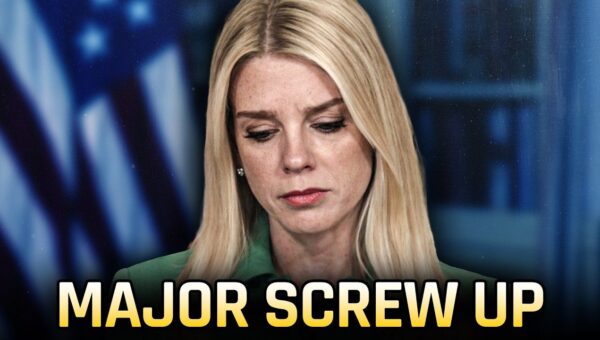
Bondi’s Court Blunder Could Cost US Billions
A court filing from Pam Bondi's Department of Justice may have committed the U.S. to refunding $170 billion in tariffs. This legal promise was made during challenges to Trump-era tariffs, with the DOJ assuring the court that collected funds would be repaid if the tariffs were overturned.
Trump’s Tariffs Linked to Stagnant Job Growth in First Year Back
The U.S. economy saw minimal job growth in 2025, adding just 181,000 jobs, a figure attributed to business uncertainty fueled by Donald Trump's volatile tariff policies. While January 2026 showed gains, they were heavily concentrated in healthcare, masking broader economic weakness and significant layoffs.
Trump Cites Iran Election Interference for US Military Action
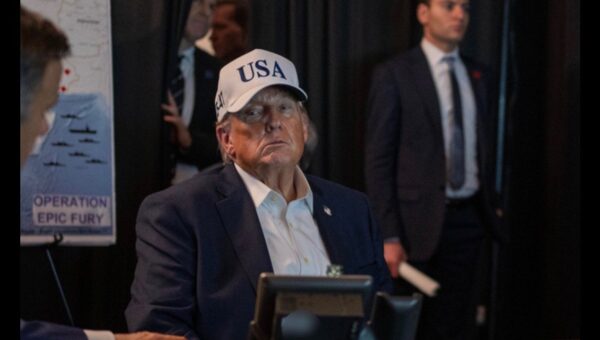
President Trump has cited Iran's alleged election interference as justification for military action, a move critics label a "wag the dog" tactic to distract from domestic issues. Concerns are mounting over a leaked memo suggesting executive orders to grant sweeping powers over voting, potentially linked to election fraud claims.