Judges Cower as Trump Administration Ignores Hundreds of Court Orders
The Trump administration has repeatedly ignored hundreds of court orders, a pattern of defiance that threatens the integrity of the American justice system. Despite some judges issuing contempt threats, a lack of consistent enforcement leaves the judiciary's authority in question.

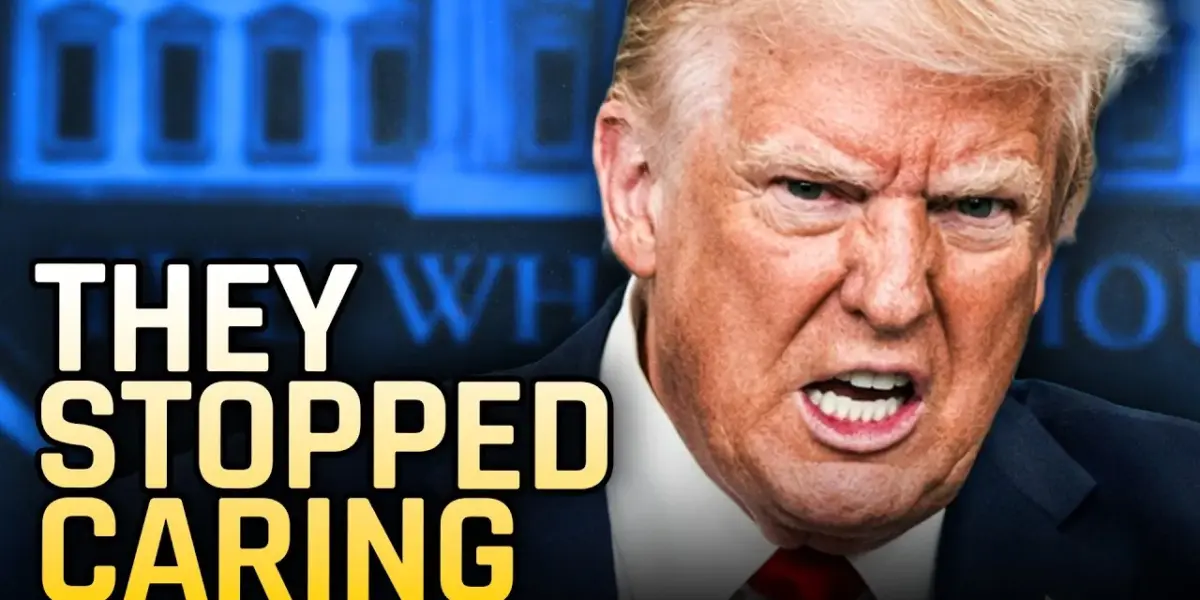
Judges Cower as Trump Administration Ignores Hundreds of Court Orders
A disturbing trend has emerged within the legal landscape of the United States: the Trump administration has repeatedly flouted court orders, accumulating hundreds of documented violations. This systemic disregard for judicial authority, as highlighted by a recent analysis in The Guardian, raises profound questions about the integrity of the American justice system and the rule of law itself.
A Pattern of Disregard
Federal judges across the nation have issued opinions detailing the administration’s non-compliance with their rulings. One notable instance involved a Minnesota federal court judge, Patrick Schilz, who cataloged hundreds of instances where the Trump administration failed to adhere to court mandates. The judge’s frustration was palpable, as he threatened to hold the administration in contempt and impose penalties. This was not an isolated incident; numerous other judges have found themselves issuing similar directives, only to see them ignored.
The administration’s response to these judicial rebukes has often been dismissive, with the former President himself characterizing judges who ruled against him as “unpatriotic” and “disloyal to our constitution.” Such rhetoric, coupled with accusations of courts being influenced by foreign interests or fringe political movements, attempts to undermine the legitimacy of the judiciary. However, as pointed out by journalist Austin Serat, the core issue remains the administration’s consistent failure to comply with court orders, a pattern that has, until recently, gone largely unpunished.
The Peril of Unchecked Disobedience
The principle that court orders must be obeyed is fundamental to the functioning of any legal system. When these orders are disregarded without consequence, the very foundation of justice begins to erode. As the analysis posits, if there are no repercussions for violating court orders, then these orders effectively cease to exist. Consequently, the courts themselves risk becoming irrelevant institutions. The argument is stark: if judges do not enforce their rulings and hold those in violation accountable, they may as well abandon their duties.
Historically, the enforcement of judicial authority has been a cornerstone of democratic governance. The ability of the judiciary to check the power of the executive and legislative branches relies on the respect and adherence to its pronouncements. When this respect is demonstrably lacking, it signals a dangerous shift in the balance of power.
A Glimmer of Enforcement, Then Stagnation
While the overarching narrative is one of widespread non-compliance, there have been attempts to enforce judicial authority. One such effort was made by Judge James Boasberg, who sought to hold the administration accountable. However, this attempt was subsequently overturned by an appeals court, illustrating the challenges faced by judges seeking to enforce their rulings against a determined executive branch.
A more recent example, however, offered a brief glimpse of potential compliance. In August, federal district judge Laura Provenzano issued a conditional civil contempt judgment against an Assistant United States Attorney in Minnesota. The judge imposed a daily fine of $500 for each day the attorney refused to comply with an order to release an immigrant detainee along with all their documentation. Crucially, the government complied the very next day, releasing the documents. This instance suggests that when faced with tangible penalties, the administration is capable of adherence. It begs the question: why have other judges hesitated to employ similar decisive measures?
The Shadow of Fear and the Call to Duty
The analysis ventures into a more speculative, yet critical, aspect: the potential reasons behind judicial hesitation. It questions whether fear, perhaps of retaliation from the administration or its supporters, is paralyzing judges from acting decisively. The piece acknowledges that such fears, particularly in the current political climate, are not entirely unfounded, referencing the palpable anxiety some feel regarding potential retribution.
However, it strongly argues that fear should not be a deterrent to fulfilling one’s sworn duty. The author draws a parallel to personal experience, stating that even with fears of negative consequences, one must continue to act and perform their responsibilities. The core of this argument is that judges, as federal officials with lifetime appointments, possess a level of security that should insulate them from job-related anxieties. The potential for impeachment and removal is exceedingly low, and the primary perceived threat often boils down to public criticism or social media commentary from the former President. The piece dismisses this as a valid excuse for inaction, imploring judges to “do your damn job.”
The Uncomfortable Choice: Resign or Act
The analysis presents a difficult dilemma. On one hand, if judges are unwilling to perform their duties and uphold the law, the conventional advice would be to resign. However, the context of the Trump administration adds a layer of complexity: resignation would simply create vacancies for the President to fill with potentially even more compliant individuals. Therefore, the pragmatic, albeit frustrating, recommendation is for judges to remain in their positions but to actively enforce their rulings.
Why This Matters
The repeated violation of court orders by any administration, let alone one that openly challenges judicial authority, poses a significant threat to the democratic framework of the United States. It undermines the separation of powers, weakens the judiciary’s role as a check on executive power, and erodes public trust in the legal system. The transcript’s central argument is that the lack of consequences for such violations creates a dangerous precedent, where judicial decrees become suggestions rather than mandates. This could lead to a gradual breakdown of legal order, where powerful actors can operate with impunity.
Implications, Trends, and Future Outlook
The trend of executive branches disregarding judicial orders is not unique to any single administration but becomes particularly concerning when it appears systemic and met with judicial hesitancy. If this pattern continues, future administrations might feel emboldened to challenge court rulings more frequently, leading to increased legal battles and a more politicized judiciary. The future outlook depends heavily on the judiciary’s willingness to assert its authority. The example of Judge Provenzano suggests that enforcement is possible and effective. The broader implication is that the judiciary must find ways to overcome any perceived or actual intimidation and consistently uphold the rule of law, even when it is politically inconvenient or challenging. The health of American democracy hinges on the judiciary’s ability to command respect and enforce its rulings, regardless of political pressure.
Source: Trump Administration Has Violated HUNDREDS Of Court Orders (YouTube)

Related Articles
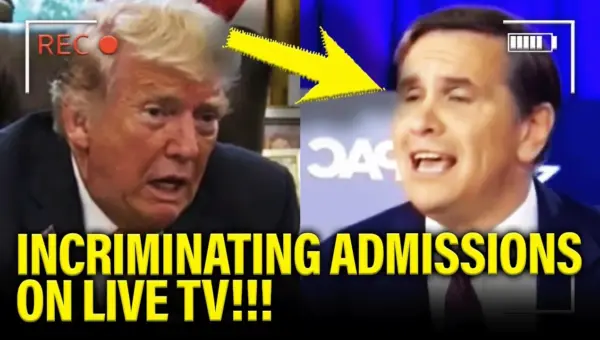
DOJ Official’s Remarks Spark Outrage Over Political Allegations
A top Trump DOJ official's speech at CPAC has sparked controversy, with claims of incriminating admissions regarding fears of prosecution and alleged political motivations. The remarks have raised serious questions about impartiality within the Department of Justice.
Trump’s Iran War Plans Criticized Amid Border Funding Standoff
Lawmakers and analysts are criticizing the Trump administration's handling of the Iran conflict and its approach to border funding, arguing that a lack of clear planning and a focus on political battles are making the U.S. less safe. Concerns are particularly high regarding the FBI's priorities and the potential impact of these issues on national security.
Lindell Faces Court Contempt Over Unpaid Fine
My Pillow CEO Mike Lindell has been held in contempt of court for refusing to pay a $56,000 fine to Smartmatic. The fine stems from his failure to comply with discovery requests in a defamation lawsuit. Lindell's claims of poverty are contrasted with his spending on his governor campaign, raising questions about campaign finance laws.