Judge Exposes Trump’s Abuse of Power in Powell Investigation
A federal judge has quashed subpoenas in a criminal probe of Fed Chair Jerome Powell, ruling it was an "extortionate" attempt by the Trump administration to pressure him. The decision highlights concerns over presidential overreach and the independence of the Federal Reserve.

Federal Judge Slams Trump Administration’s ‘Extortionate’ Probe of Fed Chair
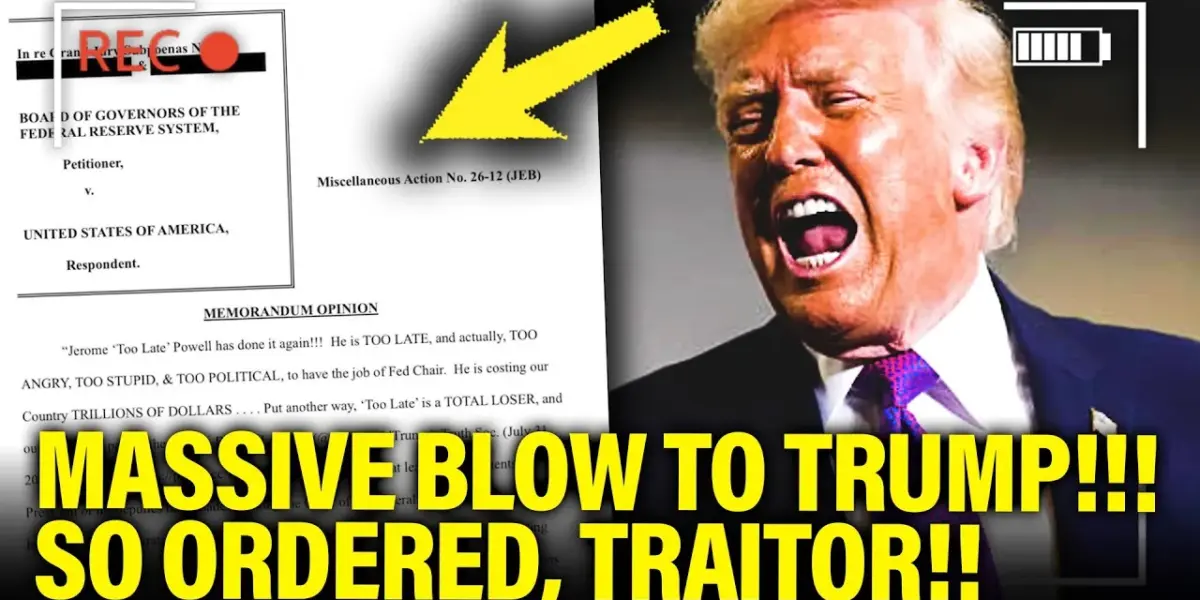
In a scathing rebuke that underscores the potential for presidential overreach, a federal judge has effectively dismantled a criminal investigation targeting Federal Reserve Chair Jerome Powell. Chief Judge Beryl A. Howell of the District of Columbia, in a detailed 26-page order, not only quashed subpoenas issued by the Department of Justice but also explicitly characterized the probe as an improper attempt to politically pressure Powell.
Allegations of a ‘Fake Criminal Investigation’
The core of the judicial decision centers on the DOJ’s investigation into alleged criminal conduct by Chair Powell concerning the renovation of two historic Federal Reserve buildings. Judge Howell’s order, as highlighted by legal commentators, paints a stark picture of an administration weaponizing the justice system to achieve policy goals.
The judge stated that “a mountain of evidence” suggests the subpoenas were issued not to uncover criminal activity, but to “pressure its chair into voting for lower interest rates or resigning.”
The judge further elaborated, finding “essentially zero evidence to suspect Chair Powell of a crime.” The justifications offered by the government, according to the order, were so “thin and unsubstantiated” that the court concluded they were “pretextual.” This judicial finding directly challenges the legitimacy of the investigation, suggesting its primary, if not sole, purpose was to harass and coerce Powell.
A Pattern of Presidential Pressure
Judge Howell’s memorandum opinion reportedly begins by cataloging Donald Trump’s numerous public attacks on Jerome Powell. These statements, often made on social media, accused Powell of being “too late, too angry, too stupid, and too political,” and blamed him for costing the country trillions of dollars. The judge appears to have drawn a direct line between these public criticisms and the subsequent initiation of a criminal investigation by the DOJ.
The transcript notes that Trump, unable to influence Powell’s interest rate decisions through public statements, hinted at “other options.” The judge’s decision suggests that the criminal investigation into the building renovations was precisely such an option, designed to force Powell’s hand or encourage his resignation.
The Federal Reserve’s Independence at Stake
The situation highlights a critical tension between the executive branch’s desire for policy alignment and the Federal Reserve’s mandated independence. The Fed’s ability to set interest rates based on economic conditions, free from political interference, is a cornerstone of modern monetary policy. The judge’s ruling implies that this independence was directly threatened by the Trump administration’s actions.
Jerome Powell himself, in a public statement, characterized the subpoena action as an “unprecedented action” that should be viewed within the “broader context of the administration’s threats and ongoing pressure.” He emphasized that the threat of criminal charges was a consequence of the Fed’s independent policy decisions, rather than any actual wrongdoing.
Historical Context and Judicial Courage
This is not the first time Judge Howell has presided over cases involving allegations of executive overreach. The transcript mentions her previous role in a case where the Trump administration and DOJ were found in criminal contempt for allegedly violating court orders related to sending individuals to El Salvador. This background adds weight to the current decision, suggesting a pattern of judicial vigilance against perceived abuses of power.
The commentary surrounding the ruling emphasizes the courage of federal judges like Howell in standing up to potential presidential pressure. The decision is presented not just as a legal victory for Powell, but as a defense of democratic institutions and the rule of law.
The Dominant Purpose: Harassment or Investigation?
A key aspect of the judge’s decision revolved around determining the “dominant purpose” of the subpoenas. The Federal Reserve argued that the subpoenas were issued for the improper purpose of harassing and pressuring Powell. Judge Howell appears to have agreed, finding “abundant evidence” to support this inference. The judge’s willingness to review evidence ex parte (in private) and the government’s subsequent failure to provide any credible evidence of actual criminal wrongdoing further bolstered the conclusion that the investigation was pretextual.
The transcript also points to actions by other government entities, such as a letter from the director of the Federal Housing Finance Agency suggesting congressional investigation into Powell’s alleged political bias. This is presented as part of a coordinated effort to target Powell.
Implications and Future Outlook
The implications of this ruling are significant. It serves as a potent reminder of the checks and balances inherent in the U.S. system of government. The judiciary, in this instance, acted as a crucial bulwark against what is alleged to be an abuse of executive power.
The decision may also have political ramifications. Reports suggest that a Republican senator had vowed to block any new Federal Reserve appointments until this investigation concluded. Judge Howell’s decisive action could potentially remove this obstacle, though the political landscape remains fluid.
For the Federal Reserve, the ruling reinforces the importance of its independence. For the public, it offers a case study in how legal and judicial processes can be used to hold powerful figures accountable, even when those figures are at the highest levels of government.
Why This Matters
This case is a critical moment in the ongoing debate about the separation of powers and the integrity of independent institutions. The clear judicial finding that a criminal investigation was initiated with a “pretextual” purpose, aimed at political coercion rather than genuine law enforcement, is a serious indictment of the tactics employed. It underscores the vital role of an independent judiciary in safeguarding democratic norms and preventing the weaponization of government agencies for political ends. The ruling protects not only an individual official but the fundamental principle of an independent central bank, essential for economic stability.
Source: WHOA!! Federal Judge SHUTS DOWN Trump’s BIGGEST CASE!!! (YouTube)

Related Articles
Trump’s Name Everywhere: A ‘Stain’ on GOP Legacy?
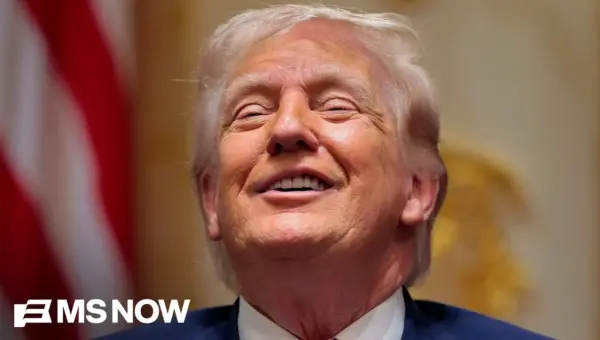
Former President Donald Trump's efforts to brand national symbols, including a proposed signature on dollar bills, spark debate. Critics view this as an authoritarian attempt to embed his legacy, potentially staining the Republican Party's history and contrasting with democratic ideals of public ownership.


Trump’s War Talk Stuns Financial Crowd
Donald Trump's recent speech in Miami focused on his foreign policy, particularly his critical views on NATO and his vision for international relations. He declared the U.S. would no longer defend NATO allies, questioned the value of existing alliances, and suggested renaming the Strait of Hormuz. The speech also touched on his personal views of success, his allies, and his perceived role as a global peacemaker.
Trump’s Warpath: New Threats Signal Imperial Ambitions
Recent statements from Donald Trump reveal a potential embrace of increased military action and interventionist foreign policy. This approach, characterized by critics as "imperialism 2.0," contrasts with his past promises of peace and has even drawn criticism from parts of his own base. The implications for U.S. global engagement and domestic priorities are significant.