Judge Crushes Trump’s Case, Prosecutor Melts Down
A federal judge has blocked subpoenas against Fed Chair Jerome Powell, citing a lack of evidence and calling the investigation politically motivated. The U.S. Attorney for D.C. responded with a public outburst, which critics labeled a "meltdown."

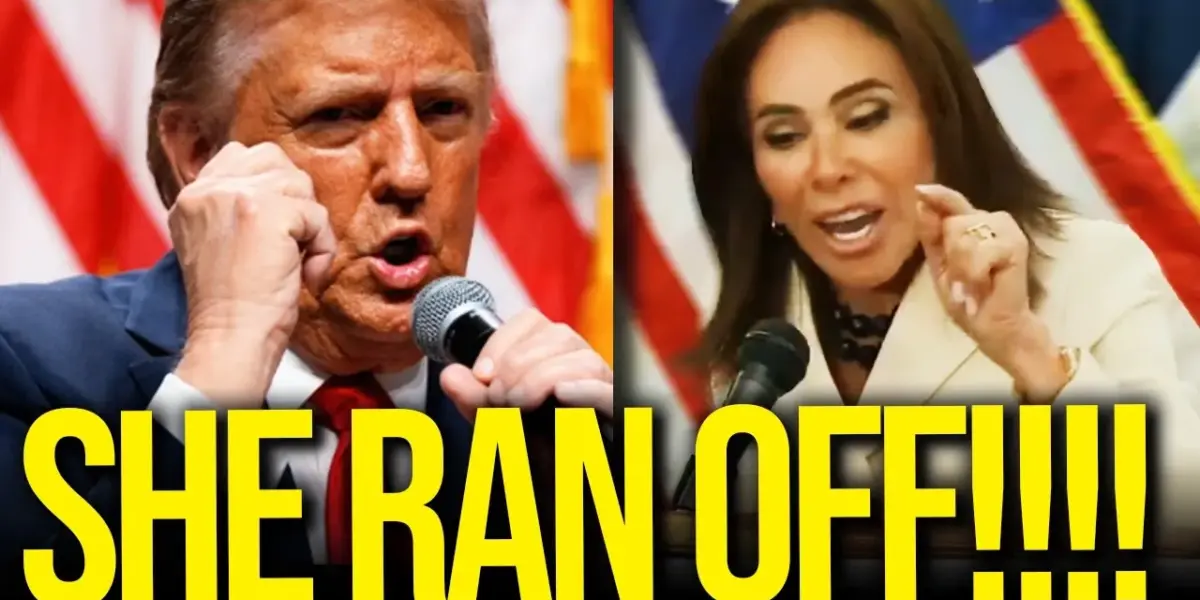
Judge Rejects Trump’s Subpoenas, Citing Lack of Evidence
In a significant legal development, a federal judge has quashed subpoenas issued by the Trump administration against Federal Reserve Chair Jerome Powell. Judge James Boasberg, Chief Judge of the U.S. District Court for the District of Columbia, ruled that the government had presented “essentially zero evidence” to suspect Powell of a crime, deeming the investigation’s justifications “thin and unsubstantiated” and likely pretextual.
The subpoenas were reportedly aimed at pressuring Powell to lower interest rates or resign, a move Judge Boasberg characterized as an attempt to “pressure our Fed chair into changing interest rates.” The judge’s opinion highlighted numerous public statements made by Donald Trump attacking Powell and the Federal Reserve, including posts on Trump’s Truth Social platform calling Powell “too late, too angry, too stupid, and too political” and a “total loser” whose actions were costing the country trillions.
Judge Boasberg’s ruling stated, “A mountain of evidence suggests that the government served these subpoenas to Federal Reserve Chair Jerome Powell on the board to pressure its chair into voting for lower interest rates or resigning.” He concluded that the subpoenas were issued for an “improper purpose” and ordered them quashed.
Prosecutor’s Fiery Response and Public Meltdown
Minutes after the judge’s ruling, Janine Piro, the U.S. Attorney for Washington D.C., emerged to deliver a highly emotional and public response. Piro, who was reportedly brought into her position by Donald Trump after a stint as a Fox News personality, appeared to have a significant public outburst, slamming her desk and expressing frustration over the judge’s decision.
“The process should have been allowed to run its course,” Piro stated, visibly agitated. “She just pissed off smacking on her desk.” The speaker in the video described Piro’s reaction as a “proper meltdown” and a “parody,” noting her performative anger and desk-smacking.
Piro argued that the judge had “taken that tool away from us” by preventing the grand jury from obtaining or hearing evidence, likening it to an “activist judge” who had “neutered the grand jury’s ability to investigate crime.” She further claimed that Powell was now “bathed in immunity,” preventing her office from investigating the Federal Reserve.
Analysis of the Judge and the Prosecutor’s Claims
The analysis in the video contrasts Piro’s characterization of Judge Boasberg with his judicial background. Appointed by President George W. Bush in 2002 and later elevated by President Obama in 2011, Boasberg is presented not as a liberal activist, but as a highly credentialed and experienced judge, having served on the D.C. Superior Court, the U.S. District Court for the District of Columbia, and even the Foreign Intelligence Surveillance Court.
The video suggests Piro’s reaction was a “temper tantrum” from someone whose “fake sham case just got blown up.” It draws parallels to other instances where, according to the video’s narrator, politically motivated prosecutions have backfired.
Piro’s defense of her office’s actions and her focus on a billion dollars in cost overruns related to renovations were met with skepticism. The narrator pointed out that the government had produced no proof of these overruns and contrasted this with the substantial U.S. spending on the war in Iran, suggesting the timing and focus of Piro’s investigation were questionable.
Historical Context and Political Motivations
The video frames the entire situation within a broader context of political pressure and alleged abuse of power. It highlights Donald Trump’s repeated public attacks on Jerome Powell and the Federal Reserve, suggesting a pattern of attempting to influence economic policy for political gain. The sheer volume of Trump’s posts attacking Powell, noted as over 100, underscores the intensity of this pressure campaign.
The narrator draws a distinction between legitimate investigation and what is perceived as political persecution. The judge’s decision to quash the subpoenas is interpreted as a rejection of this perceived political motivation, emphasizing that the government failed to provide any evidence of criminal wrongdoing by Powell.
Furthermore, the video touches upon the perceived double standard in how public figures, particularly women in politics like Vice President Kamala Harris, are held to higher standards of conduct and tone than officials like Piro, who exhibited a highly emotional and unprofessional public display.
Why This Matters
This case is significant because it touches upon the independence of critical institutions like the Federal Reserve from political interference. The attempt to subpoena the Fed chair and the subsequent judicial rebuke highlight the tension between executive power and the checks and balances designed to protect economic stability.
The aggressive and emotional response from the U.S. Attorney’s office raises questions about the integrity and impartiality of prosecutions, particularly when they appear to be driven by political agendas rather than genuine evidence of crime. The judge’s strong language in dismissing the case serves as a stark reminder that legal processes must be grounded in factual evidence, not political pressure.
Implications and Future Outlook
The ruling reinforces the judiciary’s role as a bulwark against potential overreach by the executive branch. It signals that attempts to weaponize the legal system for political purposes will face judicial scrutiny. The “meltdown” of the U.S. Attorney also exposes the potential for personal and political frustrations to spill into public conduct, undermining the gravitas of her office.
Moving forward, this case could set a precedent for how similar attempts to pressure independent agencies are handled. It also underscores the ongoing debate about accountability and the application of justice when political figures are involved. The Federal Reserve’s operational independence remains a key pillar of economic confidence, and this event, while resolved in favor of that independence, highlights the persistent threats it can face.
“A mountain of evidence suggests that the government served these subpoenas to Federal Reserve Chair Jerome Powell on the board to pressure its chair into voting for lower interest rates or resigning.” – Judge James Boasberg
Historical Background
The Federal Reserve has historically operated with a degree of independence from direct political control, a structure designed to foster stable monetary policy insulated from short-term political pressures. However, this independence has often been tested, particularly during periods of economic uncertainty or when political leaders seek to influence economic outcomes to their advantage. Donald Trump, during his presidency and after, frequently voiced strong opinions on monetary policy and publicly criticized Fed chairs, including Jerome Powell, for decisions he disagreed with.
The use of subpoenas by a U.S. Attorney’s office to investigate the Federal Reserve Chair, especially when accompanied by public pronouncements from the former president, raises concerns about the politicization of law enforcement and the potential for abuse of power. The judge’s intervention in this instance serves as a critical check on such potential abuses, emphasizing that due process and evidence-based investigations are paramount.
Conclusion
The legal battle involving subpoenas against Federal Reserve Chair Jerome Powell has culminated in a decisive victory for institutional independence and a rebuke of perceived political overreach. Judge James Boasberg’s firm ruling, citing a lack of evidence and improper purpose, effectively shut down the investigation. The ensuing public display by U.S. Attorney Janine Piro, characterized as a “meltdown,” has drawn attention to the emotional and potentially partisan undercurrents that can influence high-stakes legal proceedings.
This event underscores the delicate balance between accountability and the protection of independent governmental functions. While the investigation was halted, the underlying tensions between political influence and economic policy are likely to persist, making future interactions between political leaders and the Federal Reserve a continued area of scrutiny.
Source: Trump Lawyer SLAMS DESK as Lawsuit BACKFIRES (YouTube)

Related Articles

Polls Spell Doom: Republicans Face Voter Backlash
New polling data reveals a sharp decline in public confidence regarding the economic impact of Republican policies, particularly under Donald Trump. A significant majority now feel financially worse off, a trend that is especially pronounced among independent voters. This economic discontent poses a major challenge for the Republican party heading into future elections.

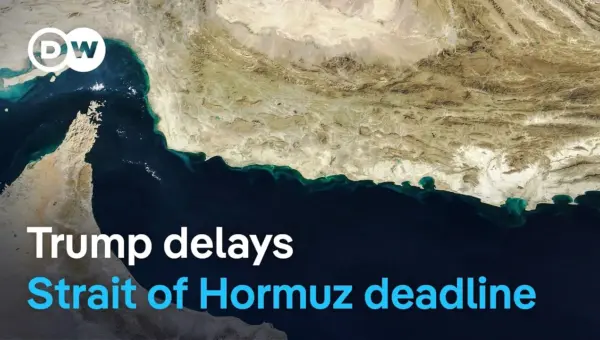
Trump Delays Iran Strike Deadline Amidst Shifting Diplomacy
President Donald Trump has extended his deadline for potential strikes on Iranian energy plants to April 6th, amid reports of U.S.-Iran diplomatic talks mediated by Pakistan. This move comes as Israel continues its strikes on Iran and the U.S. deploys additional military assets to the region. Analysts point to mixed signals, economic pressures, and strategic miscalculations as key factors shaping the evolving situation.
Iran War Claims Ring Hollow as US Troops Injured in New Attack
Days after Donald Trump claimed "we've won" the war with Iran, a new attack injured approximately a dozen U.S. troops and damaged aircraft. This incident contradicts Trump's assertions of victory and raises serious questions about the strategy and reality of the ongoing conflict.