Judge Blocks Subpoenas Against Fed Chair Powell
A federal judge has blocked subpoenas against Federal Reserve Chair Jerome Powell, citing evidence that the Justice Department sought to pressure him on interest rates. The ruling highlights concerns over the independence of the Federal Reserve.

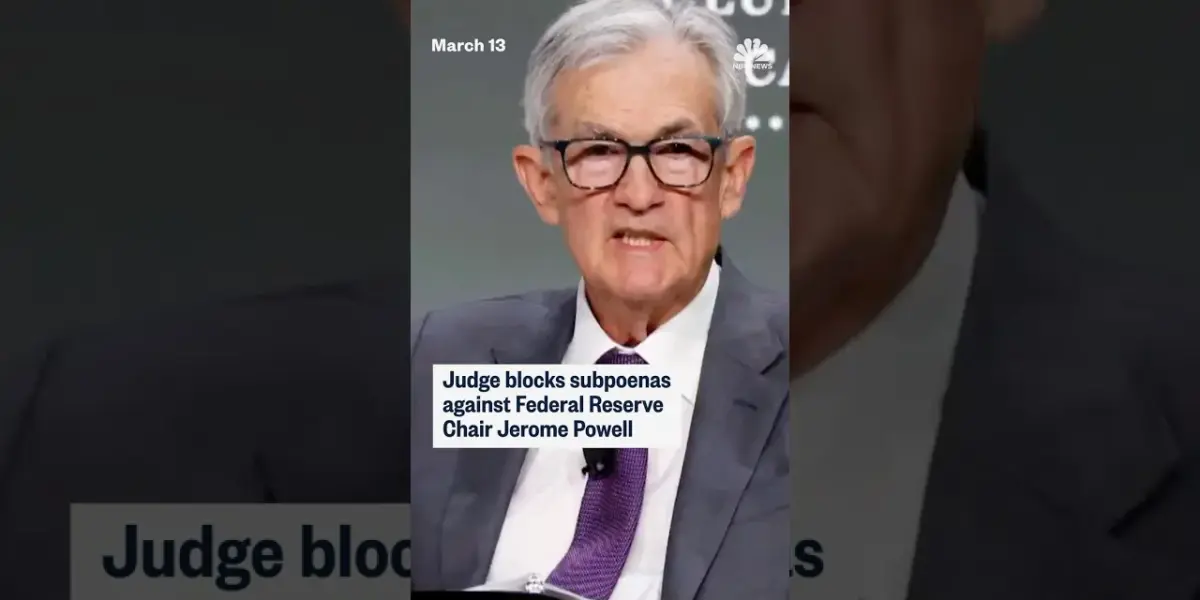
Judge Blocks Subpoenas Against Fed Chair Powell
A federal judge has blocked subpoenas issued by the Justice Department against Federal Reserve Chair Jerome Powell, ruling that the government’s actions were an attempt to improperly influence monetary policy. U.S. District Judge James Boasberg issued the ruling, stating that the subpoenas could not stand as they appeared designed to pressure Powell into lowering interest rates or resigning from his position.
Subpoenas Issued Over Office Renovations Testimony
The subpoenas were originally sent to Federal Reserve Chair Jerome Powell in January. They stemmed from his testimony regarding renovations to office buildings. The Justice Department, through U.S. Attorney Janine Piro for the District of Columbia, had sought Powell’s testimony and potentially more in relation to these renovations.
Judge’s Scathing Rebuke of Government’s Motives
Judge Boasberg’s decision was particularly critical of the government’s motivations behind issuing the subpoenas. In his ruling, he stated, “A mountain of evidence suggests that the government served these subpoenas on the board to pressure its chair into voting for lower interest rates or resigning.” The judge emphatically added, “This will not stand.”
“A mountain of evidence suggests that the government served these subpoenas on the board to pressure its chair into voting for lower interest rates or resigning.” – Judge James Boasberg
The judge contrasted the government’s actions with the lack of evidence against Powell. He noted that the government had produced “essentially zero evidence to suspect Chair Powell of a crime.” This stark imbalance formed a key part of the ruling against the subpoenas.
U.S. Attorney’s Office Defends Action, Cites Immunity
Despite the judge’s strong rebuke, the U.S. Attorney’s office for the District of Columbia, represented by Janine Piro, has voiced disagreement with the ruling. The office argued that Jerome Powell is “bathed in immunity” and therefore cannot be charged with a crime related to this specific situation. This assertion points to the complexities of legal protections afforded to high-ranking government officials.
However, the ruling does not grant Powell blanket immunity. The U.S. Attorney’s office clarified that while he may be protected from charges in this particular context, he is “not completely immune from anything” and could potentially face charges in other unrelated situations.
Broader Implications for Federal Reserve Independence
This legal battle raises significant questions about the independence of the Federal Reserve, a cornerstone of economic stability. The Federal Reserve operates with a mandate to set monetary policy free from direct political pressure. The issuance of subpoenas perceived as an attempt to influence interest rate decisions strikes at the heart of this independence.
Critics of the government’s actions argue that such attempts, even if ultimately unsuccessful, can create a chilling effect. The perception that the Fed’s decisions could be subject to political coercion, whether through legal means or otherwise, could undermine public trust and the effectiveness of monetary policy. The Federal Reserve’s ability to maintain price stability and foster maximum employment relies heavily on its credibility and autonomy.
The judge’s ruling, in this instance, appears to have upheld the principle of Fed independence by rejecting what he saw as an improper governmental overreach. However, the underlying tension between the executive branch’s oversight functions and the Federal Reserve’s autonomy remains a critical issue.
What’s Next?
While Judge Boasberg’s decision provides a temporary reprieve for Federal Reserve Chair Jerome Powell, the Justice Department may consider further legal avenues, such as an appeal. The ongoing dialogue regarding the boundaries of governmental oversight and the sanctity of independent monetary policy will undoubtedly continue to be a focal point. The Federal Reserve’s ability to operate without undue political influence will be closely watched by economists, policymakers, and the public alike.
Source: Judge blocks subpoenas against Federal Reserve Chair Jerome Powell (YouTube)

Related Articles


Iran Conflict Sparks Market Volatility, Experts Weigh In
Geopolitical tensions in the Middle East have rattled global markets, with stocks falling and safe-haven assets like the U.S. dollar strengthening. Experts suggest the market may have overreacted, creating potential buying opportunities, but warn of a "bumpy journey" ahead due to infrastructure damage and potential oil shortages. Concerns also linger about the Federal Reserve's independence amidst political commentary.


US Holds 8,000 Tons of Gold: A History Lesson
Discover how the U.S. amassed over 8,000 tons of gold, a journey that began with President Roosevelt's 1933 order and the Bretton Woods Agreement. Learn how this historical gold hoard shaped the dollar's global dominance and its eventual decline.


Rate Hike Fears Spark Market Sell-Off, Geopolitics Add Fuel
Markets are reeling as a surprising shift in Federal Reserve expectations, with rate hikes now being priced in, combines with escalating Middle East tensions. This has triggered a liquidity crunch across assets, impacting everything from stocks to bonds and gold.