Judge Blocks Pentagon Press Restrictions, Upholds Free Press
A federal judge has ruled against the Pentagon's controversial media restrictions, calling them unconstitutional in a win for press freedom. Meanwhile, President Trump's administration faces growing concerns over the impact of the Strait of Hormuz closure on global energy markets.


Court Rules Against Pentagon’s ‘Kremlin-esque’ Media Policies
In a significant victory for journalism, a federal judge has struck down controversial press restrictions imposed by the Pentagon. The ruling, handed down late today, declared the policies unconstitutional and a blow to press freedom. The case was brought forth by The New York Times, which sued the government over the restrictions implemented in October.
Pentagon’s Policy Under Fire
The restrictions, spearheaded by Secretary of Defense Pete Hegseth, would have allowed the Pentagon to revoke the credentials of any journalist who obtained and solicited information that the department had not explicitly authorized for release. This applied even to unclassified material. Many in the media world viewed these rules as overly harsh and reminiscent of policies seen in authoritarian states.
Dozens of news organizations refused to sign a pledge agreeing to these new terms, highlighting widespread opposition. The New York Times’ decision to sue underscored the severity of the perceived threat to journalistic independence.
“The court recognizes that national security must be protected, the security of our troops must be protected, and war plans must be protected. But especially in light of the country’s recent incursion into Venezuela and its ongoing war with Iran, it is more important than ever that the public have access to what its government is doing so that the public can support government policies if it wants to support them, protest if it wants to protest and decide based on full, complete and open information who they are going to vote for in the next election.”
– Judge Paul Friedman
Judge Emphasizes Public’s Right to Know
In his ruling, Judge Paul Friedman strongly supported the public’s right to access information about their government’s actions. He emphasized that this access is crucial for informed decision-making, particularly during times of conflict. The judge stated that the public needs complete and open information to decide whether to support government policies, protest them, or choose their elected officials.
The ruling comes at a critical juncture, with the nation involved in ongoing military actions. The importance of a free press to hold the administration accountable was highlighted as essential for understanding the realities of these conflicts.
President Downplays Impact of Strait of Hormuz Closure
Meanwhile, President Trump has been downplaying the severity of the ongoing crisis involving the Strait of Hormuz, a vital oil shipping route. He suggested that the closure is not a major issue for the United States, stating that the country does not rely heavily on the strait and is managing well.
However, experts and the head of the International Energy Agency paint a different picture. The closure of this route, which accounts for about 20% of the world’s oil, is expected to significantly impact global energy markets. This could lead to substantial price increases for consumers, with gas prices already seeing a notable jump.
Economic Warnings and Military Preparations
The International Energy Agency has issued a dire warning, calling the current situation the greatest threat to global energy in history. They estimate it could take six months or longer to fully restore oil and gas flows. Reports indicate that gas prices are heading towards $4 a gallon, a significant increase in a short period.
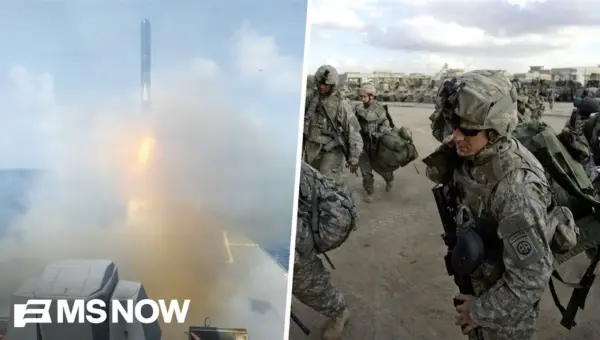
Despite the President’s assurances, there are signs of escalating military involvement. The U.S. military is reportedly sending thousands of additional troops to the Middle East. Furthermore, there are preparations for deploying U.S. ground forces into Iran, with a significant funding request made to support these operations. This indicates a potential for a prolonged and costly conflict, contradicting the President’s public statements.
Conflicting Signals on War Strategy
Adding to the confusion, the Treasury Department announced a temporary lifting of sanctions on Iranian oil already at sea. This move appears aimed at easing oil prices but seems to conflict with the broader military posture. The administration’s actions suggest a potential escalation of the conflict, despite the President’s rhetoric suggesting otherwise.
The discrepancy between President Trump’s public statements and the actions of his administration creates uncertainty. While he downplays the crisis and suggests winding down military efforts, the deployment of troops and preparations for ground operations point towards a deepening involvement in the conflict.
Looking Ahead
The coming days will be crucial in determining the true direction of U.S. policy regarding the Strait of Hormuz and the ongoing conflict. The public will be watching closely to see if the administration’s actions align with its words and how the energy crisis unfolds. The legal precedent set by the judge’s ruling on press freedom will also continue to shape the relationship between the government and the media during this critical period.
Source: Judge hands Hegseth HUGE DEFEAT on media restrictions as Trump continues to wing it on Iran (YouTube)

Related Articles

Trump Halts Iran Strikes Amid Stalled Diplomacy
President Trump announced a pause on planned strikes against Iran, citing productive talks, though Iran denies negotiations occurred. Reports also suggest a potential U.S. ground operation on Iran's Hark Island. The situation raises concerns about international support for Ukraine and potential shifts in U.S. foreign policy.
Iran’s Missile Threat Reduced by 90%, Analyst Says
An analyst reports that Operation Epic Fury has degraded Iran's missile launchers by 90%, despite challenges in targeting hidden sites. The conflict's duration and media coverage are also discussed, with implications for global energy markets and investor confidence.
Iran Missile Strikes Injure US Troops, Raise War Concerns
Iranian missile strikes have injured U.S. service members, escalating tensions as the conflict nears one month. The attacks are raising concerns about the effectiveness of U.S. military strategy and the depletion of crucial missile stockpiles. Global oil prices have surged, impacting economies worldwide.