Journalist Luke Harding on Russia’s War and Ukraine’s Global Fate
Journalist Luke Harding shares his insights on Russia's war in Ukraine, drawing from his personal experiences with the FSB in Moscow. He warns that Putin's ambitions extend beyond Ukraine, potentially threatening European stability and the future of democracy.

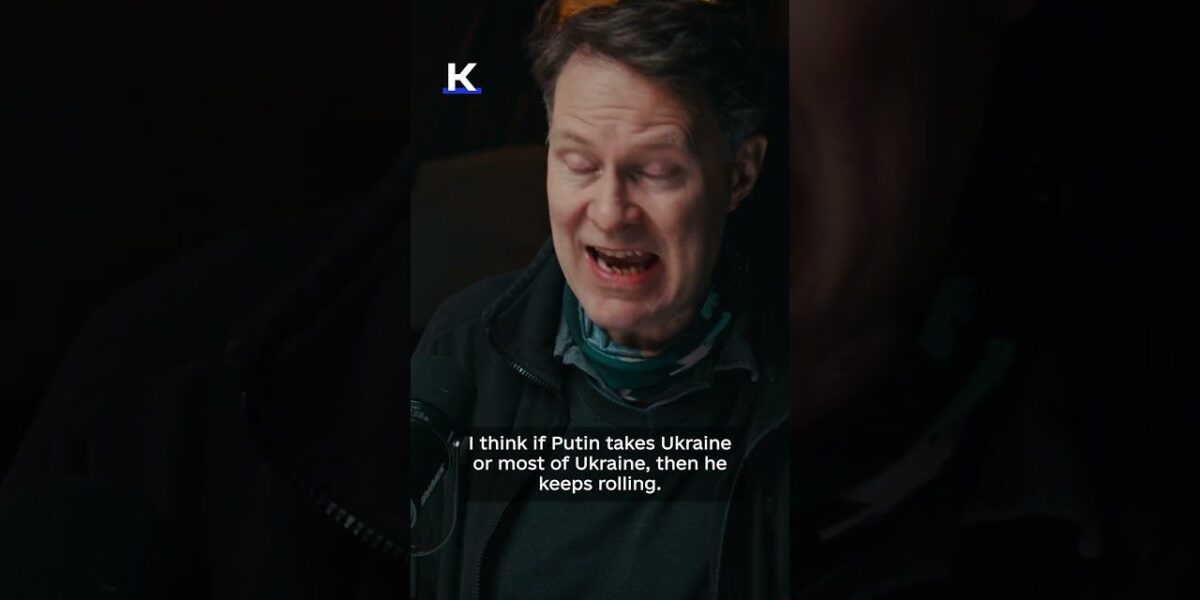
Russia’s War in Ukraine: A Journalist’s Perspective
Award-winning journalist Luke Harding, a veteran correspondent with extensive experience reporting from Moscow, has offered a stark assessment of Russia’s ongoing war in Ukraine, emphasizing its profound global implications. Harding, who served as The Guardian’s bureau chief in Moscow from 2007 to 2011, detailed his personal experiences with the Kremlin’s security apparatus and explained why he believes Russia’s aggression extends far beyond Ukraine’s borders, potentially threatening the stability of Europe and the future of liberal democracy.
Personal Encounters with the Kremlin
Harding recounted a period of intense scrutiny and harassment during his tenure in Moscow. “I spent four years in Moscow as the Guardian’s bureau chief between 2007 and 2011 and it was a pretty torrid time,” he stated. “I was there with my family. We were pursued by the FSB, Vladimir Putin’s spy agency, bro, you know, broke into our family apartment, put bugs in the ceiling and we think video.” This experience, coupled with “various kind of unsubtle hints that it would be better if I left and the Guardian said someone else,” provided Harding with an early and clear understanding of the nature of the Kremlin regime.
He elaborated on this understanding: “I understood the nature of the Kremlin regime. In other words, that it wasn’t just domestically repressive and would beat up students demonstrating against Putin, but it was internationally adventurous and dangerous.” This insight proved prescient as Russia’s actions escalated in the years that followed.
Foreshadowing the Invasion
Harding asserted that he recognized the signs of impending escalation long before the full-scale invasion of Ukraine in February 2022. “You know, when it came to the takeover of Crimea, the covert war started in 2014 by by by Russ, really Russia’s intelligence agencies in the east of Ukraine and the full-scale invasion, I was basically telling everybody, it’s going to happen. He’s going to do it,” Harding explained. His reasoning was rooted in a deep understanding of Putin’s mindset: “Um because with Putin, you always bet on the worst.”
A Moral Duty to Report
With nearly two decades of visits to Ukraine under his belt, Harding feels a profound responsibility to cover the conflict. “And so for me, reporting on Ukraine, you know, which I’ve been visiting for almost 20 years, I sort of feel I’ve got a moral duty to do it actually to to to tell this story,” he said. This sense of duty is amplified by his conviction that Putin’s ambitions are not limited to Ukraine.
The Specter of a Resurgent Russian Empire
Harding articulated a chilling prediction about Putin’s long-term goals. “I don’t think Putin stops with Ukraine. I think if Putin takes Ukraine or most of Ukraine, then he keeps rolling,” he warned. “He wants to reconstitute a new old Russian empire taking in the Baltic states, with Ukraine as a kind of centerpiece, maybe rolling into Poland. I mean, I mean, there’s no limit to his fantasy. He he lives in a delusional parallel world.” This vision paints a grim picture of a resurgent Russian expansionism that could destabilize the entire European continent.
Kyiv as the Crucible of 21st Century Destiny
The journalist drew a powerful parallel between present-day Kyiv and Cold War-era Berlin, positioning the Ukrainian capital as a critical battleground for the future of global order. “It seems to me that that Kyiv is the place where the destiny of the 21st century is going to be decided. A bit like Berlin during the Cold War,” Harding stated. He emphasized the stakes involved: “If Kyiv stands, then um democracy stands, international law means something. You know, liberal values still still exist in this new bleak world where you’ve got Putin and Trump and Xi trying to kind of divide everything up into into hemispheres and spheres of influence.”
The Alternative: An Epoch of Nihilism
Conversely, Harding painted a bleak picture of a world where Ukraine falls to Russian aggression. “And if um Ukraine falls there, we’re in a kind of epoch of nihilism um and darkness,” he concluded. This stark dichotomy underscores the significance of the conflict, framing it not merely as a regional war but as a pivotal moment that will shape international relations and the very principles of governance for decades to come.
Looking Ahead
Harding’s analysis serves as a critical reminder of the far-reaching consequences of Russia’s invasion of Ukraine. As the conflict continues, the world watches closely to see whether the principles of democracy and international law will prevail, or if a new era of authoritarian influence and geopolitical instability will dawn. The resilience of Ukraine, and the international support it receives, will undoubtedly be a defining factor in this unfolding global narrative.
Source: Luke Harding on reporting Russia’s war and why Ukraine’s fate matters globally (YouTube)

Related Articles
Ex-Russian President Medv’s Stark War Ultimatum Revealed
Former Russian President Dmitry Medvedev has reaffirmed Moscow's non-negotiable demands for ending the war in Ukraine, directly linked to Vladimir Putin's public conditions. His statements dismantle illusions of compromise and suggest a prolonged conflict, as the stated goals remain vague and open-ended.
West Targets Russian Oil: A New Era of Sanctions
New Western sanctions directly target Russia's oil revenue, aiming to cripple the financial engine of its war effort. This strategic shift, previously delayed, now pressures the Kremlin's budget and undermines Putin's image of control. The move forces global companies to choose between U.S. financial access and Russian oil trade, signaling a potentially severe economic and political blow.

Kremlin’s Ceasefire Refusal Exposes Deliberate War Continuation
Kremlin spokesperson Dmitry Peskov's repeated rejections of ceasefire proposals reveal a deliberate strategy to prolong the conflict. By cloaking refusals in complex diplomatic language and redefining "peace," Moscow aims to prevent its populace from realizing that an end to hostilities is a choice, not an inevitability.