Johnson’s Voter Threat: GOP Panic on Full Display
House Speaker Mike Johnson's recent remarks warning voters against opposing Republicans are analyzed as a sign of GOP panic. Critics argue this confrontational approach, coupled with the use of undefined ideological labels, signals a departure from substantive policy debate.

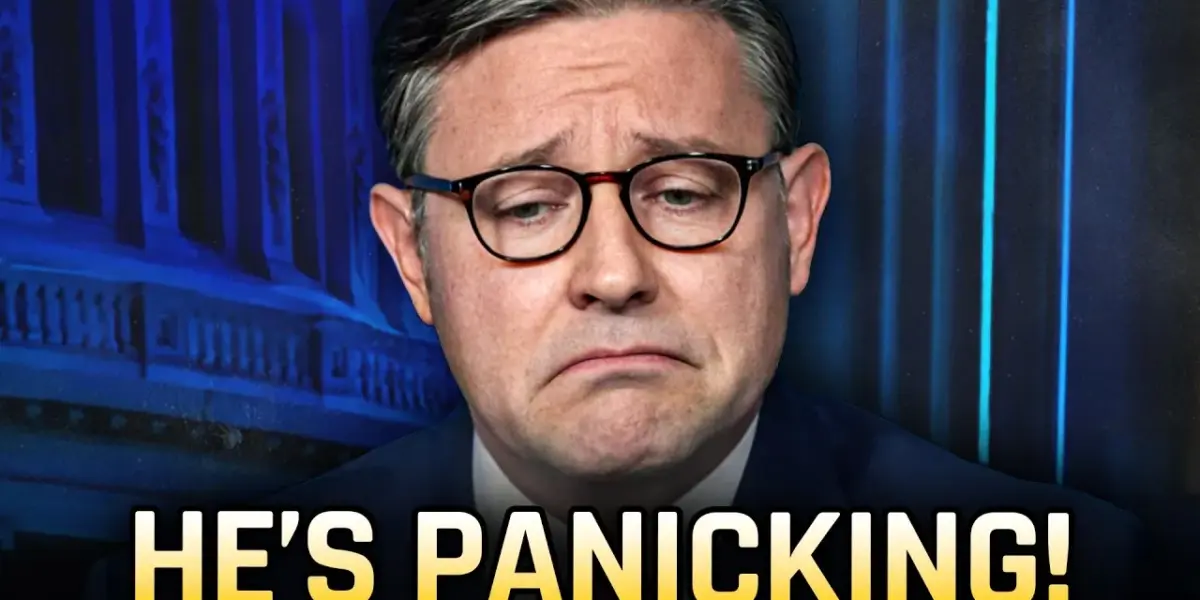
Johnson’s Voter Threat: GOP Panic on Full Display
As the United States approaches a critical midterm election cycle, a palpable sense of anxiety appears to be gripping the Republican party. Instead of focusing on legislative achievements that could resonate with the broader electorate, the party, under the leadership of House Speaker Mike Johnson, seems to be resorting to a more combative and, some argue, desperate strategy: threatening voters. This approach, exemplified by Johnson’s recent remarks at a press conference in Florida, signals a potential shift in Republican campaign tactics, moving away from policy persuasion towards a more confrontational stance.
The “Foolish” Voter Gambit
Mike Johnson’s recent statement, delivered from Donald Trump’s Doral Golf Resort, carried a stark warning: “It would be a very foolish thing to vote against us. That’s my advice to you. Okay? Don’t be a fool. Don’t vote against us.” This assertion is particularly striking given the historical context of midterm elections, where the party controlling the White House often faces significant headwinds. Johnson’s claim that House Republicans have “defied expectation and historical trends” is met with skepticism by critics, who point to a perceived lack of legislative output under his leadership.
According to the transcript, the House of Representatives, since Johnson took over, has passed the “fewest amount of bills ever” in comparable time periods. Furthermore, there has been a consistent failure to pass a fullyear funding bill, with the chamber relying on continuing resolutions. This legislative inertia, critics argue, undermines Johnson’s narrative of success and makes his admonition to voters appear less like strategic advice and more like an admission of weakness, masked by an aggressive tone.
Weaponizing Ideological Labels
Beyond the direct admonition, Johnson also employed familiar Republican rhetoric by characterizing the Democratic party as being controlled by “Marxists, open socialists, the far-left insurgent politicians, and the activist based.” This broad-brush labeling, while a common tactic in political discourse, is also highlighted as a point of contention and confusion. The transcript challenges the efficacy and sincerity of such labels, suggesting that many politicians who employ them may not be able to articulate their precise meaning.
The transcript directly questions the understanding of these terms: “I want a reporter to look any one of these Republican politicians in the eyes when they say that word and I want you to say, ‘Stop right there. Hang on. Define Marxist for me. What does it mean?'” The assertion is made that most politicians would be unable to define these terms on the spot, implying their use is more for rhetorical effect than for substantive political analysis.
This strategy of deploying ideological labels without clear definition is presented as a tactic to mobilize a base through fear and association, rather than through policy debate. The comparison to creating a nonsensical term like “smallysters” to describe Republicans underscores the argument that such political jargon, when undefined, loses its meaning and becomes mere noise.
Historical Context and Midterm Malaise
Midterm elections in the United States have historically been challenging for the party holding the presidency. This phenomenon, often referred to as “midterm malaise,” is typically attributed to a variety of factors, including voter fatigue with the incumbent party, a desire for a check on power, and the natural ebb and flow of political sentiment. For the party out of power, midterms present an opportunity to regain ground and influence.
The Republican party, facing potential losses, appears to be operating under the assumption that a strong, perhaps even aggressive, stance is necessary to counter historical trends. However, the approach taken by Johnson, particularly the “foolish voter” rhetoric and the reliance on undefined ideological attacks, raises questions about its long-term effectiveness. Instead of offering solutions or a compelling vision, the strategy seems to hinge on discouraging opposition rather than inspiring support.
Why This Matters
The current political climate, characterized by deep polarization and a sometimes-frantic pace of news cycles, makes the strategies employed by political leaders particularly impactful. Mike Johnson’s confrontational rhetoric and the broader Republican party’s apparent strategy of evoking fear and confusion over policy substance have significant implications:
- Erosion of Substantive Debate: When political discourse devolves into name-calling and undefined ideological labels, it stifles meaningful discussion about the complex issues facing the nation. Voters are left with soundbites rather than policy specifics.
- Voter Disengagement: While aggressive tactics might energize a base, they can also alienate undecided or moderate voters who may be put off by what they perceive as negativity or a lack of constructive proposals.
- Accountability and Governance: The criticism regarding the low legislative output under Speaker Johnson’s tenure suggests a potential disconnect between the party’s stated goals and its actual performance. This raises questions about accountability and the effective functioning of Congress.
Implications, Trends, and Future Outlook
The strategy of threatening voters and using undefined ideological attacks could become a more pronounced trend if it is perceived to yield any electoral success. However, it carries significant risks. It could further entrench partisan divides, making bipartisan cooperation even more difficult. It might also backfire, with voters perceiving the tactics as arrogant or out of touch, leading to a backlash.
The future outlook for the Republican party, and indeed for American political discourse, hinges on whether such strategies are seen as sustainable or as a sign of desperation. A focus on tangible policy achievements and clear communication of a vision for the country would likely be a more robust path to electoral success in the long run. Conversely, a continued reliance on fear-mongering and voter admonishments could lead to further polarization and a potential disconnect with a broader electorate seeking substantive solutions to pressing national problems.
Source: Panicked Mike Johnson Starts Threatening Voters (YouTube)

Related Articles
House Republicans Reject Senate Deal, Sparking Government Funding Clash
House Republicans have rejected a Senate bill to end the government shutdown, citing insufficient border security measures. Congressman Randy Fine called the Senate deal a "disgrace" and highlighted the ongoing fight for full government funding. President Trump's executive order to pay TSA agents offers temporary relief, but the core disagreement over border security continues to paralyze Washington.

Trump’s Name Everywhere: A ‘Stain’ on GOP Legacy?
Former President Donald Trump's efforts to brand national symbols, including a proposed signature on dollar bills, spark debate. Critics view this as an authoritarian attempt to embed his legacy, potentially staining the Republican Party's history and contrasting with democratic ideals of public ownership.


Trump’s Inner Circle Shields Him From War Reality
President Trump reportedly receives heavily filtered updates on the conflict with Iran, focusing on successes while downplaying setbacks. This intentional information control aims to maintain his belief in a decisive victory, but raises concerns about his ability to make informed decisions.