Jeep’s Dynamic Duo: Cherokee vs. Grand Cherokee Showdown
Jeep's 2026 Cherokee and Grand Cherokee offer distinct choices for SUV buyers. The all-new Cherokee focuses on efficiency with its hybrid powertrain and compact size, while the updated Grand Cherokee provides more power, towing capability, and luxury.


Jeep’s Dynamic Duo: Cherokee vs. Grand Cherokee Showdown
Jeep is reigniting a beloved nameplate with the all-new 2026 Cherokee, while simultaneously updating its established Grand Cherokee for the model year. While their names might suggest kinship, these two SUVs offer distinctly different propositions for potential buyers. This in-depth comparison explores the key differences, helping you navigate the choices and determine which Jeep best suits your needs.
A Tale of Two Sizes and Styles
The most immediate distinction between the 2026 Cherokee and Grand Cherokee is their physical footprint. The new Cherokee is a more compact offering, measuring approximately 113 inches in wheelbase. This makes it a more manageable proposition for tight garages and urban maneuverability. In contrast, the Grand Cherokee is a larger vehicle, with a wheelbase ranging from 117 inches for standard models to a substantial 122 inches for the three-row variant. This size difference translates to a more imposing road presence for the Grand Cherokee, which adopts a slightly brisker, more upright stance.
Styling-wise, both vehicles benefit from Jeep’s contemporary design language, which blends sleek aerodynamics with the rugged cues expected from the brand. However, subtle differences emerge. The new Cherokee features a distinctive rear end that drops off sharply, accented by jerry can-inspired taillights and sharp edges. The Grand Cherokee, on the other hand, presents a slightly smoother, more rounded, and aerodynamic rear profile.
Powertrain and Efficiency: The Hybrid Heart vs. The Potent Heart
Under the hood is where the divergence becomes even more pronounced, particularly for those prioritizing fuel efficiency. The 2026 Jeep Cherokee makes a significant statement with its standard hybrid powertrain. It pairs a 1.6-liter turbocharged four-cylinder engine with a two-electric motor hybrid system, driven by an EVT (Electronically Controlled Continuously Variable Transmission) featuring a planetary gear set for enhanced durability over traditional CVTs. This setup not only provides standard all-wheel drive but also delivers an impressive EPA-estimated 37 MPG combined. Jeep claims a potential driving range of up to 500 miles on a single 14-gallon tank, positioning the Cherokee as the clear efficiency champion.
The Grand Cherokee offers a choice of two powertrains. The traditional option is the robust, naturally aspirated Pentastar V6. However, the more premium and powerful choice is the new 2.0-liter four-cylinder engine. This advanced unit churns out a healthy 324 horsepower and 332 lb-ft of torque, paired with a traditional eight-speed automatic transmission. While this offers a significant performance boost over the Cherokee’s hybrid system, it comes with a notable trade-off in fuel economy. The 2.0-liter Grand Cherokee achieves an EPA-estimated 23 MPG combined. Furthermore, while the Cherokee comes standard with all-wheel drive, some base Grand Cherokee models are rear-wheel drive, requiring an optional upgrade for four-wheel-drive capability – a feature many Jeep buyers expect as standard.
Capability and Utility: Towing and Off-Road Prowess
When it comes to capability, the Grand Cherokee pulls ahead decisively, especially for those with demanding towing needs. The Cherokee can tow up to an estimated 3,500 pounds when properly equipped, suitable for smaller trailers, jet skis, or light recreational gear. The Grand Cherokee, however, significantly ups the ante, boasting a maximum towing capacity of 6,200 pounds. This allows it to handle larger campers, small boats, or utility trailers with ease.
While neither vehicle is designed to be a Wrangler, the Grand Cherokee offers greater off-road potential for those who venture beyond paved roads. It can be optioned with features like adjustable air suspension and a low-range gear set, providing enhanced capability for tackling challenging terrain. The Cherokee, while capable as a standard all-wheel-drive vehicle, does not offer these more extreme off-road features.
Interior Comfort and Technology: A Tiered Approach
The interiors of the Cherokee and Grand Cherokee reflect their differing market positions. The Cherokee, even in higher trims, leans towards a more utilitarian and entry-level feel. It features a 10.25-inch digital instrument cluster and a 12.3-inch central touchscreen, with climate controls integrated into a single panel. While comfortable enough for daily use, the materials are generally less premium, with noticeable use of plastics on the door cards. Rear-seat passengers will find ample legroom and headroom, a testament to clever packaging, though creature comforts are more basic. Notably, the Cherokee omits a spare tire, opting instead for an inflator kit.
The Grand Cherokee, particularly in higher trims like the Summit, offers a more luxurious and feature-rich experience. The interior can be optioned in eye-catching color combinations, like the described butterscotch, and boasts premium features such as a McIntosh audio system. While some elements, like the climate control panel and rotary gear selector, are shared with the Cherokee, the Grand Cherokee offers a more refined overall ambiance. Rear-seat occupants benefit from more amenities, including heated and ventilated outboard seats, dedicated climate controls, and additional power outlets. The materials and overall quality are a significant step up from the Cherokee. Furthermore, the Grand Cherokee retains a spare tire in the cargo area, a practical inclusion for a vehicle of its type.
Value and Target Audience
Pricing plays a crucial role in defining the target buyer for each model. The 2026 Jeep Cherokee has a theoretical starting price of around $37,000, including destination. At this price point, it comes standard with all-wheel drive and the efficient hybrid powertrain. As tested, a mid-grade Cherokee approached $43,000.
The 2026 Grand Cherokee starts at approximately $40,000, including destination. However, it’s important to note that this base price may not include all-wheel drive. As you move up the trim levels and add options, the price can escalate significantly. A fully loaded Grand Cherokee Summit, as described, can reach around $66,000. This wide price spectrum allows the Grand Cherokee to cater to a broader range of budgets and desires, from those seeking a well-equipped, powerful SUV to those desiring ultimate luxury and capability.
Verdict
The 2026 Jeep Cherokee and Grand Cherokee are distinct vehicles designed for different priorities. The Cherokee is the pragmatic choice for buyers seeking excellent fuel economy, manageable dimensions, and standard all-wheel-drive capability in a more compact package. It’s ideal for smaller families, urban dwellers, or anyone prioritizing efficiency and lower running costs.
The 2026 Grand Cherokee is the more versatile and luxurious option. It appeals to those who need greater towing capacity, more available off-road features, a more spacious interior, and a higher level of refinement. Whether you opt for the potent V6 or the powerful 2.0-liter turbo, the Grand Cherokee offers a more premium and capable experience, with the added flexibility of a potential three-row configuration for larger families.
Source: Compared – 2026 Jeep Cherokee vs 2026 GRAND Cherokee: Here’s How They Differ! (YouTube)

Related Articles


Hyundai Palisade Hybrid: A Hybrid SUV That Challenges EVs
The Hyundai Palisade Hybrid Calligraphy offers a luxurious and feature-rich experience that significantly undercuts the price of entry-level electric SUVs like the Rivian R1S. This raises questions about the current value proposition of EVs for the average consumer.

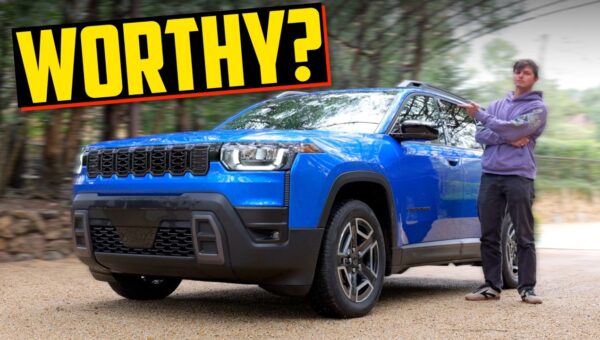
2026 Jeep Cherokee: A Hybrid SUV Reimagined
The 2026 Jeep Cherokee arrives with a significant hybrid powertrain, standard all-wheel drive, and a refreshed, rugged exterior design. It aims to balance efficiency with Jeep's traditional capability, offering up to 37 mpg combined and a comfortable ride for daily driving.

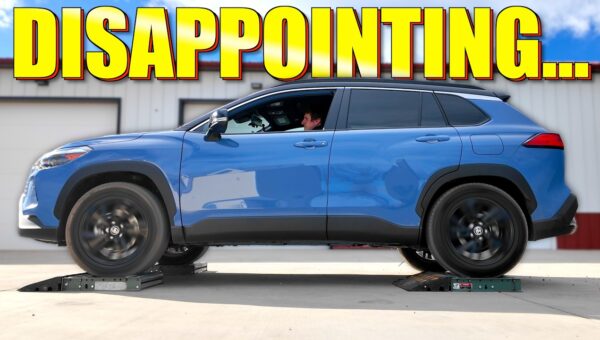
2026 Toyota Corolla Cross: Capable Crossover or All-Wheel Assist?
The 2026 Toyota Corolla Cross hybrid was put to the test on slip surfaces and a moderate off-road trail. While it offers a comfortable interior and impressive fuel economy, its e-AWD system showed significant limitations under demanding conditions, raising questions about its true crossover capability.