Jeb Bush’s Trump Praise Exposes GOP’s War-Hungry Core
Jeb Bush's endorsement of Donald Trump's military actions against Iran, issued through his organization United Against a Nuclear Iran, has sparked debate. The move highlights a complex interplay of past grievances, strategic alignment, and the enduring hawkish sentiment within certain Republican circles, drawing parallels to past interventions.

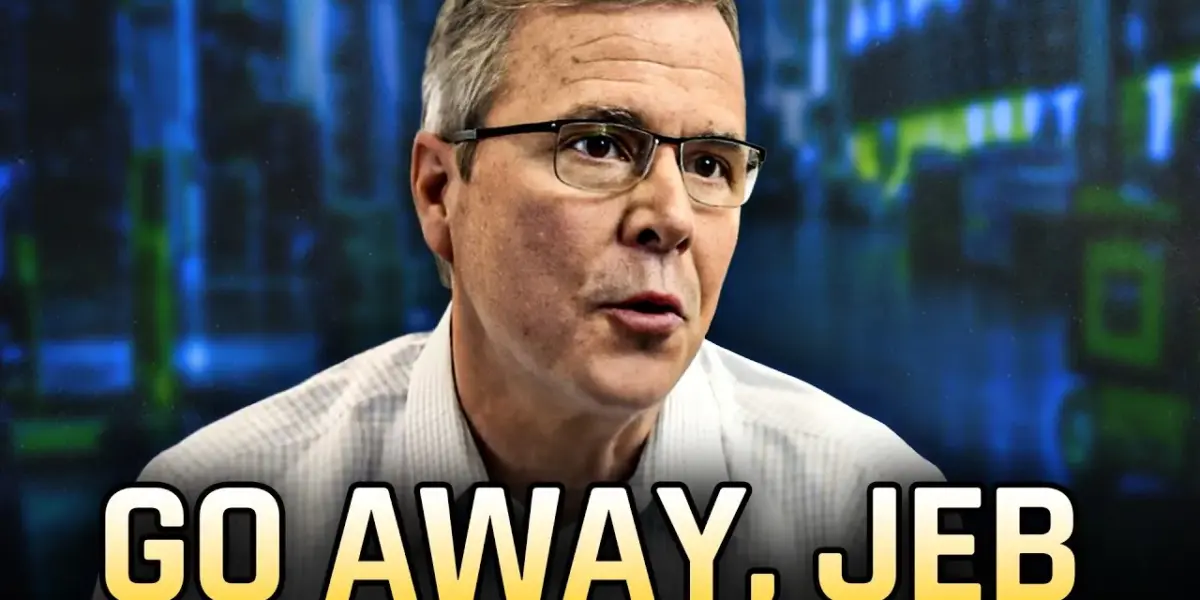
Jeb Bush’s Trump Praise Exposes GOP’s War-Hungry Core
In a political twist that feels both predictable and profoundly ironic, former Florida Governor and presidential candidate Jeb Bush has resurfaced from a period of relative quiet to offer a ringing endorsement of Donald Trump’s foreign policy decisions. Specifically, Bush, through his organization United Against a Nuclear Iran (UAI), released a statement commending Trump for his “courageous decision to launch this military operation” against the Iranian regime. This move is particularly noteworthy, given Trump’s history of brutal attacks on the Bush family, especially Jeb himself, during the 2016 election cycle, and his sustained criticism of George W. Bush’s administration throughout his political career.
The statement, co-signed by UAI co-founder Mark Wallace, lauded “American and Israeli service members carrying out this historic mission against the Iranian regime.” It further stated, “We applaud President Trump for his courageous decision to launch this military operation. For 47 years, the Iranian regime has unleashed terror, violence, and misery against its own people and across the region while threatening the United States, Israel, and our allies. The president engaged extensively and in good faith to achieve a diplomatic solution. The regime chose escalation and continued its pursuit of nuclear weapons. The responsibility for this moment rests squarely with Ayatollah Khamenei.”
A Familiar Echo of Interventionism
The immediate reaction to this statement from many observers has been one of bemused disbelief, bordering on cynicism. The core of the criticism lies in the perceived hypocrisy of a figure like Jeb Bush, who was once a target of Trump’s sharpest political barbs, now aligning himself with Trump’s actions, particularly when those actions involve military intervention in the Middle East. It raises questions about principles versus pragmatism, and whether the long-standing Republican foreign policy establishment’s appetite for military engagement has simply found a new, albeit unlikely, champion in Donald Trump.
The transcript criticizes the notion that Trump “engaged extensively and in good faith to achieve a diplomatic solution,” arguing that he instead “literally killed the negotiation that had already taken place and been finalized and signed years prior” by withdrawing from the Joint Comprehensive Plan of Action (JCPOA), the Iran nuclear deal brokered under the Obama administration. The argument presented is that this framework was effectively crippling Iran’s nuclear program and that Trump’s unilateral withdrawal dismantled a working agreement, thereby necessitating a more confrontational approach.
The Ghost of Wars Past
This situation is further contextualized by drawing parallels to the lead-up to the Iraq War. The transcript points out the Bush administration’s justification for the Iraq invasion—the alleged existence of weapons of mass destruction (WMDs)—and contrasts it with the current justification for action against Iran—the pursuit of nuclear weapons. The underlying sentiment is that a familiar pattern of pre-emptive action and the invocation of existential threats is being repeated, with the Bush family, ironically, now praising the very figure who once so vehemently attacked them for perceived foreign policy failures.
The involvement of John Bolton, who advised Jeb Bush and previously served in the George W. Bush administration, is also highlighted. Bolton is characterized as a consistent advocate for aggressive foreign policy, particularly concerning Iran. The implication is that the push for military action is not merely a Trump initiative but is fueled by a longer-standing hawkish faction within conservative foreign policy circles, a faction that includes prominent figures with deep ties to the Bush family’s previous foreign policy endeavors.
Hypocrisy or Strategic Realignment?
From one perspective, Jeb Bush’s statement can be seen as a strategic realignment. His organization, United Against a Nuclear Iran, has a singular focus: preventing Iran from acquiring nuclear weapons. If the leadership of this group genuinely believes that Trump’s actions, however controversial or politically charged, are the most effective means to achieve this objective, then their endorsement, while jarring, is consistent with their stated mission. In this view, the praise is less about personal loyalty to Trump and more about a pragmatic assessment of the situation, prioritizing the prevention of a nuclear-armed Iran above past grievances or political animosities.
However, the counter-argument, as presented in the transcript, is that this is not pragmatism but a deeply ingrained ideological stance that prioritizes military solutions and displays a selective memory regarding the consequences of such interventions. The critique suggests that the Bush family, despite experiencing the fallout from previous wars, remains eager for further military engagement, and that Trump, in his willingness to act unilaterally and decisively, has become the de facto leader of this faction, even if his rhetoric has historically been antagonistic towards them.
The transcript humorously notes the irony of the Bush family praising Trump for actions that echo those of George W. Bush, actions that Trump himself spent years denigrating. It frames this as the Bush family “emulating what they did” and then receiving praise from the very person who trashed them for it. This highlights a perceived lack of consistent principles, suggesting that the pursuit of certain foreign policy objectives, particularly regarding perceived threats in the Middle East, can override personal or political animosities.
Why This Matters
This episode underscores a significant trend within the Republican Party: the enduring influence of a hawkish foreign policy establishment, even as its figureheads and rhetorical styles evolve. The endorsement from Jeb Bush, a symbol of a more traditional Republicanism, for Donald Trump, the disruptor-in-chief, signifies a potential consolidation of power around a shared, albeit sometimes ideologically fluid, approach to international relations. It suggests that for a segment of the GOP, the perceived threat from Iran and the belief in decisive military action are paramount, overriding past criticisms and personal slights.
Furthermore, it raises questions about the efficacy and wisdom of foreign interventions. The historical context of the Iraq War, with its devastating consequences and questionable justifications, looms large. The parallel drawn to the current situation with Iran suggests a potential for repeating past mistakes, driven by a combination of genuine security concerns and a persistent belief in the utility of military force as a primary tool of statecraft. The commentary implies a self-serving narrative where the U.S. (and implicitly, its allies like Israel) are the sole arbiters of responsible power, a notion starkly contradicted by the historical use of nuclear weapons.
Implications, Trends, and Future Outlook
The implications of this alliance are multifaceted. For Trump, it offers a degree of validation from a traditional Republican foreign policy wing, potentially broadening his appeal within the party. For the Bush wing of the GOP, it represents a pragmatic, albeit uncomfortable, alignment with a leader who, in this instance, appears to be acting in ways they deem necessary for national security. This could signal a future where ideological purity takes a backseat to perceived strategic imperatives, particularly on issues of national defense and foreign threats.
The trend toward interventionism, even under a president who campaigned on an “America First” platform that often suggested a withdrawal from global conflicts, is evident. The statement from UAI and Bush suggests that when faced with specific perceived threats, the impulse for robust, often military, responses remains strong within influential circles of American foreign policy. This raises concerns about the potential for escalating conflicts and a continued reliance on military solutions over diplomatic ones, despite the lessons of recent history.
Looking ahead, the interplay between Trump’s populist nationalism and the more traditional hawkish elements of the GOP will continue to shape American foreign policy. The endorsement from Jeb Bush suggests that these factions can find common ground when a perceived existential threat is on the horizon. The future outlook may involve a continued willingness to engage in military operations, justified by rhetoric about rogue states and WMDs, a pattern that has proven costly and destabilizing in the past. The irony of a Bush praising Trump for an action reminiscent of a Bush presidency, while Trump himself built his brand on denigrating that very presidency, serves as a potent, if darkly humorous, commentary on the evolving landscape of American politics and its enduring foreign policy debates.
Source: Jeb Bush Returns from the Dead to Praise Trump (YouTube)

Related Articles

UK PM Must Court Trump Despite Party Backlash
British Prime Minister Keir Starmer faces a difficult balancing act, needing to maintain a crucial relationship with the US President despite domestic criticism. Rising global tensions and economic instability add further pressure, complicating the government's agenda and public finances.


Iran Appoints New Leader Amid Escalating Global Tensions
Iran has appointed Mojtaba Khamenei, son of the former leader, as its new Supreme Leader amidst escalating international conflict. The war has driven oil prices to record highs, impacting global markets and American consumers. Meanwhile, the U.S. military toll rises, and travel faces significant disruption due to the government shutdown.


GOP Shifts: Record Republicans Back Abolishing ICE
A new poll reveals a majority of Americans, including a record number of Republicans, now support abolishing ICE. The findings highlight widespread public concern over the agency's practices and a growing demand for reform or replacement.