JD Vance’s ‘Far-Left’ Allegation: Unpacking the Rhetoric on Sex Offenders and Criminal Justice Reform
Senator J.D. Vance recently accused “the entire far-left,” including Minneapolis Mayor Jacob Frey, of “letting violent sex offenders stay on the streets of America,” igniting a contentious debate on criminal justice reform. This article unpacks Vance's potent rhetoric, exploring the complexities of sex offender management, the tenets of progressive justice reform, and how such highly charged political statements shape public perception and policy discussions in America.

JD Vance’s ‘Far-Left’ Allegation: Unpacking the Rhetoric on Sex Offenders and Criminal Justice Reform
In a recent public statement, Ohio Senator J.D. Vance launched a potent accusation against what he termed “the entire far-left,” specifically citing Minneapolis Mayor Jacob Frey, for allegedly “letting violent sex offenders stay on the streets of America.” This stark claim, delivered with characteristic directness, immediately sparked debate, positioning itself firmly within the ongoing national discourse on criminal justice reform, public safety, and the ideological battle lines drawn around these critical issues. While the transcript offers only a brief glimpse into Vance’s assertion and a subsequent comment hinting at “irony” for Democrats, it opens a wide avenue for a comprehensive examination of the complex policies, political strategies, and societal anxieties at play when discussing the management of sex offenders and the broader push for criminal justice reform.
Vance’s statement is not merely a critique of a specific policy; it is a rhetorical maneuver that seeks to define and condemn an entire ideological spectrum. By linking “the far-left” with the perceived threat of “violent sex offenders” remaining on the streets, Vance taps into deep-seated public fears and aims to frame progressive approaches to justice as inherently dangerous or irresponsible. This article will delve into the intricacies of this claim, exploring the political landscape in which it was made, the realities of criminal justice reform, the specific challenges of managing sex offenders, and the profound impact of such charged rhetoric on public perception and policy debates.
The Core Allegation and Its Immediate Political Context
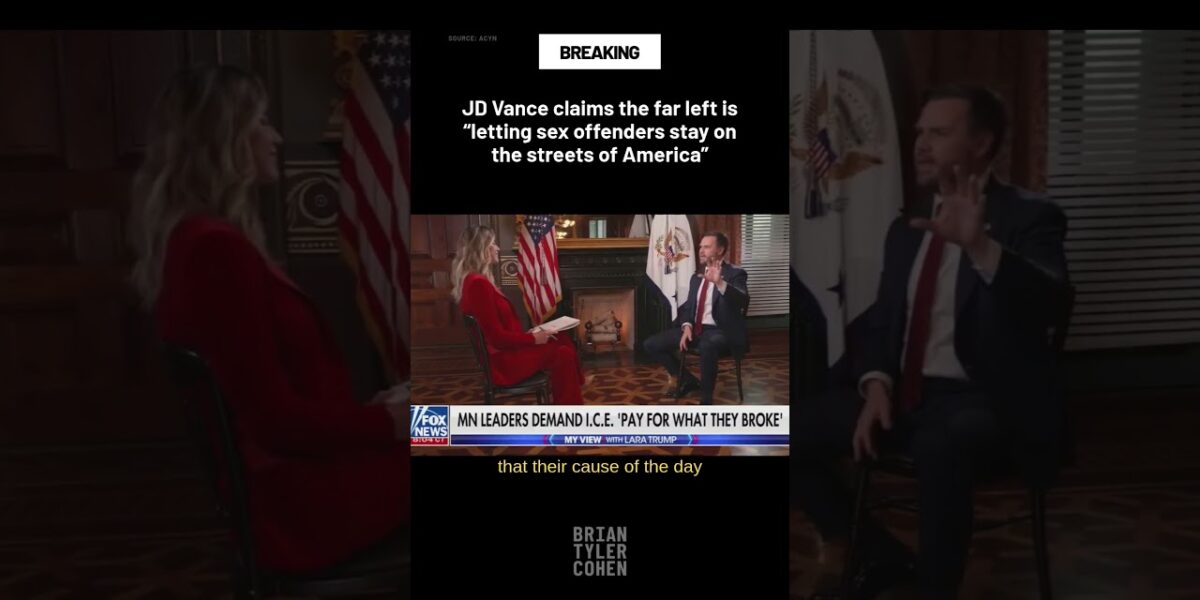
Senator Vance’s remarks were unequivocal: “It’s really not that hard. And it’s it’s a huge indictment of Jacob Fry and frankly the entire far-left that they made that their cause of the day, letting violent sex offenders stay on the streets of America.” This statement, delivered with a tone of exasperation, suggests a clear ideological divide. By singling out Mayor Jacob Frey, Vance localizes his critique while simultaneously expanding it to encompass a broader political movement. Frey, as mayor of a major American city that has been at the epicenter of debates surrounding policing and criminal justice reform, often becomes a focal point for national discussions on these issues.
The accusation itself – “letting violent sex offenders stay on the streets” – is designed to be provocative. It implies a deliberate choice by “the far-left” to prioritize certain reform agendas over public safety, particularly concerning a category of offenders widely considered among the most dangerous and socially stigmatized. The subsequent comment from an unnamed speaker, “The president’s just not going to go for that. Well, the irony doesn’t end there, unfortunately, for the Democrats. They have now thrust us,” further solidifies the partisan framing. It suggests a perceived disconnect between the “far-left” and more mainstream Democratic positions, implying that such policies are not only dangerous but also politically self-defeating for the party as a whole.
Understanding Vance’s statement requires recognizing its place within contemporary American political discourse. Crime and public safety have consistently ranked as top concerns for voters, and politicians frequently leverage these anxieties to draw sharp distinctions between themselves and their opponents. The “tough on crime” versus “smart on crime” debate often becomes a proxy for broader ideological clashes, with “the far-left” often characterized by critics as being overly lenient or idealistic, while “tough on crime” advocates are sometimes accused of promoting punitive and ineffective policies that disproportionately harm marginalized communities.
Deconstructing “The Far-Left” and Criminal Justice Reform
To fully grasp Vance’s critique, it’s essential to understand what “the far-left” generally advocates for in the realm of criminal justice reform. While the term itself can be a broad and often pejorative label, progressive criminal justice reform movements typically champion a range of policies aimed at reducing incarceration rates, addressing systemic inequalities, and shifting focus from punishment to rehabilitation and prevention.
Key tenets often include:
- Decarceration: Reducing the number of people in jails and prisons through alternatives to incarceration, reduced sentences for non-violent offenses, and parole reforms.
- Rehabilitation over Retribution: Emphasizing programs that address the root causes of crime, such as poverty, lack of education, mental health issues, and substance abuse. This includes job training, housing assistance, and therapeutic interventions.
- Police Reform: Advocating for changes in policing practices, including increased accountability, de-escalation training, community-oriented policing, and divesting resources from traditional policing towards social services.
- Ending Cash Bail: Eliminating or significantly reforming cash bail systems, which disproportionately affect low-income individuals and people of color, often leading to pre-trial detention for those who cannot afford bail.
- Restorative Justice: Focusing on repairing harm caused by crime through dialogue between victims, offenders, and communities, rather than solely on punishment.
It is important to note that “the far-left” is not a monolithic entity, and specific policy proposals can vary widely. However, the overarching goal is often to create a more equitable and effective justice system that prioritizes human dignity, community well-being, and evidence-based interventions over purely punitive measures. Critics, like Vance, often interpret these efforts as being soft on crime or prioritizing the rights of offenders over the safety of the public, particularly when it comes to serious offenses.
The Complexities of Sex Offender Management
The management of sex offenders presents one of the most fraught and challenging areas within criminal justice. Public fear and moral outrage surrounding sex crimes are intense, often leading to calls for severe penalties and stringent controls. However, the reality of managing this population is far more nuanced than political rhetoric often suggests.
Legal Frameworks and Public Safety Measures:
Most jurisdictions in the United States have comprehensive systems in place for managing convicted sex offenders. These typically include:
- Sex Offender Registration: Laws like Megan’s Law require individuals convicted of certain sex offenses to register their addresses, employment, and other personal information with law enforcement. This information is often publicly accessible through online databases.
- Community Notification Laws: These laws mandate that communities be informed when a registered sex offender moves into their area, often through public alerts or direct notifications to schools and childcare facilities.
- Residency Restrictions: Many states and localities impose restrictions on where registered sex offenders can live, often prohibiting them from residing within a certain distance of schools, parks, or other places where children congregate.
- Post-Release Supervision: Upon release from prison, sex offenders are typically subjected to strict parole or probation conditions, which may include electronic monitoring, mandatory counseling, regular check-ins with officers, and restrictions on internet access or contact with minors.
- Civil Commitment: In some cases, individuals deemed “sexually violent predators” who have completed their prison sentences may be civilly committed to a secure facility for indefinite treatment if they are deemed a continuing danger to the community.
Recidivism and Rehabilitation:
The question of whether sex offenders are “staying on the streets” often hinges on perceptions of recidivism – the rate at which offenders commit new crimes after release. While public perception often assumes very high rates of re-offense, research on sex offender recidivism is complex and varies depending on the type of offense, the methodology of the study, and the definition of recidivism (e.g., any new arrest, new sex offense, or parole violation).
Generally, studies suggest that sex offenders, as a group, have lower overall recidivism rates for *new sex offenses* compared to other types of offenders (e.g., property or violent offenders) for their respective crimes. However, any re-offense, especially a violent sex crime, is devastating and rightly a cause for public concern. The challenge lies in accurately assessing risk and implementing effective interventions.
Rehabilitation programs for sex offenders focus on cognitive-behavioral therapy, addressing distorted thinking patterns, developing empathy, and managing deviant sexual interests. These programs, often delivered during incarceration and continued post-release, aim to reduce the likelihood of re-offending. However, their effectiveness is a subject of ongoing research and debate, and successful reintegration into society remains a significant challenge due to intense public stigma and practical barriers like housing and employment.
When Vance speaks of “letting violent sex offenders stay on the streets,” he is likely criticizing policies that he perceives as insufficient in either preventing release or adequately monitoring and restricting these individuals post-release. This could refer to bail reform initiatives, sentencing guidelines, or a perceived lack of resources for strict supervision, though the transcript does not specify the exact policies he targets.
Political Framing and Rhetoric: Mobilizing Fear and Defining Opponents
Vance’s statement serves as a prime example of how political rhetoric can simplify complex policy debates into emotionally charged narratives. By using terms like “violent sex offenders” and “the far-left,” he employs a strategy designed to mobilize his political base and clearly delineate his opposition. This approach often prioritizes visceral impact over nuanced policy discussion.
The Power of “Us vs. Them”:
Framing the issue as “the far-left” versus the safety of “America” creates a clear “us vs. them” dynamic. This strategy is highly effective in political campaigning, as it allows voters to easily identify with one side and against the other. It also transforms policy differences into moral failings, suggesting that opponents are not just wrong on policy but are actively endangering the public.
Tapping into Public Anxiety:
Crime, particularly violent crime and offenses against children, generates significant public anxiety. Politicians who can convincingly position themselves as the protectors of public safety, while simultaneously portraying their opponents as indifferent or even complicit in rising crime, gain a powerful rhetorical advantage. The specific mention of “sex offenders” is particularly potent, as it evokes a profound sense of vulnerability and outrage, making it a highly effective tool for galvanizing public opinion.
Oversimplification of Policy:
Complex issues like criminal justice reform, which involve intricate legal frameworks, social determinants of crime, and psychological considerations, are often reduced to soundbites in political discourse. Vance’s statement, while impactful, offers no specific policy alternative or detailed critique of what “the far-left” is allegedly doing. Instead, it relies on the emotional weight of the accusation to carry its message. This oversimplification can hinder productive policy discussions, as it discourages a deeper examination of the evidence and the potential consequences of various approaches.
Local Governance and National Narratives: The Case of Minneapolis
The mention of Jacob Frey, Mayor of Minneapolis, highlights how local policy decisions can quickly become fodder for national political narratives. Minneapolis has been a focal point for debates over policing and criminal justice since 2020, experiencing significant discussions around police reform, alternative public safety models, and approaches to crime.
Cities like Minneapolis, often led by progressive politicians, frequently explore innovative or reform-minded approaches to public safety. These might include diverting certain calls away from police to mental health professionals, investing in community-based violence prevention programs, or implementing bail reform. While these initiatives are typically designed to create a more equitable and effective justice system, they can become targets for critics who argue they undermine law enforcement or jeopardize public safety.
Vance’s decision to link Frey to the broader “far-left” narrative is a common tactic. It allows national figures to comment on local issues, framing them as part of a larger ideological struggle. This can put local leaders under immense pressure, as their policy choices are scrutinized through a national, often partisan, lens. It also blurs the lines between local governance and federal political battles, making it harder for communities to address their unique challenges without being caught in broader culture wars.
The Broader Landscape of Public Safety Debates
The conversation ignited by Vance’s comment is indicative of a broader national struggle to define the future of public safety. On one side are those who advocate for traditional “tough on crime” approaches, emphasizing increased policing, longer sentences, and stricter enforcement. They often argue that any deviation from these methods leads to an increase in crime and a breakdown of social order. On the other side are proponents of criminal justice reform, who argue that the existing system is often ineffective, costly, and perpetuates cycles of poverty and inequality. They seek to address systemic issues, reduce mass incarceration, and invest in community-based solutions.
The tension between these two philosophies is often exacerbated by fluctuating crime rates. Periods of increased crime, whether real or perceived, tend to fuel calls for more punitive measures, while periods of relative calm may allow for more space to discuss reform. However, the data on crime is often complex and subject to varying interpretations, making it challenging to attribute trends solely to specific policies or ideological stances.
A critical aspect of this debate is the role of evidence-based policy. Advocates for reform often point to research suggesting that certain punitive measures do not effectively deter crime or reduce recidivism, and that investments in social services and rehabilitation can yield better long-term outcomes. Conversely, critics of reform often highlight individual cases of re-offense or perceived increases in crime to argue against what they see as lenient policies. The challenge for policymakers and the public alike is to sift through the rhetoric and focus on what genuinely works to enhance public safety while upholding justice and human rights.
Balancing Public Safety and Justice Reform: A Persistent Challenge
The core dilemma at the heart of Vance’s accusation and the broader criminal justice debate is how to balance the imperative of public safety with the goals of justice reform. No responsible policymaker, regardless of political affiliation, desires to see violent offenders “on the streets.” The disagreement lies in the best methods to prevent this and to manage those who have committed crimes.
For reformers, ensuring public safety means not only apprehending and prosecuting offenders but also addressing the underlying conditions that lead to crime. It involves investing in communities, providing mental health support, creating educational and economic opportunities, and building pathways for successful reintegration for those released from incarceration. They argue that a purely punitive approach creates a revolving door of incarceration, destabilizes communities, and ultimately makes society less safe.
For those who advocate for stricter measures, public safety often means prioritizing deterrence through robust law enforcement, secure incarceration, and stringent monitoring of offenders. They may view reform efforts as potentially compromising these essential safeguards, particularly when it comes to sensitive categories of crime like sexual offenses. The perception of leniency, even if unfounded by data, can erode public trust and fuel demands for tougher laws.
Finding common ground requires moving beyond highly charged rhetoric and engaging in data-driven discussions about which policies genuinely reduce crime and enhance community well-being. It necessitates an understanding that both public safety and justice are intertwined and that effective solutions often require a multi-faceted approach that considers both accountability for past actions and opportunities for future rehabilitation.
Conclusion: Beyond the Soundbite
Senator J.D. Vance’s accusation that “the far-left” is “letting violent sex offenders stay on the streets of America” is a powerful political statement designed to resonate with public anxieties about crime and justice. While brief, the transcript reveals a clear attempt to frame criminal justice reform as a dangerous ideological pursuit, particularly when it touches upon the sensitive issue of sex offender management.
However, the reality of criminal justice is far more complex than such a soundbite can convey. The policies surrounding sex offenders involve intricate legal frameworks, dedicated supervision, and ongoing efforts at rehabilitation, all aimed at balancing public safety with the rule of law. Similarly, the broader movement for criminal justice reform seeks to address deeply rooted systemic issues, not to endanger communities.
As the nation continues to grapple with questions of crime, punishment, and rehabilitation, it is crucial for public discourse to move beyond simplistic accusations and engage with the nuanced realities of policy and its impact. The challenge for journalists, policymakers, and citizens alike is to demand evidence-based discussions that prioritize effective solutions for public safety and justice, rather than allowing emotionally charged rhetoric to dominate and polarize these vital debates.
Source: JD Vance claims the far left is “letting sex offenders stay on the streets of America” (YouTube)

Related Articles


Austin Bar Shooting Claims 3 Lives in Early Morning Violence
At least three people were killed and several others injured in a shooting at a bar in downtown Austin early Saturday morning. Law enforcement is currently investigating the incident, which occurred in a busy entertainment district, and urging anyone with information to come forward.


Vance’s Silence on Iran Strikes Signals GOP Foreign Policy Divide
Vice President JD Vance's uncharacteristic silence following US strikes against Iran has sparked debate about a growing rift within the Republican party over foreign intervention. His past anti-interventionist statements contrast sharply with President Trump's recent actions, highlighting a potential ideological divide within the MAGA movement.


Motorola’s Remarkable Comeback: From Mobile Pioneer to Tech Giant
Motorola, once a dominant force in mobile, has staged a remarkable comeback. The company now thrives as a leader in public safety communications through Motorola Solutions, while its smartphone division, Motorola Mobility, is also experiencing significant growth and innovation.