Jayapal Decries Trump’s Iran Strike as Illegal, Unconstitutional
Representative Pramila Jayapal has strongly condemned President Trump's strike on Iranian General Qasem Soleimani, labeling it "illegal and unconstitutional." She argued that the action bypassed Congress, setting a dangerous precedent for executive overreach in matters of war.

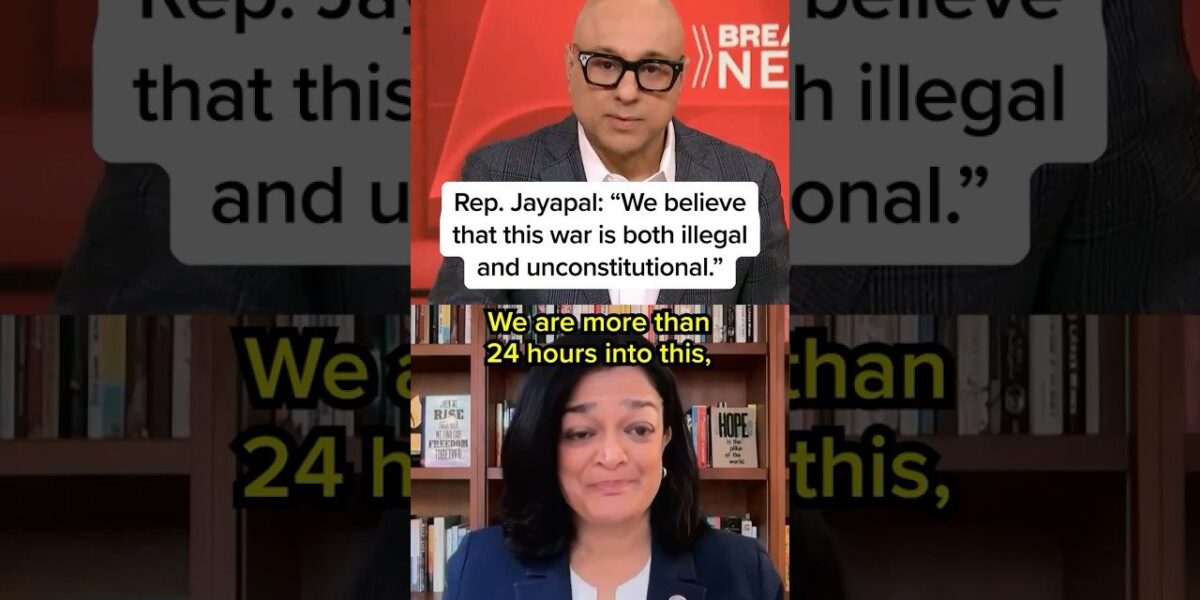
Jayapal Slams Trump’s Iran Strike, Cites Illegality and Unconstitutionality
In a strong rebuke of President Donald Trump’s decision to authorize a drone strike that killed Iranian General Qasem Soleimani, Representative Pramila Jayapal has declared the action to be both “illegal and unconstitutional.” Speaking out against the move, which bypassed congressional approval, Jayapal argued that the strike sets a dangerous precedent and undermines the legislative branch’s constitutionally mandated war powers. The congresswoman’s remarks highlight a growing tension between the executive and legislative branches over the authority to initiate military action, with significant implications for democratic oversight and international relations.
Constitutional Authority and Congressional Prerogative
At the heart of Representative Jayapal’s criticism is the U.S. Constitution’s clear delineation of war-making powers. The Constitution vests the power to declare war in Congress, not the President. Jayapal emphasized that President Trump’s decision to engage in a targeted strike against a foreign military leader, without prior consultation or authorization from Congress, represents a significant overreach of executive authority. “We believe that this war is both illegal and unconstitutional,” Jayapal stated, underscoring her conviction that the administration acted outside its legal and constitutional bounds.
The War Powers Resolution of 1973, enacted over President Nixon’s veto, aims to reassert congressional control over the commitment of U.S. armed forces abroad. It requires the President to notify Congress within 48 hours of committing armed forces to military action and limits the duration of such deployments without congressional authorization. Jayapal’s argument suggests that the Soleimani strike not only violated the spirit of this resolution but potentially its letter as well, by initiating a hostile act without the necessary legislative consent.
Dangerous Precedent and Erosion of Checks and Balances
Beyond the immediate legality of the strike, Jayapal expressed deep concern over the long-term implications of the President acting unilaterally in matters of war. She warned that such actions set a “dangerous precedent” that could further erode the system of checks and balances that is fundamental to American democracy. If presidents can unilaterally commit the nation to military actions that could escalate into broader conflicts, the role of Congress as a deliberative body responsible for representing the will of the people in matters of war and peace is significantly diminished.
“This is about reclaiming our constitutional war powers authority,” Jayapal urged, calling on her fellow lawmakers to take a stand against what she perceives as executive overreach. Her appeal is a call to action for Congress to reassert its role as a co-equal branch of government, particularly in decisions with life-and-death consequences for American service members and potentially global stability. The debate ignited by the Soleimani strike is thus not just about a single military action, but about the fundamental balance of power between the President and Congress in foreign policy and national security.
Broader Implications for U.S. Foreign Policy
The killing of Qasem Soleimani, a high-ranking official in Iran’s Islamic Revolutionary Guard Corps (IRGC) and a key architect of its regional policy, was a significant escalation in U.S.-Iran tensions. While the administration justified the strike as a defensive measure to deter future Iranian attacks, critics like Jayapal argue that it dramatically increased the risk of broader regional conflict. The lack of congressional debate and authorization prior to the strike means that the American public and their representatives were not afforded the opportunity to weigh the potential costs and benefits of such a provocative action.
This incident further complicates the already challenging landscape of U.S. foreign policy in the Middle East. It raises questions about the administration’s strategy for dealing with Iran and the broader implications for regional security alliances and the potential for unintended escalation. The bypass of Congress in such a critical decision-making process could also embolden future administrations to similarly circumvent legislative oversight, potentially leading to a more militaristic and less deliberative foreign policy.
A Call for Congressional Action
Representative Jayapal’s forceful statement serves as a clarion call for Congress to actively defend its constitutional prerogatives. Her advocacy for lawmakers to “reclaim their constitutional war-powers authority” suggests a path forward involving legislative action. This could include resolutions of disapproval, stricter oversight mechanisms, or even legislative efforts to further clarify and enforce the War Powers Resolution. The challenge for Congress will be to unite across partisan lines to address what many see as a critical threat to democratic governance.
The debate over war powers is not new, but the circumstances surrounding the Soleimani strike have brought it to the forefront with renewed urgency. As the United States navigates complex geopolitical challenges, the balance of power between the executive and legislative branches in authorizing the use of force remains a crucial element of democratic accountability and responsible foreign policy. The actions taken by Congress in response to this incident will likely shape the future of American military engagement and oversight for years to come.
What’s Next?
The coming weeks and months will likely see continued debate and potential legislative maneuvering within Congress regarding presidential war powers. Observers will be watching closely to see if Representative Jayapal’s call to action gains broader traction among her colleagues and if concrete steps are taken to reaffirm Congress’s constitutional role in authorizing military engagements. The international community will also be monitoring how these internal U.S. debates impact future foreign policy decisions and the broader U.S. approach to international security.
Source: Rep. Jayapal: “We believe that this war is both illegal and unconstitutional.” (YouTube)

Related Articles
Veterans Lead Charge Against Trump’s “War of Choice”
Veterans in Congress are raising alarms against President Trump's escalation of military action with Iran, arguing it's a "war of choice" lacking clear objectives and congressional approval. They draw on their combat experience to demand accountability and prevent repeating past mistakes.
Dem Rep. Gomez: Trump Was Never Truthful About Peace
California Congressman Jimmy Gomez criticized the Trump administration's handling of intelligence regarding Iran, stating the President was "never truthful" about his intentions. Democrats plan to force a vote on a War Powers resolution, arguing the recent military actions lacked justification and congressional approval.


Dem Leader Questions Iran Strike Rationale, Cites ‘War of Choice’
Senator Mark Warner questions the White House's justification for military strikes in Iran, labeling it a 'war of choice' due to a lack of perceived imminent threat. He highlights shifting rationales and calls for presidential transparency regarding goals and potential casualties.