Japan’s Space Odyssey: From Post-War Dreams to Lunar Rovers
Discover the fascinating history of Japan's space agency, from its post-war origins and early rocket development to its ambitious missions and future lunar endeavors. Learn how JAXA navigates international collaboration and technological challenges.

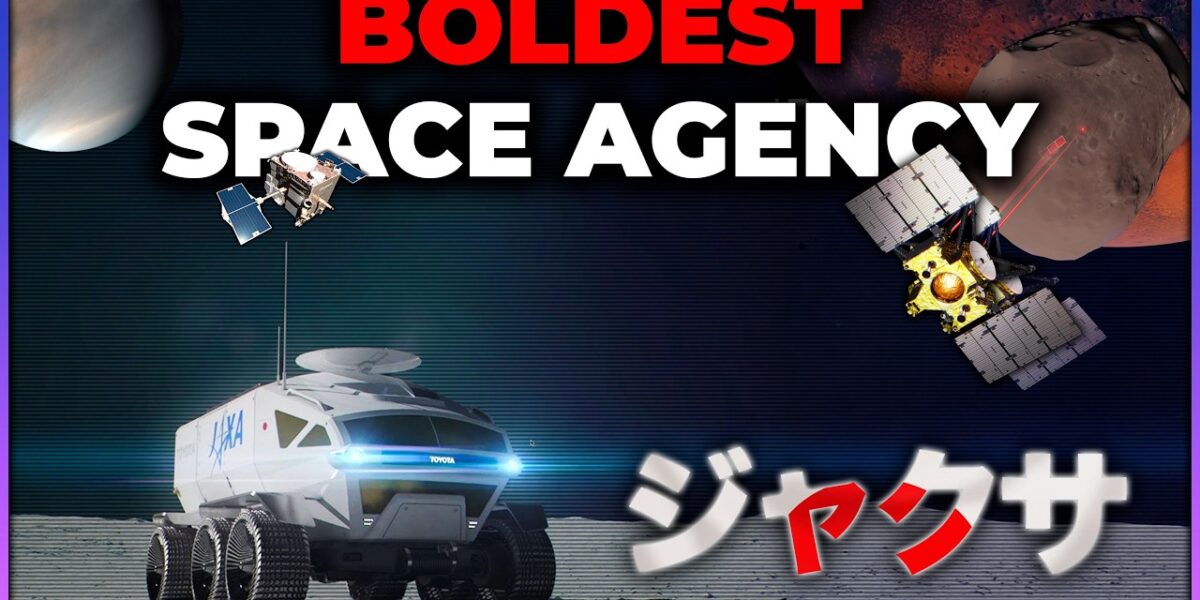
Japan’s Ambitious Ascent in the Cosmos
Japan’s journey into space is a testament to ingenuity, resilience, and strategic foresight. While often overshadowed by the space programs of the United States and the Soviet Union, the Japanese space agency, now known as JAXA (Japan Aerospace Exploration Agency), has carved a unique and impressive niche for itself. From pioneering asteroid sample return missions to developing cutting-edge lunar rovers, Japan’s space endeavors are characterized by ambitious goals, often achieved within realistic budgets and fostering international collaboration.
Roots in a Post-War Landscape
The origins of Japan’s space ambitions can be traced back to the aftermath of World War II. Hideo, an aircraft engineer who worked on advanced weaponry, found himself at a loose end as Japanese industry lay in ruins and aeronautical research was prohibited by the Allied occupation. Initially captivated by the potential of helicopters, Hideo’s focus shifted to rocketry after learning about biological experiments for space travel in America. This led to the establishment of the Avionics and Supersonic Dynamics Laboratory (AVSA) at the University of Tokyo, marking the nascent beginnings of Japan’s rocket development.
However, the deeper historical roots of rocketry in Japan extend further back to the 1920s and 1930s. During this period, Japanese engineers began studying and conceptualizing rockets, laying the crucial groundwork for future technological advancements. This period of imaginative exploration created the necessary cultural space for rockets to be taken seriously as a viable technology, a concept highlighted by Napoleon’s skepticism towards steamships.
Navigating Geopolitical Sensitivities
The post-war era presented unique challenges for Japan’s burgeoning space program. The United States, wary of Japan developing nuclear capabilities and delivery systems, imposed restrictions on rocket development. Furthermore, geopolitical tensions with China, a neighboring communist nation with its own growing space program, added another layer of sensitivity. Within Japan, a profound aversion to war, stemming from the devastating experiences of World War II, also influenced the direction of space research.
To navigate these complexities, Japanese space researchers adopted a dual strategy. Firstly, they framed space development as a national project of redemption, emphasizing that all components would be domestically manufactured to demonstrate a commitment to civilian applications rather than military ones. Secondly, they initially focused on solid-fuel rockets. Solid-fuel rockets, while capable of launching satellites, are inherently less precise than liquid-fuel rockets, thus mitigating concerns about their potential use as intercontinental ballistic missiles (ICBMs). This approach allowed Japan to develop essential rocket technologies, including avionics, aerodynamics, and payload capacity, while adhering to international and domestic sensitivities.
The Birth of NASDA and the H-II Rocket Saga
The late 1960s saw Japan making significant strides in rocket development, officially beginning its serious pursuit of space technology. This period saw the decentralization of space programs, with institutions like ISAS (Institute of Space and Astronautical Science) focusing on solid-fuel rockets and scientific missions. However, the growing demand from commercial sectors, particularly telecommunications companies, for more powerful and reliable launch capabilities highlighted the limitations of solid-fuel technology.
This led to a critical juncture in the 1970s, where tensions between ISAS’s established approach and commercial demands spurred the creation of a new entity: NASDA (National Space Development Agency of Japan). NASDA was specifically tasked with developing liquid-fuel rockets, a more complex and dual-use technology. The development of Japan’s first indigenously designed liquid-fuel rocket, the H-II, became a monumental undertaking. While technologically ambitious, the H-II project was fraught with difficulties. Coordinating resources and technologies across various agencies proved challenging, and the rocket experienced several high-profile failures, including the loss of an expensive satellite on its final flight. These setbacks, coupled with Japan’s economic downturn in the late 1980s and early 1990s, cast a shadow over the H-II program.
JAXA: Unification and a New Era
The challenges faced by NASDA and ISAS eventually led to a significant organizational change. In 2003, the two agencies merged to form the Japan Aerospace Exploration Agency (JAXA). This unification marked a new era, bringing together the diverse expertise and resources of the previous organizations. Notably, JAXA’s mandate expanded to include military functionalities, a departure from the earlier strict civilian focus.
Collaborative Spirit and Future Frontiers
JAXA has consistently demonstrated a remarkable ability to identify gaps in advanced research and to excel in specific technological domains. While Japan often relies on international partners, particularly the United States, for human spaceflight launches and infrastructure, it excels in areas where others may not be focusing. This is exemplified by the success of the IKAROS mission, an experimental solar sail satellite, which positioned Japan as a world leader in solar sail technology.
Looking ahead, Japan’s contributions to space exploration remain at the forefront of innovation. The ambitious Artemis program, aimed at returning humans to the Moon, features a significant role for Japan, including the development of a pressurized rover by Toyota. This highlights Japan’s strategic approach to space, focusing on developing niche, high-value technologies, much like Canada’s renowned robotic arms for space missions. The Japanese robotic arm, for instance, is a crucial component of the International Space Station’s external experimental platform.
Japan’s space agency, born from post-war necessity and shaped by a unique blend of technological ambition and geopolitical awareness, continues to push the boundaries of space exploration. Its history is a compelling narrative of overcoming challenges, fostering innovation, and carving out a distinctive identity in the global pursuit of understanding the cosmos.
Source: How Japan Built Its Crazy Space Agency (YouTube)

Related Articles
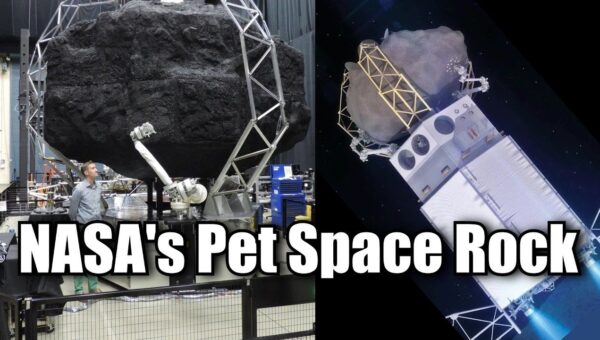
NASA’s Asteroid Mission: From Mars Dream to Lunar Gateway
NASA's ambitious Asteroid Redirect Mission (ARM), designed as a stepping stone to Mars, aimed to capture a small asteroid boulder and tow it to lunar orbit for astronaut testing. Though cancelled, its advanced propulsion and robotic technologies live on in NASA's Lunar Gateway and future deep space exploration plans.
NASA’s Evolving SLS Rocket Hints at New Upper Stage
NASA's Artemis program may be adopting a new upper stage for its Space Launch System (SLS) rocket, potentially utilizing the commercially available Centaur V. An updated infographic reveals design changes and hints at evolving mission strategies, including advanced lunar lander operations.


SpaceX Starship V3 Nears First Flight Amidst Major Artemis Shakeup
SpaceX eyes March for Starship V3's maiden flight as new testing reveals design improvements. Meanwhile, NASA's Artemis program faces delays and strategic shifts, with Artemis III repurposed as a LEO test mission.