Japan’s Bold Gambit: Prime Minister Takiichi Secures Historic Mandate, Defying China’s Pressure
Japanese Prime Minister Tanay Takiichi secured a historic landslide victory in a snap election, defying China's aggressive pressure tactics which inadvertently bolstered her mandate. This decisive outcome empowers Takiichi to pursue a more assertive national security agenda, including potential constitutional amendments and increased defense capabilities, fundamentally reshaping Japan's role in the Indo-Pacific.


Japan’s Bold Gambit: Prime Minister Takiichi Secures Historic Mandate, Defying China’s Pressure
In a stunning display of political acumen and national resolve, Japanese Prime Minister Tanay Takiichi has secured an unprecedented mandate, propelling her Liberal Democratic Party (LDP) to a historic landslide victory in a snap election. This decisive outcome, achieved amidst a backdrop of escalating geopolitical tensions and direct pressure from Beijing, has not only reshaped Japan’s political landscape but also signaled a robust new era for its defense posture and regional foreign policy. The election results represent a significant backfire for China, whose aggressive tactics appear to have inadvertently strengthened Japan’s determination to assert its sovereignty and enhance its security capabilities.
The swiftness of the election, with its remarkably short campaign period, underscores the audacious nature of Prime Minister Takiichi’s gamble. Her resounding success is a testament to her widespread popularity, particularly among younger demographics, and a clear indication that the Japanese populace is increasingly aligned with a more assertive stance on national security, especially in the face of perceived external threats.
A Political Earthquake: Takiichi’s Daring Gambit Pays Off
Just months into her premiership, Prime Minister Tanay Takiichi, also serving as the President of the Liberal Democratic Party, made a bold and highly risky decision: to dissolve the lower house, or House of Representatives, which was not slated to expire until October 2028. This move triggered a snap election on February 8th, initiating the shortest campaign period in Japan’s post-war history, a mere 16 days. The LDP leadership was explicit about its motivations, with the party’s secretary general stating, "Political stability is essential. We will restore political stability through this election. Our goal is to secure a majority for the ruling coalition." This candid declaration, aiming for a solidified party majority, might raise eyebrows in other democracies where such overt ambition could draw accusations of overreach. However, the Japanese electorate responded with overwhelming support, confounding expectations of a potential rebuke.
The results were nothing short of a political earthquake. The LDP, which held 198 seats out of 465 before the election, surged to an astounding 316 seats. This represents the highest proportion of representatives won by any single party since the end of World War II, a clear demonstration of a powerful public mandate. When combined with its coalition partner, the Japan Innovation Party, which secured 36 seats, the ruling bloc now commands a formidable total of 352 out of 465 seats. This figure not only surpasses the 261 seats required for a supermajority but establishes what has been dubbed a "super duper majority," granting the coalition unparalleled legislative power.
Adding further weight to the outcome, voter turnout for the election reached 56%, a notable increase compared to the previous lower house election, despite challenging winter weather conditions. This higher engagement signifies that the victory was no mere fluke but a genuine expression of the public will, affirming Takiichi’s leadership and her administration’s agenda. Inheriting a minority government that faced inherent instability, Takiichi chose to directly appeal to the Japanese people, asking them to entrust her with the nation’s governance. Her success in this high-stakes maneuver is largely attributed to her immense popularity, particularly among Japan’s youth, with an approval rating exceeding 92% among 18 to 29-year-olds.
The Dragon’s Roar and Japan’s Resolve
While Prime Minister Takiichi’s domestic popularity was a significant factor in her victory, another powerful, albeit indirect, influence came from an unexpected quarter: China. From the outset of her premiership, the Chinese Communist Party (CCP) harbored deep-seated animosity towards Takiichi. This antagonism intensified dramatically when she took an uncompromising stance on Taiwan, unequivocally stating that a military attack on the self-governing island would justify support from Japan’s Self-Defense Force (SDF). This declaration touched a raw nerve in Beijing, which views Taiwan as an inalienable part of its territory and consistently warns against any foreign interference.
The CCP’s reaction was swift and vitriolic. China’s Consul General in Osaka, Shoen, issued a chilling and widely condemned threat, suggesting Takiichi’s "head right off." This verbal aggression was swiftly followed by a comprehensive pressure campaign designed to intimidate Japan and undermine Takiichi’s leadership. Beijing "nuked" Chinese tourism to Japan, a significant economic blow, and escalated its crackdown on Japanese pop culture within China. Threats were issued regarding Japan-bound exports, and Japanese fighters reportedly faced radar lock-ons from Chinese military assets. Simultaneously, a relentless propaganda campaign was waged against Prime Minister Takiichi in state-controlled media, portraying her as a warmonger and a threat to regional stability.
However, what Beijing intended as a punitive measure against Japan and a deterrent against Takiichi’s policies spectacularly backfired. Instead of cowering, the Japanese public rallied behind their leader. The CCP’s heavy-handed tactics served only to reinforce the perception among ordinary Japanese citizens that China poses a genuine and escalating threat, thereby solidifying the conviction that Japan must enhance its preparedness and strengthen its alliance with the United States. This unintended consequence directly contributed to the surge in support for Takiichi and her party, transforming China’s bullying into a catalyst for Japan’s reinforced resolve.
Beijing’s Fury: State Media Unleashes Scathing Attacks
The outcome of the snap election, and the clear mandate it delivered to Prime Minister Takiichi, was met with predictable outrage from Beijing. Chinese state-run media, known for its aggressive rhetoric, erupted in a chorus of condemnation. Hu Xijin, the former editor-in-chief of the influential Global Times, penned a scathing piece for Phoenix TV, demanding that "China must take strong measures to subdue this demon," in a thinly veiled attack on Takiichi. He further escalated his rhetoric, warning that Takiichi would launch a "surprise attack on China" and, more alarmingly, stated that if Japan were to become a nuclear power, "China will reserve the right to launch a preemptive nuclear strike against Japan." This latter threat was a direct response to recent discussions within Japan about reconsidering its long-standing ban on nuclear weapons, a taboo subject since the end of World War II.
The collective "howling" from other Chinese state-run media outlets over the snap election underscores Beijing’s deep apprehension. The reasons for this alarm are clear: Prime Minister Takiichi’s new LDP mandate grants her and her coalition an extraordinary degree of power, enabling significant policy shifts that directly challenge China’s regional ambitions.
A New Era for Japan’s Defense and Sovereignty
The "super duper majority" secured by the LDP-led coalition ushers in a new era of legislative dominance for Prime Minister Takiichi. This overwhelming victory in the lower house grants the coalition the unprecedented ability to override challenges that might emerge from a lack of a majority in the upper house. Specifically, key bills and budgets, if voted down in the upper house, can now be overridden in the lower house with a two-thirds majority – a threshold well within the coalition’s current strength. Furthermore, the coalition will now chair all 17 standing committees in the lower house, providing it with extensive control over the legislative agenda and policy formulation. This newfound power positions Takiichi to implement a wide array of reforms and initiatives, many of which are directly aimed at countering China’s growing influence and perceived aggression.
Strategic Overhaul and Defense Modernization
A primary focus of the Takiichi administration will be a comprehensive overhaul of Japan’s national security framework. This includes revising the National Security Strategy, the National Defense Strategy, and the Defense Buildup Program. These revisions are explicitly tailored to enhance Japan’s capabilities for countering China, reflecting a fundamental shift from a purely defensive posture to one that is more proactive and deterrent-focused. The goal is to anticipate and mitigate threats from Beijing, ensuring Japan’s security in an increasingly volatile Indo-Pacific.
The Constitutional Conundrum: Article 9 and the SDF
Perhaps the most significant and contentious policy change on Takiichi’s agenda, and one that deeply alarms the CCP, is the prospect of amending Article 9 of Japan’s post-war constitution. This landmark article, imposed under pressure from the United States after World War II, famously stipulates that "the Japanese people forever renounce war as a sovereign right of the nation and the threat or use of force as means of settling international disputes." Crucially, it also states that "land, sea, and air forces, as well as other war potential, will never be maintained." In essence, Article 9 denies Japan the sovereign right to a full-fledged military.
Over the decades, Japan has reinterpreted Article 9 to allow for the creation and operation of the Self-Defense Force (SDF), which, while not officially a "military," is one of the most sophisticated and capable defense forces in the world, responsible for both national defense and supporting allies. However, a full constitutional amendment has never been achieved in Japan’s post-war history. Takiichi has publicly declared her intention to amend the constitution to "clearly enshrine" the SDF, a move that would grant greater legitimacy and flexibility to Japan’s defense-related activities. This would be a monumental step, fundamentally altering Japan’s pacifist identity.
Achieving this amendment, however, will be an arduous task, even with the LDP’s "super duper majority." Constitutional amendments require a two-thirds majority vote in *both* the upper and lower houses of the National Diet. While Takiichi’s coalition now dominates the lower house, it does not hold a two-thirds majority in the upper house. The next upper house election is not scheduled until July 2028, and unlike the lower house, the prime minister cannot unilaterally dissolve it. This means Takiichi will need to either build broader consensus across the political spectrum or wait for future electoral opportunities to consolidate power in the upper chamber.
Strengthening Regional Alliances and Defense Capabilities
Even prior to Takiichi’s ascendance to the premiership, Japan had been steadily strengthening its regional security posture. This included providing radar systems and small boats to the Philippines, securing a deal to build frigates for Australia, and engaging in advanced fifth-generation fighter jet combat training with the United States and Australia. These initiatives demonstrate a clear trend towards enhanced cooperation and capability building across the Indo-Pacific.
Under Takiichi’s fortified leadership, Japan is poised to accelerate these efforts significantly. Key proposals include easing restrictions on lethal arms exports, a move that could provide a much-needed boost to Japan’s domestic defense industry, fostering innovation and production. This would not only enhance Japan’s own defense capabilities but also contribute to regional security by providing allies with advanced defense equipment, thereby countering the growing military presence of China. Furthermore, Takiichi is pushing to increase defense spending beyond 2% of GDP, aligning Japan more closely with NATO standards and reflecting a serious commitment to national defense. By mid-2026, a new intelligence bureau is planned, designed to centralize Japan’s currently fragmented intelligence systems, thereby improving information gathering and analysis capabilities. Complementing these efforts, the administration is also cracking down on foreign ownership of sensitive assets, a measure clearly aimed at countering China’s "gray zone warfare" tactics, which often involve economic coercion and clandestine influence operations.
Beyond Military: Energy Independence and Resource Security
Japan’s strategic pivot under Prime Minister Takiichi extends beyond military and intelligence reforms. Recognizing the critical importance of energy and resource independence, especially in a region prone to geopolitical disruptions, her administration is championing bold initiatives in these sectors.
A significant push is being made for nuclear energy, a move aimed at bolstering Japan’s energy independence. This policy, despite past public apprehension following the Fukushima disaster, enjoys overwhelming support among young people, who recognize its potential to provide stable, low-carbon power and reduce reliance on imported fossil fuels. Furthermore, Takiichi is actively encouraging deep-sea rare earth mining. Rare earth minerals are vital components in modern technology, from electronics to defense systems, and China currently dominates their global supply chain. By developing its own deep-sea mining capabilities, Japan seeks to significantly reduce its reliance on Chinese minerals, thereby strengthening its economic and strategic autonomy.
These ambitious plans have, predictably, drawn criticism from environmentalist groups. However, proponents argue that given the choice, Japan, with its stringent environmental regulations and commitment to technological advancement, is a far more trustworthy steward of the environment than communist China, which is notorious for its massive pollution emissions and the creation of ecological wastelands globally. This framing highlights a broader geopolitical argument: that authoritarian regimes often prioritize economic growth and strategic advantage over environmental protection, whereas democratic nations like Japan can pursue both with greater accountability.
Reframing the Narrative: Who is Escalating Tensions?
In the aftermath of the election and Takiichi’s assertive policy pronouncements, some Western mainstream media outlets have sought to portray her as a figure escalating tensions with China. This narrative often points to her strong stance on Taiwan and her ambition to strengthen Japan’s defense capabilities as provocative. However, this framing is fundamentally flawed and, as the transcript suggests, "horribly wrong."
A deeper historical and geopolitical analysis reveals that it is China, not Japan, that has been systematically escalating tensions for decades. Beijing’s aggressive claims over disputed territories, such as the Senkaku (Diaoyu) Islands, its militarization of the South China Sea, its constant threats against Taiwan, and its increasing military assertiveness in the Indo-Pacific, all demonstrate a pattern of expansionism and coercion. These actions have compelled Japan and its allies to step up their security measures. When China reacts with disproportionate fury and threats to Japan’s legitimate self-defense actions or diplomatic overtures, it acts like a "spoiled brat." The international community, therefore, should be holding China accountable for its escalatory behavior, rather than blaming Japan for responding to genuine threats.
The upcoming meeting between Prime Minister Takiichi and US President Donald Trump in the White House is anticipated with keen interest. This high-level engagement is expected to further solidify the US-Japan alliance and explore additional avenues for cooperation that will undoubtedly drive Beijing to further frustration. The convergence of Japan’s renewed resolve and America’s strategic re-engagement in the Indo-Pacific signals a powerful counterweight to China’s regional ambitions, promising a dynamic and potentially transformative period for international relations.
Conclusion
Prime Minister Tanay Takiichi’s landslide victory in Japan’s snap election marks a pivotal moment in the nation’s post-war history. Her audacious political gamble paid off handsomely, securing an unprecedented mandate driven by strong public support and, ironically, fueled by China’s own aggressive tactics. This historic "super duper majority" empowers Takiichi to pursue a comprehensive agenda focused on strengthening Japan’s national security, reforming its defense posture, and securing its economic independence. From potentially amending the pacifist Article 9 of the constitution to boosting defense spending, enhancing intelligence capabilities, and diversifying critical resource supplies, Japan is embarking on a path of greater self-reliance and regional leadership.
The backfiring of China’s bullying campaign has not only solidified Takiichi’s position but also galvanized the Japanese public’s determination to confront external threats and deepen alliances with like-minded nations. As Japan steps into this new era, its unwavering commitment to a free and open Indo-Pacific, backed by a robust and modernized defense, will undoubtedly reshape the geopolitical dynamics of the region, signaling a clear message to Beijing that its coercive tactics will be met with resolute defiance.
Source: Japan Just Dealt China A HUMILIATING Defeat (YouTube)

Related Articles


Senator Kelly: Khamenei’s Death is Positive, But Lacks a US Strategy
Senator Mark Kelly welcomed the death of Iranian Supreme Leader Ali Khamenei, calling it a "good thing." However, he sharply criticized the current U.S. administration for lacking a coherent strategy to manage the significant geopolitical shift. Kelly emphasized that "hope is not a strategy" and called for clear objectives and actionable plans to ensure American security.


Dem Leader Questions Iran Strike Rationale, Cites ‘War of Choice’
Senator Mark Warner questions the White House's justification for military strikes in Iran, labeling it a 'war of choice' due to a lack of perceived imminent threat. He highlights shifting rationales and calls for presidential transparency regarding goals and potential casualties.
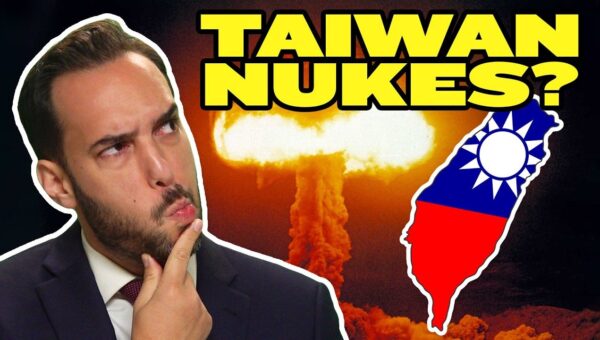
Taiwan’s Nuclear Dilemma: Deterrence or Disaster?
As China expands its nuclear arsenal and military presence, the question of whether Taiwan should possess nuclear weapons or host U.S. nuclear arms gains urgency. The debate weighs the potential for deterrence against the risks of escalation, drawing parallels to Ukraine's disarmament and Taiwan's own past nuclear ambitions.