Italy’s ‘Michelangelo’ System Bolsters Ukraine’s Air Defenses
Italy is supplying Ukraine with a key component of its Michelangelo air defense system, designed to integrate disparate air defense assets. The initial delivery focuses on improving counter-drone capabilities, aiming to conserve Ukraine's finite interceptor missiles.

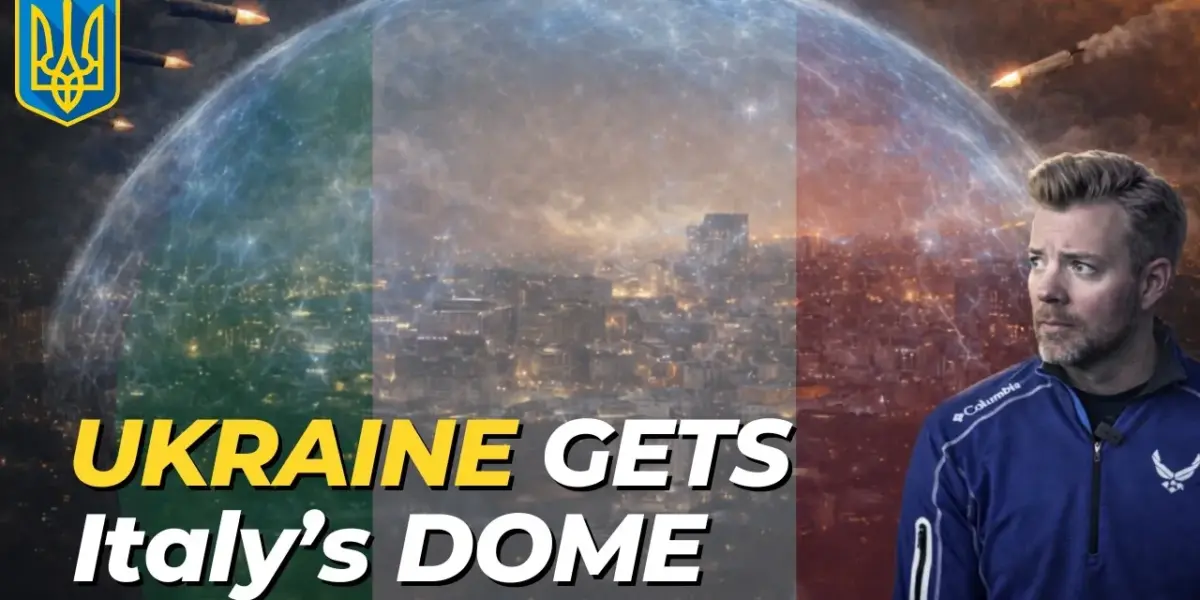
Italy Signals Key Air Defense Upgrade for Ukraine
Italy is set to provide Ukraine with a critical component of its advanced Michelangelo air defense system. This move aims to address Ukraine’s complex air defense challenges, which stem from a mix of Russian aerial threats and a fragmented network of Western and Soviet-era systems. The Michelangelo system, developed by Italian defense firm Leonardo, is designed not as a standalone weapon but as a sophisticated network architecture. Its primary goal is to integrate various radar, sensor, and weapon systems into a unified command and control network.
Ukraine’s Layered Air Defense Struggle
Ukraine faces a multi-faceted air defense problem. Russia consistently launches a high volume of threats, including drones, cruise missiles, and ballistic missiles. These attacks are often sequenced to overwhelm defenders, forcing them to expend finite interceptor missiles against cheaper, expendable targets like drones. This tactic depletes Ukraine’s limited missile stocks and strains its operators.
Furthermore, Ukraine’s existing air defense network is a combination of systems from different nations. These include Soviet-era S-300s, American Patriots, Norwegian NASAs, and German Iris-T systems. These diverse systems were built with different technologies, communication protocols, and operational doctrines. They do not naturally communicate or coordinate with each other. This forces Ukrainian operators to manually manage multiple independent systems, a complex task under intense combat pressure.
Michelangelo: The ‘Conductor’ for Air Defense
The Michelangelo system’s core component, known as MC5 (Multi-Domain Command, Control, Communications, Computers, and Cyber), acts as a central “brain” for air defense. It is designed to fuse data from various sensors into a single, coherent air picture. Using artificial intelligence, it can then help assign the most appropriate interceptor to each incoming threat. This automation is crucial because split-second decisions are required when dealing with high-speed threats like ballistic missiles.
Leonardo’s CEO, Roberto Singalani, confirmed in March that the first part of the Michelangelo system is being built for Ukraine. Testing is scheduled for later this year, with the system to be deployed in Ukraine for evaluation in a real combat environment. This decision highlights Italy’s recognition of the Ukrainian battlefield as the ultimate test for advanced defense technologies.
Focus on Counter-Drone Capabilities
The specific component being delivered to Ukraine this year is expected to focus on the “dead zone” segment, which is designed to counter low-flying drones and swarm attacks. This will likely involve advanced gun systems with guided munitions. While this is not the full Michelangelo system capable of addressing ballistic missile threats, it represents a significant improvement for Ukraine’s drone defense. Russia’s strategy often begins with drone attacks to degrade defenses before launching more potent weapons.
By strengthening the drone defense layer, Ukraine can better protect its more expensive interceptors. This approach is key to attrition management, a critical aspect of the ongoing war. Saving premium interceptors for high-value threats while using less costly systems for drones helps preserve Ukraine’s overall defensive capacity.
Broader European Defense Ambitions
The Michelangelo program extends beyond its immediate application in Ukraine. Leonardo envisions the broader Michelangelo architecture maturing through NATO trials by 2027. Future expansions include the Space Guardian satellite constellation by 2028-2029, aiming to provide a sovereign European space-based intelligence, surveillance, and reconnaissance (ISR) capability. The long-term goal is a European air defense network that can integrate with NATO and EU frameworks by 2030.
This initiative reflects a broader European effort to enhance defense independence and reduce reliance on U.S. systems. The current global distribution of air defense assets, such as Patriot interceptors being deployed to the Middle East, underscores the strategic importance of developing robust, sovereign European capabilities.
Strategic Implications and Future Outlook
The delivery of the Michelangelo system’s counter-drone component is a significant step, but it is not a complete solution to Ukraine’s air defense needs. The full promise of Michelangelo, particularly its ability to counter ballistic missiles and create a fully integrated network, is still several years away, with NATO trials planned for 2027. Ukraine faces a critical gap between what is currently useful and what is strategically transformative.
The current deployment represents a vital upgrade for Ukraine’s immediate defense needs, particularly against drone threats. If the full Michelangelo architecture proves successful in future trials, it could offer a more comprehensive solution to Russia’s layered attack strategies. This development also positions Italy and Europe to play a larger role in regional air and missile defense, offering a parallel to Israel’s multi-layered defense systems.
Source: Italy Gives Ukraine the Missing Piece to Defeat Russian Missiles (YouTube)

Related Articles


Ukraine Strikes Russian Oil Hubs, Navy Under Fire
Ukraine has inflicted significant damage on Russia's oil export infrastructure with drone strikes, crippling nearly half of its maritime capacity. Attacks on Baltic ports and the Black Sea, including a strike on a Russian frigate, highlight Ukraine's evolving capabilities and Russia's defensive vulnerabilities.

Russia’s Imperial Past Fuels Modern Conflict
Russia's historical identity as an empire, often misunderstood in the West, continues to shape its modern actions. Despite imperial policies, Russia positions itself as anti-Western, complicating global perceptions. Ukraine's long struggle for independence, rooted in distinct historical narratives, challenges these Russian myths and is increasingly recognized in Western academia.


Ukraine Strikes Russian Oil Hubs, Straining Air Defenses
Ukraine's escalating strikes on Russian oil infrastructure are straining Moscow's air defenses and disrupting vital exports. The Russian army also faces significant personnel shortages, while internal issues like internet outages persist. Meanwhile, global energy markets are impacted by the Middle East conflict, prompting Europe to consider emergency measures.