Istanbul’s Ramadan Lights: A Dying Art Needs Saving
Istanbul's historic Ramadan mahya, messages of light strung between minarets, face extinction as few apprentices are willing to learn the demanding craft. Master craftsman Kahra Yildiz, one of the last practitioners, fears this 400-year-old tradition will disappear in favor of digital displays.

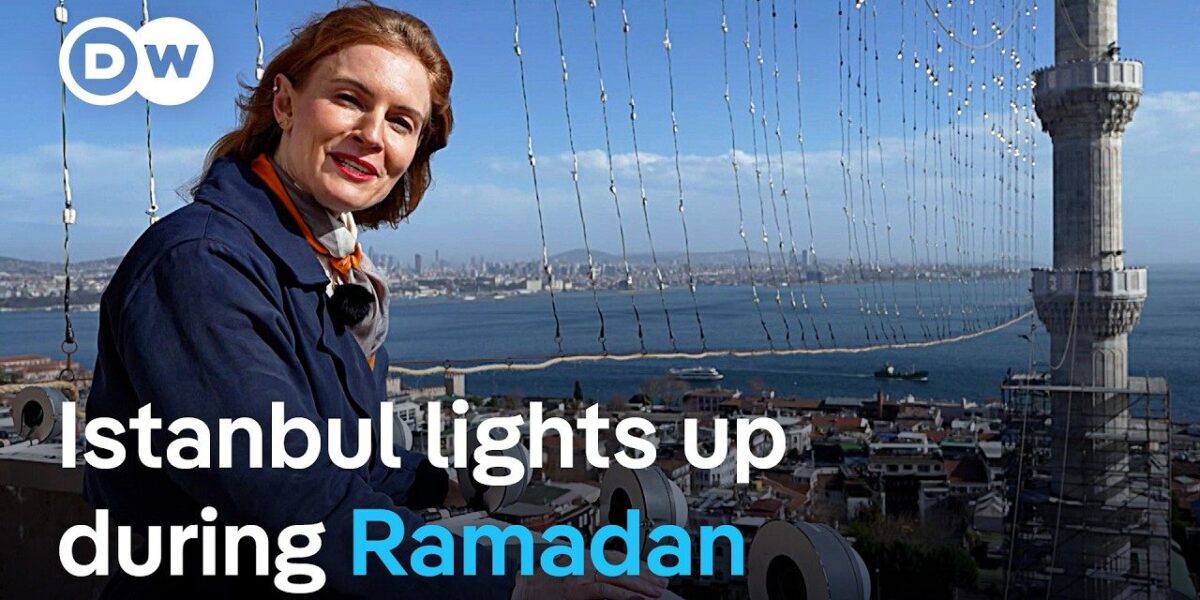
Ancient Craft Illuminates Istanbul’s Ramadan Nights
As dusk settles over Istanbul, a centuries-old tradition illuminates the city’s skyline: the mahya, intricate messages of faith and unity strung between mosque minarets. These glowing displays, a hallmark of Ramadan, are more than just decorative; they are a vital link to the city’s rich Ottoman past. Residents express deep affection for the mahya, with one local noting, “These are beautiful religious messages. We love them. They are such an important part of Ramadan for us. I think these lights are really wonderful at night because when you look at them, it just makes you calm down. And the colors are really amazing here.”
The Master Craftsman Behind the Glow
What appears effortless from below is the result of meticulous, physically demanding work. At 70 years old, Kahra Yildiz is one of the last remaining mahya masters in Turkey. Even in retirement, he continues to ascend the soaring minarets of the Sultanahmet Mosque, personally installing each light. “You can’t make any mistakes,” Yildiz emphasizes. “The letters must be placed precisely. The symmetry must be perfect. It takes some math and some geometry, strength and skill. Sometimes there’s storm, rain, and even snow. But we give our best in any weather.”
From Oil Lamps to LEDs: A Tradition Evolves
The art of mahya is believed to be at least 400 years old, originating in the Ottoman era when messages were formed using oil lamps. Today, Yildiz and his small team utilize electric bulbs, but the fundamental principle remains the same: transforming light into language. The precision required to hang each letter at dizzying heights is evident when viewed from above, highlighting the delicate balance of artistry and engineering involved.
A Fading Legacy in a Digital Age
Despite its historical significance and visual splendor, the mahya craft faces an uncertain future. Across Turkey, only nine mosques still feature these traditional displays, with Yildiz having dedicated over 50 years to preserving this art form. For him, mahya is not merely a job but a profound legacy. However, he struggles to find apprentices willing to learn the demanding craft. Increasingly, mosques are opting for modern LED panels to display digital messages, posing a significant threat to the survival of traditional mahya. “The art of mahya is dying out,” Yildiz laments. “This craft could disappear. I just hope someone comes along to help keep it alive.”
The Enduring Appeal of Craftsmanship
The work, though challenging, is deeply rewarding. “You climb where most people can’t and write messages in the sky,” Yildiz reflects. These messages, such as “Ramadan is about being together,” serve as a poignant reminder of community and shared values. In an increasingly digital world, the mahya represents a tangible piece of craftsmanship and a tradition that Yildiz ardently wishes to pass on, one light at a time.
What’s Next for Istanbul’s Ramadan Lights?
The future of the mahya hinges on finding new practitioners who can master the intricate skills and embrace the dedication required. As digital displays become more prevalent, the challenge lies in bridging the gap between preserving a cherished tradition and adapting to modern technological advancements. The efforts of dedicated individuals like Kahra Yildiz are crucial in this transitional period, offering a beacon of hope for the continuation of this luminous cultural heritage.
Source: The craftsmanship behind Istanbul's glowing Ramadan messages | DW News (YouTube)

Related Articles


Men Battle in Mud for Bountiful Harvest at Japanese Festival
Men in Japan recently participated in a vigorous mud-wrestling festival, a tradition aimed at ensuring a bountiful harvest. Participants expressed a strong desire to preserve Japanese culture by engaging in these challenging rituals and passing them on to future generations.


College Football’s Shortest Shorts Debate Ignites!
College football's uniform debate has intensified, with critics calling for an end to 'booty shorts' and a return to traditional, knee-covering lengths. The discussion highlights a growing sentiment against modern, revealing styles.


Congressman Swalwell Slams Trump’s Iran Strikes, Cites ‘No Plan’
Congressman Eric Swalwell has strongly condemned the recent U.S. military strikes in Iran, deeming them illegal and lacking a clear strategic plan. He joins Democrats in demanding a War Powers vote, asserting that the administration has failed to present evidence of provocation or a post-strike strategy. Swalwell criticizes the move as a distraction from domestic issues and a departure from campaign promises.