Israel’s Actions Spark Global Outrage, US Funding Under Fire
A critical analysis from Midas Touch Network accuses Israel of widespread civilian deaths, targeting journalists, and committing acts of ethnic cleansing and torture. The report also questions US complicity through financial aid and highlights growing public and political dissent against the US-Israel relationship.


Israel’s Actions Spark Global Outrage, US Funding Under Fire
A recent analysis from the Midas Touch Network, featuring journalist Suri Crow, has brought serious accusations against Israel regarding its actions in Gaza and beyond. The report highlights deeply concerning claims about civilian casualties, the targeting of journalists, and the nature of Israel’s government. These allegations paint a disturbing picture that challenges widely held perceptions.
Children and Journalists Targeted?
The analysis begins with a stark claim: Israel is identified as a leading cause of death for children globally. UNICEF estimates suggest over 50,000 children have been killed or wounded in conflicts involving Israel. Beyond children, the report states that Israel has killed over 250 journalists for reporting on what the analysis calls “Israel’s war crimes.” This figure, if accurate, would make Israel a significant threat to press freedom.
A specific incident involving British journalist Steve Sweeney is presented as evidence. Sweeney narrowly escaped a bomb attack in Lebanon, which the report alleges was a deliberate targeting by an Israeli fighter jet. Despite claims of precision bombing by the Israeli Defense Forces (IDF), the analysis dismisses explanations of accidental strikes on civilian areas like hospitals as lies. It argues that the Israeli government possesses advanced technology allowing them to pinpoint targets with extreme accuracy.
Accusations of Ethnic Cleansing and US Complicity
The report describes the destruction in towns like Kada in south Lebanon as a result of Israeli military actions. It draws a parallel between these events and ethnic cleansing, suggesting that Israel is intentionally eliminating entire families. Furthermore, the analysis points to the United States, stating that billions of dollars in aid to Israel are effectively supporting these alleged genocidal actions. The narrative suggests that Americans have been misled into believing Israel is a force for good.
The report also touches upon the political dynamics, suggesting Israeli Prime Minister Benjamin Netanyahu has manipulated former President Donald Trump into a protracted conflict. It questions the nature of the US-Israel relationship, implying it is a “parasitic relationship” where the US is exploited.
Apartheid and Torture Allegations
A significant portion of the analysis focuses on accusations of Israel being an “apartheid state.” It claims that non-Zionist, non-white individuals face discrimination, comparing the situation to the Jim Crow South and apartheid South Africa. This segregation, the report argues, is not reported by Western media, which it claims is influenced by Zionists. The analysis asserts that Israeli society is built on a belief in white supremacy among some Zionist Jews, leading to the mistreatment of Palestinians.
The report makes deeply disturbing claims about the torture of Palestinian prisoners by Israeli forces. It alleges that 85% of captured Palestinians are not Hamas members but innocent civilians. Graphic testimonies are mentioned, describing torture methods including the use of metal rods and electric sticks. The report claims that evidence of these actions exists on video, but that the Israeli government suppresses it.
A particularly shocking incident cited involves five IDF soldiers accused of raping a Palestinian man with a knife. The report states that charges against them were dropped, and the military lawyer who leaked the video faced repercussions. The analysis notes that these soldiers were reportedly celebrated by some Israelis, further fueling the critique.
Critique of Israeli Democracy and US Support
The analysis strongly disputes Israel’s self-proclaimed status as the “only real democracy in the Middle East,” labeling it a “fascist autocratic regime.” It argues that such actions are not characteristic of democratic nations and draws a parallel to perceived issues within the United States. The report criticizes the long tenure of Benjamin Netanyahu, suggesting it is not accidental and that many Israelis support his policies.
A major point of contention is US taxpayer money being sent to Israel while Americans face economic hardship. The report questions why the US provides billions to Israel, which allegedly offers its citizens free housing, healthcare, and education, while many Americans struggle with basic necessities. This is framed as a betrayal of American citizens.
Shifting Political Landscape and Anti-Zionist Voices
The analysis suggests a growing awareness among Americans about the US-Israel relationship, with the word “Israel” becoming increasingly negative. It points to politicians distancing themselves from pro-Israel lobbying groups like AIPAC, citing examples of politicians who have previously accepted AIPAC funding but are now campaigning to reject it. The report also mentions efforts by figures like Senator Bernie Sanders to block arms sales to Israel, highlighting a growing opposition within the political sphere.
The report includes perspectives from anti-Zionist groups, such as the “Voice of Rabbis.” This group is quoted as stating that criticizing Israel is not anti-Semitism and that Israel is not a Jewish state, nor is Zionism synonymous with Judaism. The analysis encourages viewers to learn more about the formation of Israel, suggesting its history is not aligned with true Judaism. It posits that Zionism and white Christian nationalism share a common goal of domination, contrasting this with a religion of peace.
Why This Matters
This analysis raises profound questions about international relations, human rights, and the role of the United States in global conflicts. The allegations of widespread civilian deaths, the targeting of journalists, and systematic torture, if substantiated, would represent severe violations of international law. The critique of US foreign aid and its implications for American domestic welfare strikes a chord with citizens concerned about economic priorities.
The discussion also highlights the complex relationship between political ideology and religious identity, particularly concerning Zionism and Judaism. By drawing parallels between different nationalist movements, the analysis prompts a deeper examination of power, dominance, and the pursuit of peace. The growing public discourse and political action against established pro-Israel lobbying groups suggest a potential shift in public opinion and policy, making this a critical moment for understanding the evolving dynamics of the conflict and its international implications.
Historical Context and Background
The establishment of Israel in 1948, following World War II and the Holocaust, was a pivotal moment in modern history, intended to provide a homeland for the Jewish people. However, the subsequent displacement of Palestinians and the ongoing conflict have been sources of international concern and debate for decades. The narrative surrounding this conflict is often deeply polarized, with strong arguments and counter-arguments from all sides.
The concept of Zionism, a political movement advocating for a Jewish homeland in the historical Land of Israel, has evolved over time. While initially a response to anti-Semitism and persecution, its modern interpretation and the policies of the Israeli state have become subjects of intense scrutiny and criticism, particularly from those who see it as incompatible with Palestinian rights and international human rights standards.
Implications, Trends, and Future Outlook
The trends discussed in the analysis point towards increasing scrutiny of US foreign policy and financial commitments, especially in the context of international conflicts. As information becomes more accessible and diverse voices emerge, public opinion may continue to shift, influencing political decisions. The potential for greater accountability for actions perceived as war crimes or human rights abuses is a significant development.
The future outlook suggests a continued struggle to reconcile national interests with ethical considerations in foreign policy. The debate over aid to Israel and the broader implications for regional stability will likely remain a central issue. Furthermore, the challenge of combating misinformation and presenting a balanced view of complex geopolitical situations will be crucial for informed public discourse.
Source: Trump Walked Into WAR TRAP He CAN’T ESCAPE!!! (YouTube)

Related Articles
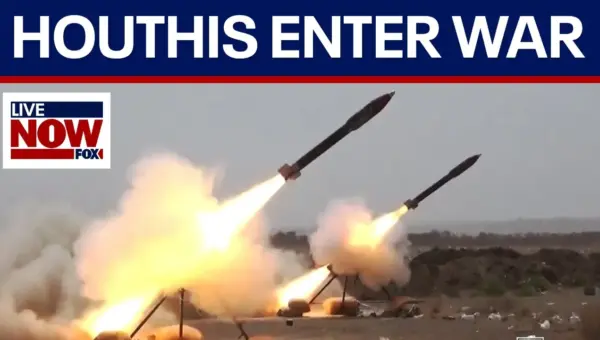
Iran-Backed Houthis Strike Israel, Escalating Regional Tensions
Iran-backed Houthi rebels have launched a missile attack targeting Israel, marking their first such strike since the current Middle East conflict began. The Israeli military confirmed the interception of the projectile. Analysts view this action as part of Iran's broader regional strategy, highlighting the regime's reliance on proxy forces amid internal weaknesses.

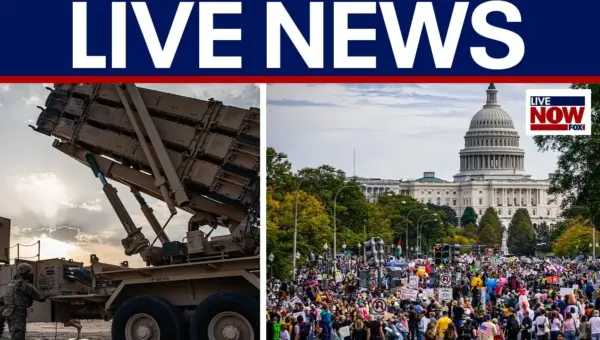
Iran-Backed Houthis Attack Israel; US Troops Injured
Iranian-backed Houthi rebels have claimed responsibility for a missile launch targeting Israel, which was intercepted by Israeli forces. This escalation follows an Israeli strike on Iranian nuclear facilities and a prior Iranian retaliatory attack that injured U.S. troops. Experts suggest Iran's actions aim to project strength despite internal weaknesses and economic hardship for its population.
Israel’s Strategy Against Iran Revealed
Israel's strategy to counter Iran's nuclear ambitions and regional influence centers on containment, utilizing a mix of covert military actions, intelligence operations, and diplomatic pressure. Analysts highlight the growing urgency due to Iran's nuclear advancements, while also noting the persistent risk of escalation in the volatile Middle East.