Israel Vows Hezbollah’s Reckoning Amid Passover Barrage
Israel is warning Hezbollah of severe consequences for increased rocket fire towards Israeli civilians during Passover. The IDF vows to secure southern Lebanon, while Iran's recent missile launch adds to regional tensions. This escalation raises concerns for stability.


Israel’s Northern Front Heats Up
Israel is facing a serious threat from the Iran-backed Hezbollah group along its northern border. This conflict has intensified, with Israel issuing a strong warning to Hezbollah. They stated that the group will face severe consequences for firing rockets towards Israeli civilians, especially during the Passover holiday. This period is one of the holiest times for Jewish people, marking their escape from slavery in ancient Egypt.
A Direct Message to Hezbollah
The Israeli defense minister directly addressed the leader of Hezbollah. He sent a video message clearly stating that both the leader and his supporters would pay a very high price. This message aimed to show Israel’s determination to protect its citizens and restore security. Israel believes the support Hezbollah receives from Iran will not be enough to protect them from the strength of the Israeli Defense Forces (IDF).
IDF’s Commitment to Security
Israel’s military is committed to bringing security back to the northern region. They have vowed to remove Hezbollah and its backers from southern Lebanon. The goal is to establish IDF control over the entire Litani River area. This action is seen as a way to neutralize the threat posed by Hezbollah, described as the ‘teeth of the snake,’ throughout Lebanon.
Recent Military Actions
In the past 24 hours, Israeli forces reported significant actions. They stated that they killed around 40 Hezbollah fighters. Additionally, dozens of Hezbollah’s military sites and infrastructure were destroyed. Israel is continuing its ground operations in southern Lebanon, aiming to degrade Hezbollah’s capabilities.
Broader Regional Tensions
These events are happening alongside other major regional developments. Iran recently launched about 10 missiles targeting central Israel. This attack occurred in the early evening, just before sunset. Siren alerts forced millions of Israelis to seek shelter as they were preparing to celebrate the first night of Passover. This shows the wider tensions involving Iran and its allies in the region.
Historical Context
The conflict between Israel and Hezbollah has a long and complex history. Hezbollah, a Shiite political party and militant group based in Lebanon, has been a significant adversary for Israel for decades. The group emerged in the early 1980s, partly in response to the Israeli invasion of Lebanon. Their actions often involve rocket attacks and cross-border skirmishes, while Israel responds with airstrikes and ground operations. This ongoing struggle is deeply intertwined with the broader geopolitical dynamics of the Middle East, particularly the rivalry between Iran and Israel.
Why This Matters
The escalating conflict on Israel’s northern border is a serious concern for regional stability. The targeting of civilian areas, especially during a significant religious holiday like Passover, raises the stakes considerably. It highlights the persistent threat posed by non-state actors like Hezbollah, which are often backed by larger regional powers like Iran. The IDF’s stated intention to gain full security control over southern Lebanon signifies a potential shift in military strategy. This could lead to a more prolonged and intense engagement.
Implications and Future Outlook
The current situation suggests a period of heightened tension and potential for further escalation. Israel’s strong rhetoric and military actions indicate a resolve to decisively address the Hezbollah threat. However, such actions also carry risks, including potential civilian casualties and the possibility of a wider regional conflict. The involvement of Iran as a backer of Hezbollah adds another layer of complexity. Any significant military action by Israel could draw a response from Iran or its other proxies, leading to a dangerous cycle of retaliation. The international community will be watching closely, as any major conflict in this region could have global economic and political repercussions.
The focus on Passover, a holiday celebrating freedom and redemption, stands in stark contrast to the current reality of fear and conflict for many Israelis. This juxtaposition underscores the deep emotional and historical significance of the ongoing struggle for security in the region. The coming weeks and months will likely reveal the true extent of Israel’s commitment to its stated goals and the world’s reaction to them.
Source: Israel Warns Hezbollah ‘Will Pay’ for Bombardment During Passover (YouTube)

Related Articles


Strait of Hormuz Tensions Risk Wider Middle East War
Efforts to secure the vital Strait of Hormuz risk triggering a wider Middle East war, according to UN warnings and security analysts. The narrow waterway is crucial for global trade, and forcing it open against Iran's objections could escalate regional tensions dramatically. Experts highlight the complex geography, Iran's remaining military capabilities, and the involvement of regional players as key factors in the volatile situation.
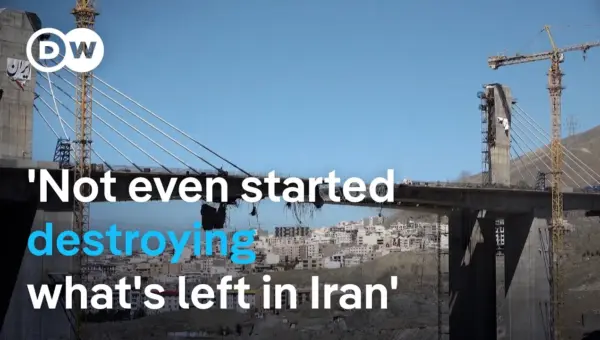
Iran Bridge Strike: US Hits Civilian Infrastructure, Causes Deaths
A US airstrike has destroyed Iran's tallest bridge, killing eight and wounding 95. The attack, called a strike on civilian infrastructure by Iran, follows escalating threats from President Trump. Experts warn that targeting power plants and healthcare facilities could lead to a severe humanitarian crisis and potential war crimes.


Trump Fires AG, Middle East Tensions Rise, Space Mission Advances
President Trump fired Attorney General Pam Bondi, citing frustration with her performance. Meanwhile, Middle East tensions escalated with increased strikes on civilian infrastructure, causing oil prices to surge past $100 a barrel. In space news, the Artemis II mission successfully began its journey towards the Moon with four astronauts aboard.