Israel, US Goals Clash Amid Iran Tensions
Tensions remain high as Israel and the United States appear to be at odds over their strategic objectives concerning Iran. Reports of Iran's missile capabilities are being scrutinized, while differing goals between Washington and Jerusalem complicate de-escalation efforts. The future of regional security, particularly around the Strait of Hormuz, hangs in the balance.


Israel and US Differ on Iran Strategy
Recent events involving Iran have highlighted a significant gap between the strategic goals of Israel and the United States. While both nations share concerns about Iran’s actions, their approaches to addressing these concerns appear to be diverging, leading to complex diplomatic challenges.
Concerns Over Iranian Missile Capabilities
Reports suggesting Iran possesses missiles capable of reaching distant targets, including London, have surfaced, with some sources pointing to Israeli intelligence. However, experts question the credibility of these claims, suggesting they may serve Israel’s agenda to garner greater international support. Simon McDonald, former permanent under-secretary at the Foreign and Commonwealth Office, noted the lack of independent evidence for such advanced capabilities. He also pointed out that Iran has not, to date, attempted to use missiles of such range, despite recent Israeli and US strikes targeting Iran’s missile programs.
“Frankly, there’s no evidence that they have missiles of this capability, apart from an Israeli source, and the Israeli agenda is to get Europe more concerned, more involved, more supportive of what they’re doing.”
Simon McDonald, Former Head of Diplomatic Service
McDonald acknowledged that missiles aimed at Diego Garcia were intercepted, but stressed that they did not reach their intended targets. He also confirmed that the UK lacks comprehensive missile defense systems, potentially leaving it vulnerable if such threats were realized. However, he reiterated that evidence for Iran possessing such long-range missiles remains scarce, especially following recent military actions that have likely degraded Iran’s existing capabilities.
Diverging Objectives in Iran Conflict
The core of the current misalignment lies in the differing objectives of the US and Israel regarding Iran. While the US, under President Trump, seems to be seeking a way to declare victory and potentially de-escalate, Israel’s aims are more far-reaching. Israel desires a permanent degradation of Iran’s missile and nuclear capabilities, and possibly its military infrastructure, a goal that would likely require a longer and more intensive engagement.
This difference in objectives suggests ongoing, possibly tense, discussions between Washington and Jerusalem. If the US decides its objectives have been met and seeks to withdraw, it could leave Israel feeling that its own goals are unmet. This divergence raises questions about the future security arrangements in the region, particularly concerning the Strait of Hormuz.
The Strait of Hormuz and Allied Support
Donald Trump has suggested that allies could take over the responsibility of policing the Strait of Hormuz if the US scales back its involvement. However, McDonald expressed skepticism about the feasibility of this plan without significant US participation and a clear strategy. He indicated that the US Navy might be reluctant to shoulder this burden alone, which could influence how other nations react to such a proposal. A robust force, including the United States, is seen as essential for effective policing of the vital waterway.
Iran’s Response and Future
Despite facing targeted strikes, Iran has continued its drone and missile attacks, albeit with less capable systems that cause inconvenience rather than significant damage to facilities. McDonald believes Iran’s ability to sustain these actions may be limited by supply issues. He also suggested that Iran’s immediate response might be short-lived, as they are likely incentivized to avoid prolonging the conflict, especially given the disruption they have already caused to regional neighbors.
The conflict has undeniably led to a significant loss of key personnel at the top levels of Iran’s military and intelligence apparatus. Those who have taken their place are aware that their adversaries possess the capability to strike again. This knowledge might lead Iran to reconsider its future actions. Alternatively, anger over the losses could push them to quickly rebuild their capabilities, a scenario McDonald acknowledged remains uncertain.
Impact on UK Relations with Allies
The current geopolitical climate, marked by the conflict involving Iran and the differing stances of the US and Israel, has implications for the UK’s foreign relations. While the US remains the UK’s most crucial ally, its unpredictable nature requires constant careful management. The UK may also find renewed impetus to strengthen its security and defense ties with European Union members, even after Brexit, to bolster collective security.
Looking Ahead
The situation remains fluid, with potential for both de-escalation and further escalation. Key factors to watch include the long-term strategic decisions of the United States regarding its engagement in the region, Israel’s continued pursuit of its objectives in Iran, and Iran’s capacity and willingness to retaliate. The stability of the Strait of Hormuz and the broader implications for global energy markets will also be critical areas to monitor in the coming months.
Source: Israel and The US Are Misaligned In Their Goals In Iran (YouTube)

Related Articles

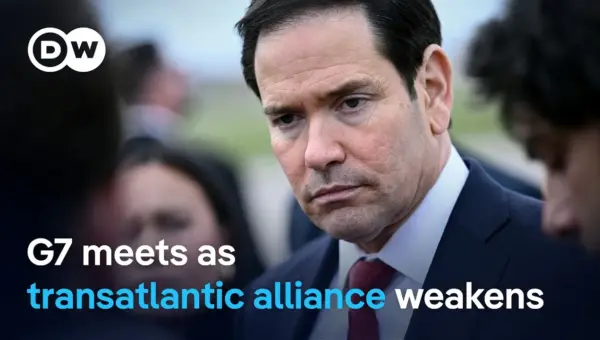
G7 Allies Clash Over Iran War Strategy, Urge Focus on Russia
G7 foreign ministers met in Paris, revealing deep divisions over the U.S. war with Iran. European allies urged the U.S. to pressure Russia, linking its actions to the conflict and fearing support for Ukraine will wane.

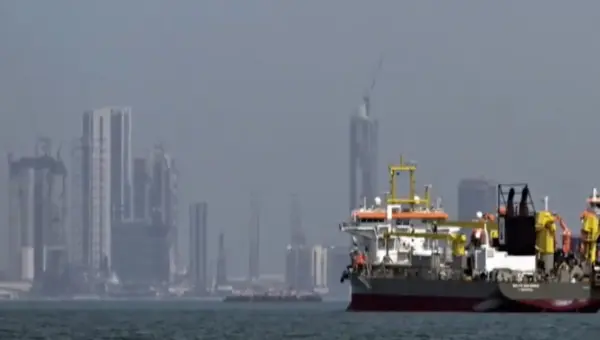
Iran Blocks China Ships, Exposing Beijing’s Weak Grip
Iran's recent decision to block Chinese ships at the Strait of Hormuz is exposing the limits of Beijing's influence in the Middle East. This action is causing delays and cancellations for Chinese manufacturers, turning a perceived geopolitical win into an economic strain.
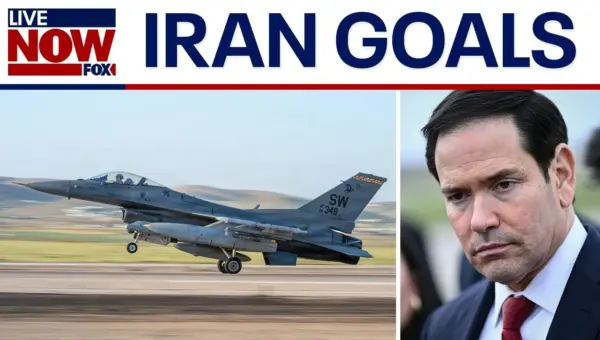
Rubio: US Can Achieve Iran War Goals Without Troops
Senator Marco Rubio outlined a strategy to counter Iran without deploying U.S. ground troops, focusing on weakening the regime and enhancing maritime security. He also criticized Cuba's economic system and expressed concerns about West Bank violence.