Israel Threatens Lebanon Invasion Amid Escalating Regional Conflict
Israel has threatened to "take territory" in Lebanon, escalating tensions amid retaliatory strikes and counter-strikes with Hezbollah. Security analyst Sarah Hamush discusses Israel's strategy to degrade Iranian-backed groups and the risk of a wider regional conflict.

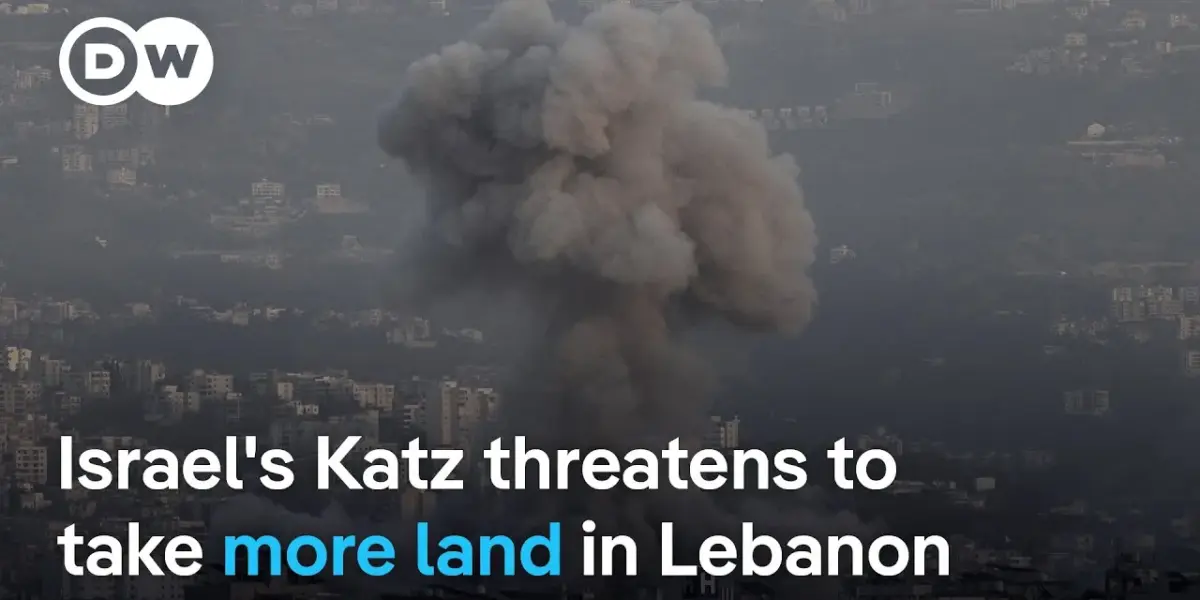
Israel Escalates Lebanon Standoff, Threatens Territorial Takeover
Beirut, Lebanon – Israel has issued a stark warning to Lebanon, threatening to seize territory if the Lebanese government fails to curb militant activity by Hezbollah. The dramatic escalation follows a coordinated overnight attack by Hezbollah, described by Israel as the largest of the current conflict, which prompted retaliatory strikes by the Israel Defense Forces (IDF) across southern Lebanon and the capital, Beirut.
The intensified exchange of fire comes as the death toll in Lebanon nears 700, with Israeli military operations targeting Hezbollah positions. In Beirut, residents reported devastating strikes hitting civilian areas, including neighborhoods housing families displaced by the ongoing conflict. One resident described the experience as “indescribable,” with women and children terrified by explosions that struck near their homes.
The attacks in Beirut reportedly killed at least eight people and wounded dozens more. Simultaneously, Israeli forces targeted southern Beirut, a traditional stronghold of the Iran-backed Hezbollah group. Israel stated these actions were a direct response to Hezbollah’s launch of approximately 200 rockets into Israel, marking the most significant barrage of the war to date.
Israel’s Strategic Aims and Shifting Tactics
Sarah Hamush, CEO of Defense and Foreign Policy Consultancy H9 in Washington D.C., explained Israel’s multifaceted strategy in the broader regional conflict, which is largely centered on countering Iran’s influence. “Israel’s strategy broadly in the Iran war is to eliminate Iran’s existential threat,” Hamush stated. “It’s doing so by focusing on degrading Iran’s military capabilities and second, it’s also pressuring its regional network by hitting connected fronts, especially Hezbollah and Lebanon.”
Hamush elaborated on Israel’s objectives concerning Hezbollah: “The strategy there also is to degrade Hezbollah’s military activities at the same time pressure Beirut and the Lebanese state to act faster and more decisively against Hezbollah.” She added that Israel aims to signal to the region that it is prepared to broaden the conflict if Hezbollah is not disarmed and the Lebanese state cannot contain the group.
The recent threat by Israeli Defense Minister Israel Katz to “take territory” signifies a potential shift from punitive strikes to a broader coercion campaign. “This means it would just not be militarily. It would also be politically directed at the Lebanese at Beirut, either contain Hezbollah or Israel will raise the cost,” Hamush explained. Such a move carries the risk of increased civilian displacement, greater pressure on Beirut, and the potential for the Lebanon front to develop its own momentum, separate from the primary conflict with Iran.
Lebanon Caught in the Crossfire
Civilians in Lebanon find themselves increasingly exhausted and stressed, caught between Israeli military actions and Hezbollah’s continued defiance. Over 800,000 people have been displaced in less than two weeks, with the looming threat of an Israeli ground invasion amplifying anxieties. Many Lebanese express a desire for peace and stability, fearing the devastating consequences of prolonged warfare.
Lebanon’s government has publicly accused Hezbollah of actions that threaten state stability and has called for negotiations with Israel. However, these calls for de-escalation appear to be unheeded, with the conflict intensifying.
Concerns about Lebanon’s stability have been raised, with Turkey’s foreign minister expressing fears of state collapse. Hamush, however, refrained from labeling Lebanon a “failed state,” noting the country’s severe economic challenges since the last major conflict and the government’s attempts to counter Hezbollah’s independent military operations. She highlighted a significant divergence between Hezbollah’s strategic objectives, aligned with Iran’s goals of deterrence and defense, and the Lebanese state’s priorities of national survival, de-escalation, and avoiding institutional collapse.
Hezbollah’s Autonomy and Regional Cascading Conflict
Regarding Hezbollah’s relationship with Iran, Hamush clarified that while the group is not a mere puppet, it operates within an Iranian strategic framework, particularly on issues of major escalation. “Hezbollah retains some operational agency but it is operating right now and acting right now under an Iranian strategic framework,” she stated. Increased coordination with Iran’s Revolutionary Guard, especially under the current leadership, has been observed.
The current situation exemplifies what Hamush describes as “cascading extremist dynamics,” where conflict in one theater triggers actions and risks in others. “This is no longer a set of neatly separated theaters. You are starting to see that the Iran war has activated linked fronts, disrupted shipping and energy routes and also triggered missile activity well beyond the immediate Iran-Israel theater and also dragged Lebanon deeper into the fighting,” Hamush observed.
The conflict is no longer confined to Israel and Iran, with actions in one area creating incentives and risks in others. Linked fronts have opened in Lebanon, and Gulf countries have been drawn into escalation. The potential actions of Iran’s proxy in Yemen, the Houthis, remain a critical unknown factor in the unfolding regional dynamic.
Future Outlook: A Million-Dollar Question
The trajectory of the conflict remains uncertain, with Hamush describing the potential for further expansion as a “million-dollar question.” The outcome hinges on the interactions between various actors, including Iran’s proxies, Gulf nations, and the strategic decisions of the United States. While Israel and the U.S. may achieve military objectives, Hamush cautioned that “military success does not always mean an end stable political outcome.” The coming weeks will be critical in determining whether the current escalation is the peak of the cascade or the prelude to a wider regional conflagration.
“Israel’s strategy broadly in the Iran war is to eliminate Iran’s existential threat… by focusing on degrading Iran’s military capabilities and second, it’s also pressuring its regional network by hitting connected fronts, especially Hezbollah and Lebanon.” – Sarah Hamush, CEO of Defense and Foreign Policy Consultancy H9
“This is no longer a set of neatly separated theaters. You are starting to see that the Iran war has activated linked fronts, disrupted shipping and energy routes and also triggered missile activity well beyond the immediate Iran-Israel theater and also dragged Lebanon deeper into the fighting.” – Sarah Hamush
Source: Israel threatens to 'take territory' in Lebanon — What's Israel’s current strategy? | DW News (YouTube)

Related Articles
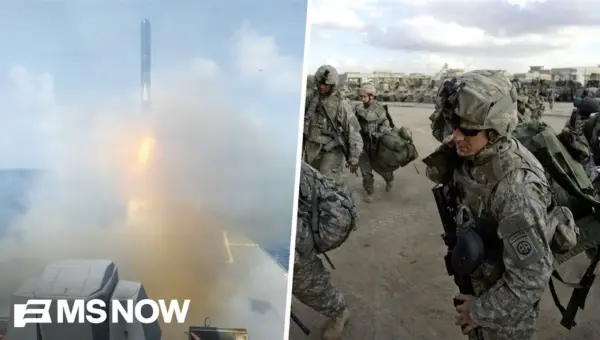
Iran Missile Strikes Injure US Troops, Raise War Concerns
Iranian missile strikes have injured U.S. service members, escalating tensions as the conflict nears one month. The attacks are raising concerns about the effectiveness of U.S. military strategy and the depletion of crucial missile stockpiles. Global oil prices have surged, impacting economies worldwide.

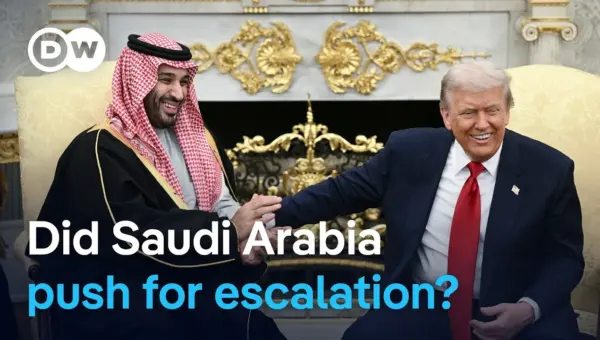
Saudi Arabia Pushes US for Iran War, Report Claims
Saudi Arabia's Crown Prince Mohammed bin Salman has reportedly urged the US to escalate military action against Iran, viewing it as an opportunity to reshape the Middle East. While Saudi officials deny the report, the push comes amid increased Iranian attacks on Saudi oil infrastructure. Experts suggest a complex dynamic where Saudi Arabia seeks US intervention while also managing the risks of regional instability.


Israelis Forge Resilience Amidst Constant Bomb Shelter Drills
Life in Israel is a blend of resilience and constant vigilance, with many families adapting to frequent bomb shelter drills and even sleeping in makeshift shelters. Despite ongoing missile attacks, Israelis strive to maintain normalcy, though businesses face disruption and emotional fatigue is a growing concern.