Israel Strikes Lebanon After Hezbollah Missile Barrage
Israel launched airstrikes into southern Lebanon on Wednesday following a significant missile barrage from Hezbollah. The tit-for-tat attacks mark a dangerous escalation in cross-border hostilities, raising concerns of a wider regional conflict.


Israel Launches Airstrikes on Lebanon Following Hezbollah Missile Attacks
BEIRUT, Lebanon – Israel launched airstrikes into southern Lebanon on Wednesday in response to a significant missile barrage fired by Hezbollah across the border, escalating cross-border hostilities that have become a daily feature of the ongoing conflict. The exchange of fire marks another dangerous turn in the volatile regional situation, with fears growing of a wider conflagration.
Hezbollah Claims Responsibility for Missile Fire
Hezbollah, the powerful Lebanese militant group and political party, claimed responsibility for firing dozens of rockets and missiles towards northern Israel. The group stated the strikes were in retaliation for recent Israeli actions, though specific details regarding the trigger were not immediately elaborated upon in their statements. The scale of the Hezbollah attack indicated a significant escalation in their operational capacity and intent.
Israeli Defense Forces Respond with Airstrikes
In a swift and decisive response, the Israel Defense Forces (IDF) confirmed they had conducted airstrikes targeting Hezbollah military infrastructure in southern Lebanon. The IDF stated their objective was to neutralize threats and degrade Hezbollah’s ability to launch further attacks. Details about the specific targets and any potential casualties on the Lebanese side were not fully disclosed by the Israeli military, adhering to usual operational security protocols.
Context of Escalating Tensions
The latest exchange comes amid heightened tensions across the Middle East, particularly following the recent conflict involving Hamas and Israel in Gaza. Since the outbreak of hostilities in Gaza, there has been a notable increase in cross-border skirmishes between Israel and Hezbollah, a heavily armed group with close ties to Iran. These clashes have led to casualties on both sides and prompted widespread displacement of civilians in border regions of both Lebanon and Israel.
Analysts have expressed deep concern over the potential for miscalculation or deliberate escalation that could draw in other regional actors, further destabilizing an already fragile geopolitical landscape. The involvement of Hezbollah, a non-state actor with a significant military arsenal, poses a unique challenge to regional security and international diplomatic efforts.
Impact on Civilians and Regional Stability
The repeated exchanges of fire have had a devastating impact on civilian populations in the border areas. Thousands of residents in northern Israel have been evacuated from their homes, living in temporary accommodations and facing an uncertain future. Similarly, in southern Lebanon, communities have been heavily affected, with infrastructure damage and a growing humanitarian crisis. The ongoing violence disrupts daily life, damages economies, and fuels fear and uncertainty.
International bodies and various governments have repeatedly called for de-escalation and urged all parties to exercise restraint to prevent a broader conflict. However, diplomatic efforts have thus far struggled to achieve a lasting cessation of hostilities.
Looking Ahead
The coming days will be critical in determining the trajectory of this escalating conflict. All eyes will be on whether either side chooses to further retaliate or if diplomatic channels can be effectively utilized to quell the immediate violence and address the underlying causes of the tensions. The international community will likely continue to monitor the situation closely, with a focus on preventing a full-scale war that could have catastrophic consequences for the region and beyond.
Source: Israel launched strikes on Lebanon after Hezbollah fired missiles across the border (YouTube)

Related Articles

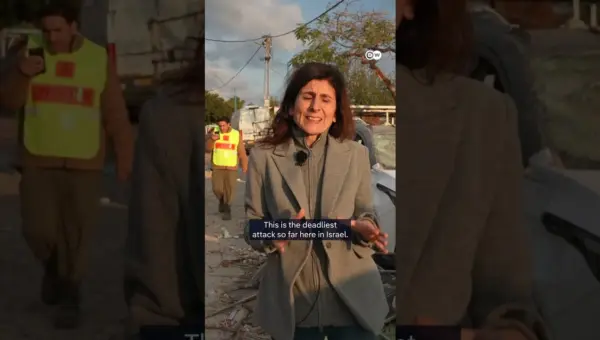
Iran Missile Strike Kills Many Near Jerusalem
A direct Iranian ballistic missile strike on a residential neighborhood in Beamesh, near Jerusalem, has resulted in heavy casualties and widespread destruction. The attack, which bypassed Israeli air defenses, represents a significant escalation and has left the region on high alert.


Hegseth’s War Spin: A Desperate Defense of a Flawed Strategy
Secretary of Defense Pete Hegseth's defense of the current Middle East conflict has been met with sharp criticism, accused of being a desperate performance masking a flawed strategy. The analysis questions the administration's narrative on the war's origins, highlights perceived missteps, and warns of escalating chaos and human cost.
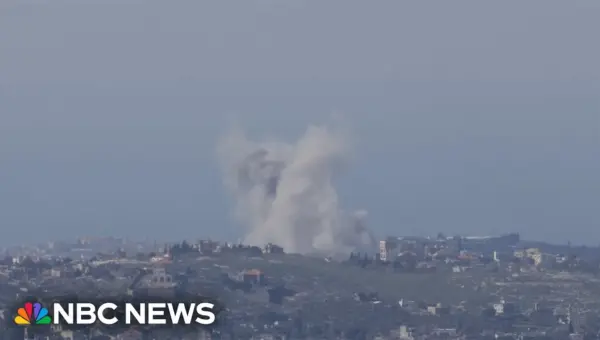
Mideast War Escalates: US Jets Downed, Israel Strikes Hezbollah
The Middle East is on high alert as a conflict with Iran escalates, marked by the downing of three U.S. warplanes in Kuwait and Israel's new offensive against Hezbollah. The strikes follow joint U.S.-Israeli attacks on Iran that reportedly killed its Supreme Leader, Ayatollah Ali Khamenei.