Israel Strikes Iran’s Security Chief, Allies Target Repression Apparatus
Israel has reportedly killed Iran's security chief Ali Larijani and other top officials in a strike targeting the nation's internal repression apparatus. The move is seen as a strategic shift by allies to weaken the regime internally, offering hope to the suffering Iranian population. Meanwhile, former President Trump has criticized the UK's limited involvement, straining transatlantic relations.

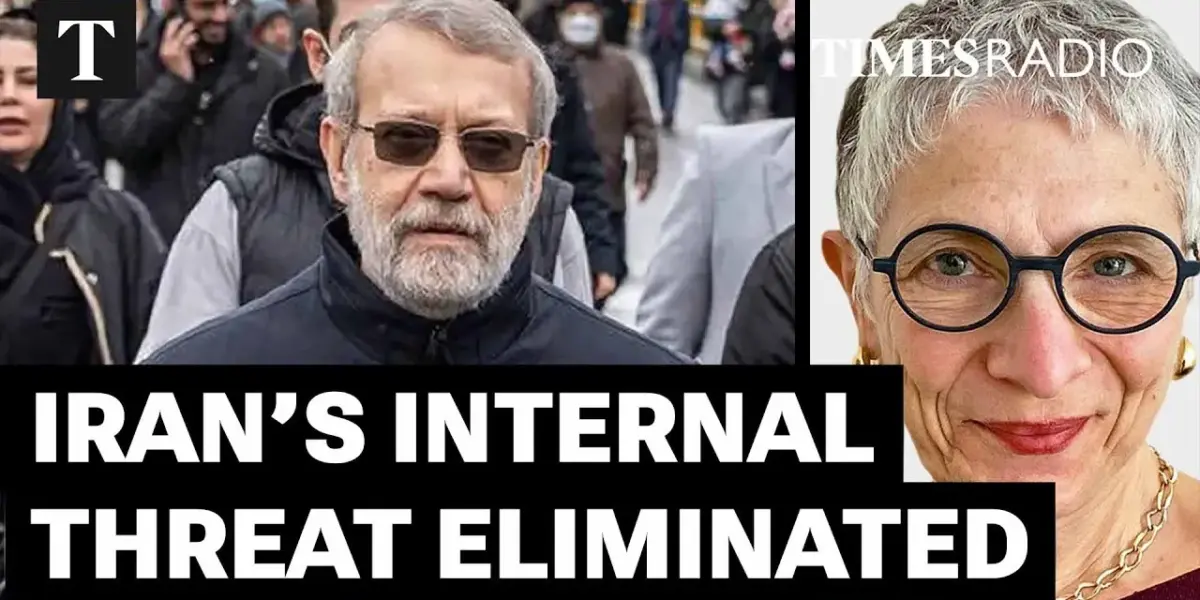
Israel Claims Key Iranian Security Official Killed in Strike
Jerusalem, Israel – In a significant development in the escalating Middle East conflict, Israel announced that its military has killed Ali Larijani, identified as Iran’s security chief, in a recent strike. The operation reportedly also eliminated the entire high command of Iran’s paramilitary security force, the Basij. This development marks a strategic shift, with allies Israel and the United States increasingly targeting Iran’s internal repression apparatus alongside its military capabilities.
Targeting Iran’s Internal Repression
Melanie Phillips, a columnist for The Times, described the news as “amazingly good news for the people of Iran who have suffered for 47 years.” Phillips explained that the alliance’s strategy now extends beyond degrading Iran’s military capacity, including its missiles, launchers, and naval assets. The focus has significantly advanced towards dismantling the internal security forces, which have been responsible for widespread repression.
“So what the alliance, Israel and America are now doing, in addition to degrading Iran’s military capacity in terms of its missiles and its missile launchers and all that, its naval boats and so on, they are beginning to or have significantly advanced in taking out the internal repression apparatus.”
Phillips elaborated that the Basij, along with the Islamic Revolutionary Guard Corps (IRGC), have been principally responsible for the torture, jailing, and murder of tens of thousands of Iranian citizens. The strategic aim of these strikes, she suggested, is to create an environment where the Iranian people can eventually rise up and overthrow the regime, once the “deadly threat posed to them by the internal security apparatus” is removed.
Escalating Tensions and Regional Impact
The conflict has brought the realities of war to the heart of Israel. Phillips, speaking from Jerusalem, described a recent period of relative quiet but noted that other areas, including Tel Aviv, have experienced multiple air raid alerts daily. She expressed concern over debris from intercepted Iranian missiles, some of which are enormous, falling in sensitive locations, including near the Temple Mount in the Old City. This raises fears that Iran might be intentionally targeting such flashpoints.
Transatlantic Tensions Flare Over UK’s Role
The interview also touched upon tensions within the transatlantic alliance, particularly concerning the United Kingdom’s response to the conflict. Former U.S. President Donald Trump has been highly critical of UK Prime Minister Keir Starmer, accusing him of failing to commit naval assets to assist in the Middle East. Phillips characterized Trump’s remarks as a potential “new low” for the special relationship, noting his volatile nature and his expectation that allies, especially Britain, should “step up to the plate” in times of crisis.
Phillips observed that Trump views Britain as a historically reliable ally and is genuinely dismayed by its perceived lack of engagement. She also highlighted a broader sentiment within American intelligence and political circles that Britain has been declining as a reliable ally, citing concerns about its identity and willingness to defend itself. This perspective, she warned, is “extremely worrying from the point of view of Britain.”
Regarding the UK’s stance, Phillips noted that most major political parties, including the current government and the opposition, appear to favor a more reserved role in the conflict. She suggested that the British public largely does not approve of direct involvement, viewing it as a war initiated by the U.S. and Israel, rather than a direct NATO threat.
Historical Context of the Conflict
Phillips offered a historical perspective on the current hostilities, arguing that Iran has been engaged in a de facto war with the West, the United States, and Israel since the 1979 revolution. She pointed to decades of Iranian-backed attacks, particularly in Iraq, which have resulted in the deaths of thousands of coalition soldiers. The current Israeli and American actions, she contended, represent a long-overdue response to Iran’s sustained aggression, finally “returning fire” after 47 years of covert and proxy warfare.
Looking Ahead
The targeted killing of Ali Larijani and the broader strategy of dismantling Iran’s internal security apparatus represent a significant escalation and a potential turning point. The coming weeks will reveal the immediate impact of these strikes on Iran’s command structure and the regime’s response. Furthermore, the ongoing friction within the transatlantic alliance, particularly between Donald Trump and UK leadership, will be closely watched for its implications on international cooperation and security in the volatile Middle East region.
Source: Israel Claims To Kill Iranian Security Chief Ali Larijani | Melanie Phillips (YouTube)

Related Articles


Iran Targets US With Cyberattacks, Escalating Digital Warfare
Iran is increasingly using cyberattacks to challenge the U.S., as seen in a recent hack of the FBI director's account. Experts say this is a strategic shift due to Iran's limitations in conventional warfare. The U.S. needs to strengthen its digital defenses, focusing on encryption and cloud computing, rather than solely relying on traditional security measures.

Iran Hacks FBI Chief, Exposing U.S. Cyber Vulnerabilities
A recent hack of FBI Director Kash Patel's personal email by an Iran-linked group highlights Iran's growing cyber threat to the U.S. Experts explain how simple security oversights are exploited, emphasizing the need for basic defenses like two-factor authentication to protect against propaganda and potential infrastructure attacks.

Trump Halts Iran Strikes Amid Stalled Diplomacy
President Trump announced a pause on planned strikes against Iran, citing productive talks, though Iran denies negotiations occurred. Reports also suggest a potential U.S. ground operation on Iran's Hark Island. The situation raises concerns about international support for Ukraine and potential shifts in U.S. foreign policy.