Israel Launches Ground Operations in Lebanon, Escalating Regional Tensions
Israel has launched ground operations in Lebanon, targeting Hezbollah strongholds in what it describes as "limited and targeted" actions. The move has intensified fighting and raised concerns about a broader regional conflict, with explosions reported in Beirut and evacuations ordered.

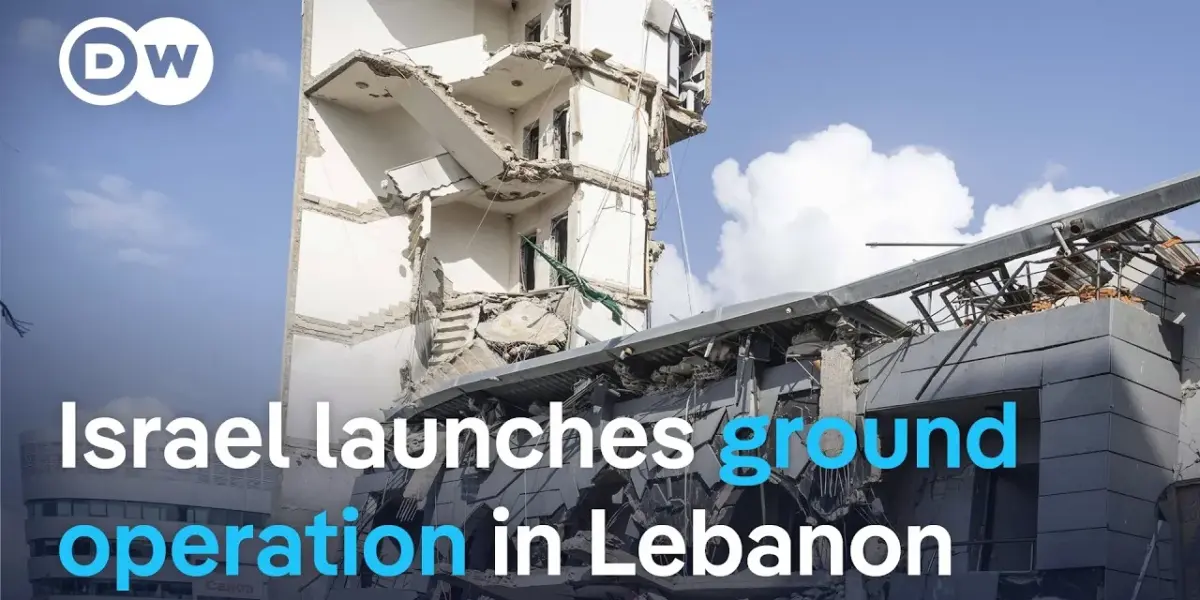
Israel Initiates Ground Operations in Southern Lebanon
The Israeli military has announced the commencement of ground operations in Lebanon, characterizing them as “limited and targeted” actions aimed at Hezbollah strongholds. This escalation follows a period of intensifying cross-border exchanges, raising significant concerns about a broader regional conflict. The operations, described by the IDF as focused on disrupting militant infrastructure, have led to increased fighting in southern Lebanon, a traditional stronghold of the Iran-backed group.
Hezbollah’s Response and Civilian Impact
Hezbollah has responded to the incursions, with reports of clashes occurring in multiple locations along the border. The group, a powerful non-state actor with a significant military arsenal, has vowed to defend Lebanon against Israeli aggression. The civilian impact of these operations is a growing concern. Overnight, massive explosions were heard across Beirut, the Lebanese capital, with the Israeli army ordering the evacuation of several neighborhoods. This suggests a potential expansion of Israeli operations beyond the immediate border region, targeting leadership or infrastructure within the city.
Expert Analysis: A Delicate Balancing Act
H. A. Hellyer, a Senior Research Fellow at the Royal United Services Institute (RUSI), offered insights into the complexities of the situation. “What Israel is attempting to do is to essentially degrade Hezbollah’s capabilities, particularly its offensive capabilities, and to create a different security reality along its northern border,” Hellyer stated. He emphasized that the operations are designed to be a “limited and targeted” response, suggesting a strategic effort to avoid a full-scale war while still achieving military objectives.
Hellyer elaborated on the delicate balancing act involved: “The Israelis are very keenly aware that a full-scale war with Lebanon, and by extension with Hezbollah, would be incredibly costly, not only in terms of Israeli lives but also in terms of the destruction of infrastructure within Israel itself.” He highlighted that Hezbollah possesses a substantial arsenal, including tens of thousands of rockets, capable of reaching deep into Israeli territory. Therefore, any large-scale confrontation would likely result in significant retaliation.
Regional Ramifications and the Iran Factor
The ground operation in Lebanon carries significant regional implications. Hezbollah is a key component of Iran’s “axis of resistance” in the Middle East. An escalation involving Hezbollah could draw Iran more directly into the conflict, either through direct support or by activating other allied groups in the region. This raises the specter of a wider conflagration, potentially involving Syria, Iraq, and even further afield.
The involvement of Iran is a critical factor that Israel must consider. “Iran is a major player in this,” Hellyer noted. “It is the primary funder and armorer of Hezbollah. Therefore, any Israeli action against Hezbollah is perceived by Iran as an attack on its own interests.” This dynamic means that Israel’s actions in Lebanon are not just a bilateral issue but are viewed within the broader geopolitical context of Iran’s regional influence.
The Gaza War Context
These developments in Lebanon are occurring against the backdrop of the ongoing war in Gaza. The conflict between Israel and Hamas, which began with Hamas’s attacks on October 7th, has already destabilized the region. The ground operation in Lebanon could be seen as an attempt by Israel to address a secondary, yet significant, security threat while preoccupied with the Gaza conflict. However, it also risks diverting resources and attention, potentially complicating efforts to achieve a decisive outcome in Gaza.
The war in Gaza has already led to increased tensions on the Lebanese border, with daily exchanges of fire between Israeli forces and Hezbollah. The decision to launch ground operations suggests that Israel believes the existing measures are insufficient to address the threat posed by Hezbollah, particularly in light of perceived advancements in the group’s capabilities.
International Concerns and Future Outlook
International actors are closely monitoring the situation, urging de-escalation and restraint. The potential for a wider war is a grave concern for global stability. The United Nations and various regional powers have called for a diplomatic resolution to prevent further bloodshed. However, with ground operations now underway, the path to de-escalation appears increasingly challenging.
The coming days and weeks will be critical in determining the trajectory of this conflict. Israel’s objectives with these “limited and targeted” operations, Hezbollah’s capacity for sustained resistance, and the potential involvement of Iran will all shape the future of the region. The world watches with bated breath as a delicate situation teeters on the brink of a potentially devastating wider war.
Source: What Israel’s ground operation in Lebanon could mean for the region | DW News (YouTube)

Related Articles

Iran Escalates Global Conflict, Threatens World Economy
Yemen's Houthi rebels have officially joined the conflict, launching ballistic missiles at Israel and escalating regional tensions. This move threatens vital shipping lanes like the Red Sea's Bab al-Mandab strait, potentially causing catastrophic economic consequences. Meanwhile, US soldiers have been injured in Iranian missile strikes, adding to the mounting human and financial costs of the escalating war.

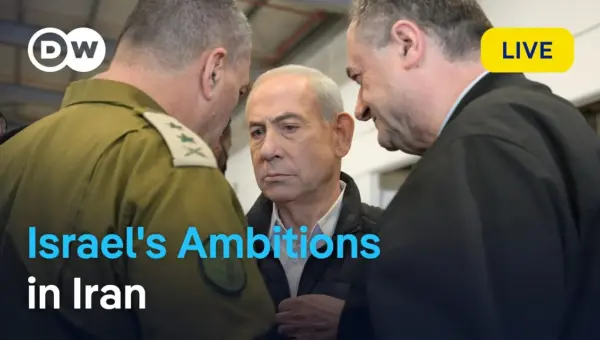
Israel’s Strategy Against Iran Revealed
Israel's strategy to counter Iran's nuclear ambitions and regional influence centers on containment, utilizing a mix of covert military actions, intelligence operations, and diplomatic pressure. Analysts highlight the growing urgency due to Iran's nuclear advancements, while also noting the persistent risk of escalation in the volatile Middle East.

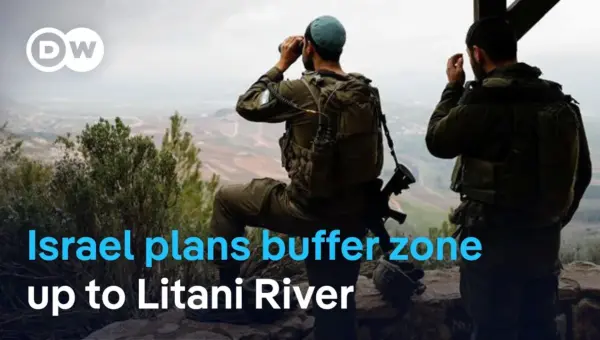
Israel Eyes Lebanon Buffer Zone: A Political Ploy?
Israel's military operations in southern Lebanon aim to create a buffer zone and pressure Hezbollah, according to expert Yazid Sayigh. He argues the strategy is more political than military, echoing historical tactics. The ongoing conflict could destabilize Lebanon further, while Hezbollah fights for survival.