Israel Eyes Prolonged Conflict Amidst Widening War Fronts
Israel is bracing for a prolonged conflict with Iran, a stark contrast to President Trump's initial four-week projection. As new fronts open, including escalation with Hezbollah in Lebanon, the UK grants the US permission to use its bases for defensive strikes on Iran. The widening war raises concerns about regional stability and the long-term commitment of international support.

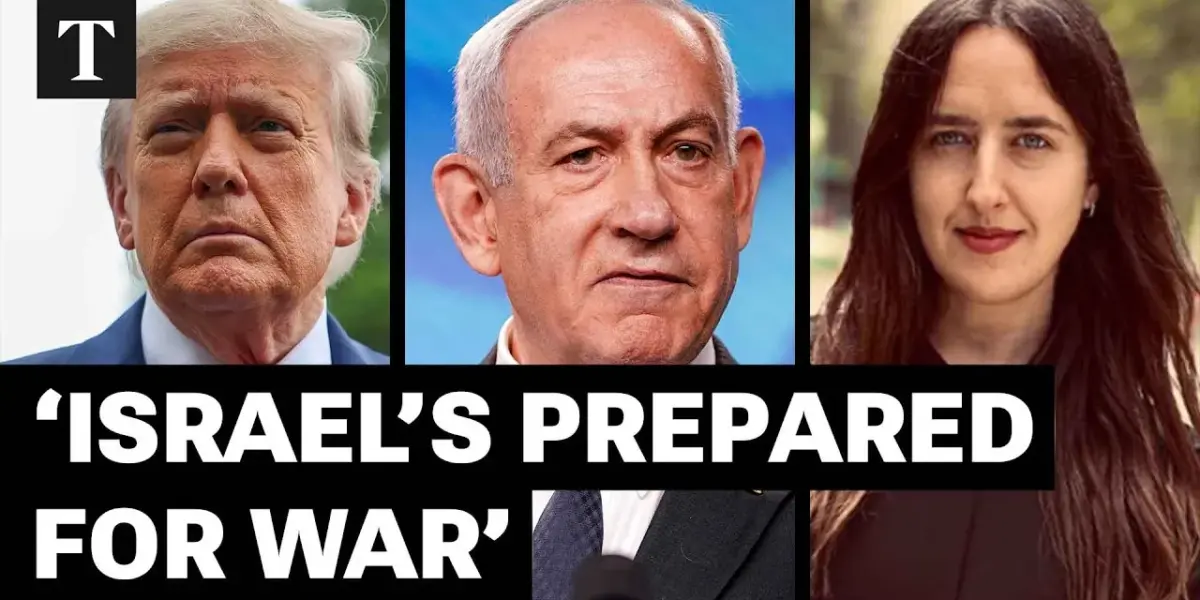
Israel Gears Up for Extended Conflict as War Fronts Expand
TEL AVIV – Israel appears prepared for a prolonged conflict with Iran, a stance that contrasts with President Trump’s initial projection of a swift, four-week resolution. The nation’s leadership, particularly Prime Minister Netanyahu, is reportedly inclined towards seeing the conflict through to its conclusion, signaling a strategic willingness to endure a protracted war. This sentiment is echoed by an assessment that “Israel has a high pain tolerance,” suggesting the public is prepared for the sacrifices war demands.
The conflict has intensified with the opening of new fronts, notably an escalation between Israel and Hezbollah in Lebanon. This development signifies a widening of the war, drawing in regional actors and complicating the geopolitical landscape. The United States, meanwhile, has secured permission from the UK to utilize its military bases, including Diego Garcia and RAF Fairford, for defensive air strikes against Iran. This international cooperation underscores the escalating tensions and the broad coalition forming in response to Iranian aggression.
Hezbollah Joins the Fray, Escalating Lebanon Front
In a significant escalation, Hezbollah has launched projectiles and drones at northern Israel, marking its first major engagement since Israel’s “decapitation” operations in September and October. The missiles originated from southern Lebanon, a region supposedly demilitarized, indicating a failure of previous containment strategies. This move by Hezbollah is particularly noteworthy given its weakened state since 2004 and its previous non-response during an earlier confrontation with Iran in June.
According to insights from Times Israel correspondent Gabriel Weiniger, Hezbollah finds itself in a difficult strategic position. By joining the conflict, the group risks further financial and political repercussions from Iran and faces potential backlash from its own population. “They’ve now put Lebanon in a very bad situation where Israel’s not going to let it go,” Weiniger observed, suggesting that Israeli intelligence views this action as potentially Hezbollah’s “swan song.” Israel, anticipating this escalation, had already initiated strikes against Hezbollah in southern Lebanon and Beirut prior to the broader operation against Iran, demonstrating a readiness to fight on multiple fronts.
US Secures UK Bases for Defensive Strikes on Iran
The United Kingdom has granted the United States permission to use its military bases for defensive air strikes against Iran. Prime Minister Kama announced the decision, stating that the bases would be used for “specific and limited defensive purposes” aimed at preventing Iran from firing missiles across the region. “We have taken the decision to accept this request to prevent Iran firing missiles across the region, killing innocent civilians, putting British lives at risk, and hitting countries that have not been involved,” Kama stated in an address to the nation.
This agreement allows for potential strikes from Diego Garcia in the Chagos Islands and RAF Fairford in Gloucestershire. The move signals a strong international alignment against Iran’s aggressive posture and provides the US with crucial operational capabilities. The decision comes amidst reports of an attack on a UK RAF base in Cyprus by a drone, although no casualties were reported. This incident underscores the immediate threat posed by Iranian actions and the rationale behind the UK’s decision to support defensive measures.
Trump Calls for Iranian Uprising Amidst Casualties
President Trump has declared that the conflict will last four to five weeks and has urged Iranians to rise up against their government. He claimed to have eliminated Iran’s Supreme Leader, Ayatollah Khamenei, before Khamenei’s alleged killing of him, though this appears to be a rhetorical framing rather than a factual account of events. “I call upon all Iranian patriots who yearn for freedom to seize this moment, to be brave, be bold, be heroic, and take back your country. America is with you,” Trump stated, promising continued support.
However, the sustainability of this stance is questioned, particularly as US casualties mount. With reports of at least five American service members killed and several more seriously wounded, the long-term appetite for prolonged engagement in the US remains uncertain. The effectiveness of Trump’s call to action within Iran is also debated, given the lack of a strong, organized opposition and the public’s reluctance to take to the streets under fire.
Israel’s Strategic Calculus: Degrade Threat, Avoid ‘Mowing the Lawn’
Israel’s strategic objective appears to extend beyond merely degrading Iran’s capabilities; the aim is to remove the threat of Iranian attacks that result in civilian casualties. The nation, despite its high pain tolerance, is acutely aware of the devastating impact of such attacks. A recent horrific incident in Binesh, a city west of Jerusalem, where nine people were killed sheltering in a designated safe space after a missile strike, has deeply shaken the public’s sense of security.
Weiniger highlighted Israel’s desire to avoid a policy akin to “mowing the lawn” – the periodic, limited operations previously conducted in Gaza against Hamas. Such a strategy, involving yearly ground incursions, is deemed unsustainable due to its severe disruption to the economy and daily life, including the closure of schools and businesses. The goal is to achieve a more permanent resolution that minimizes the risk of future attacks and allows for a return to normalcy. The effectiveness of this strategy will depend on continued international support and the ability to neutralize Iran’s long-range strike capabilities.
Broader Implications and Future Outlook
The conflict’s expansion raises significant concerns about regional stability and the potential for a wider conflagration. Israel feels it is at the forefront of a global battle against Iranian-sponsored terror, with intelligence suggesting Iran is developing weapons capable of reaching as far as London. The perceived provocation of Europe by Iran, and Europe’s apparent reluctance to confront this directly, is a point of contention for Israel, which feels it is bearing the brunt of this threat.
Looking ahead, the key questions revolve around the duration of the conflict, the willingness of international partners to sustain their support, and the ultimate strategic objectives of all parties involved. The coordination between Prime Minister Netanyahu and President Trump regarding the endgame will be crucial. Furthermore, the response from other regional actors, such as the Houthis in Yemen, remains a critical factor in the evolving conflict dynamics. The international community watches closely to see if de-escalation is possible or if the current trajectory leads to further regional instability.
Source: ‘Israel Has A High Pain Tolerance’ | Gabrielle Weiniger (YouTube)

Related Articles

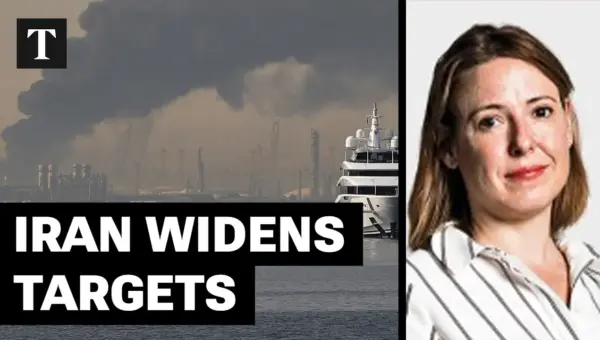
Iran Escalates Regional Attacks, Feeling ‘Nothing to Lose’
Iran is widening its regional attacks, driven by a "nothing to lose" mentality, according to Catherine Philp of The Times. The escalating conflict has seen Hezbollah engage in hostilities, drawing retaliatory strikes and increasing global oil prices. The U.S. and Israel are targeting Iranian leadership and military sites, while the response of Gulf nations remains a key uncertainty.
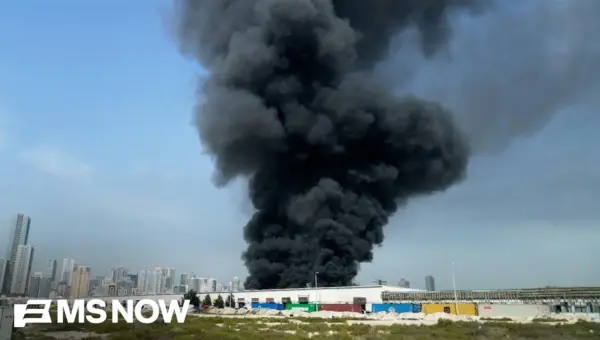
American Stranded in Dubai Fears for Safety Amid Iran Tensions
An American tourist celebrating her 30th birthday in Dubai was left stranded and anxious amid escalating U.S.-Iran tensions. Facing disrupted flights and intense fear, she detailed her ordeal and struggles to secure a direct flight home, highlighting the personal impact of geopolitical instability.
Retired General Slams Trump’s Iran Policy as ‘Political Mess’
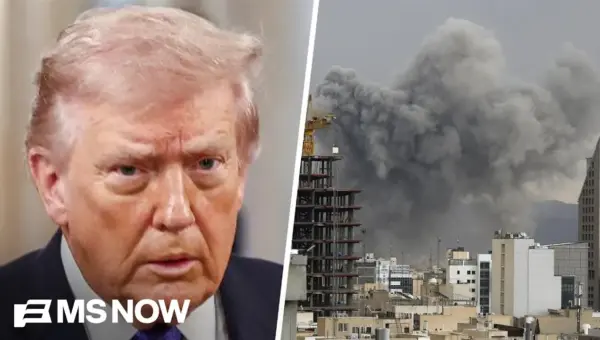
Retired General Barry McCaffrey has condemned President Trump's approach to Iran as a "political mess," citing a lack of congressional authorization and diplomatic engagement. While commending the effectiveness of recent military strikes, McCaffrey emphasized the critical need for de-escalation and a return to nuclear talks.