Israel Expands Death Penalty, Sparking Rights Concerns
Israel's parliament has approved expanding the death penalty for terrorism offenses, a move critics warn will disproportionately target Palestinians and isolate the country internationally. Despite warnings from allies, the law faces potential challenges from the Supreme Court, which could strike down its discriminatory aspects.

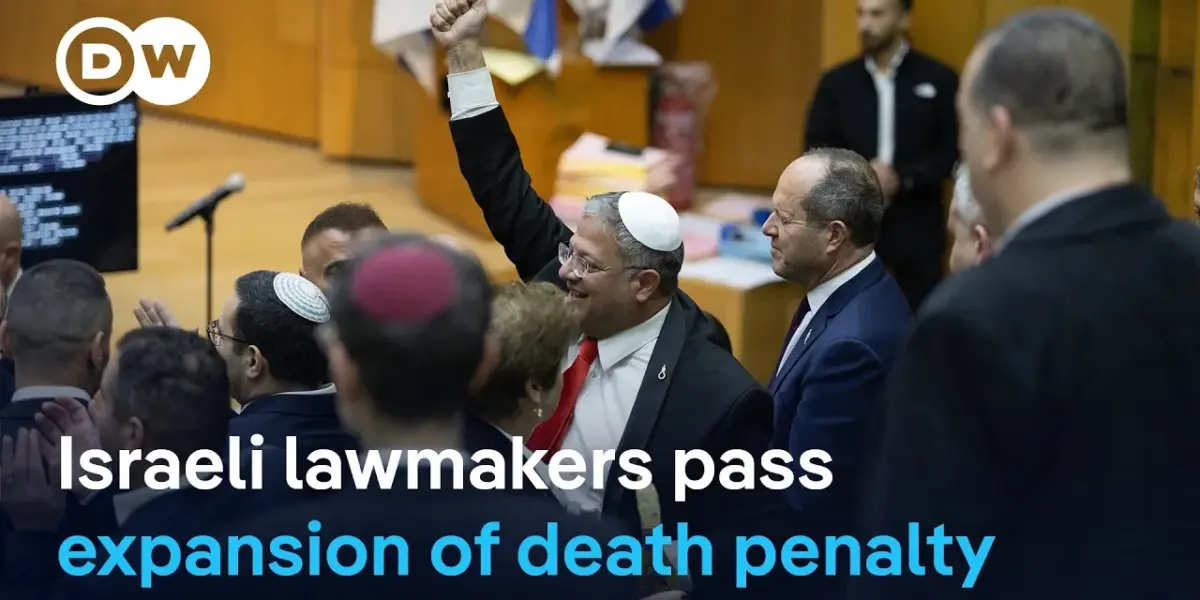
Israel Expands Death Penalty for Terrorism Offenses
Jerusalem – The Israeli parliament has voted to expand capital punishment, making death by hanging the default sentence for terrorism offenses. The controversial legislation passed just hours ago, despite strong warnings from international allies like Germany, the United Kingdom, and France. These nations have expressed concerns that the move could harm Israel’s democratic standing on the global stage.
New Law Mandates Death Sentence for Terrorism Convictions
Under the new law, individuals convicted of terrorism in a military court will face mandatory death sentences. Critics argue that this punishment will disproportionately affect Palestinians, both within Israel and in the occupied West Bank, while rarely being applied to Israelis. Far-right National Security Minister Itamar Ben-Gvir, whose party spearheaded the legislation, claims the change will deter what he calls “Arab terrorism.”
Public Opinion and Political Shift in Israel
Opinion polls consistently show that a majority of Jewish Israelis support the expanded death penalty. This sentiment reflects a broader shift towards the right in the country, particularly since the Hamas-led attacks on October 7, 2023. However, international allies, including Germany, France, and Italy, have voiced worries that the law risks undermining Israeli democracy.
Palestinian Concerns and International Isolation
The legislation has instilled fear among Palestinians in Israel and the occupied territories. Those interviewed described the law as inhumane and unfairly targeted, stating it ignores violence committed by Israelis against Palestinians in the West Bank. They also note that the death penalty, previously a rarely used option in Israel, is now being positioned as a primary tool for dealing with Palestinians. This move further isolates Israel internationally, even as Prime Minister Benjamin Netanyahu’s government pushes it forward.
Potential Supreme Court Challenge
There is a significant caveat to this new law. It is expected to face legal challenges, and if a petition is submitted, Israel’s Supreme Court will have to rule on its legality. The court could potentially strike down parts, or even all, of the legislation. This legal review is seen as a critical next step in determining the law’s future.
Expert Opinion: Against the Legislation
Professor Barak Medina, from the Max Planck Center for Democracy, Human Rights, and Security at Hebrew University, strongly opposes the new law. “It puts Israel outside of the liberal democratic world,” Medina stated. He believes the legislation will weaken Israel’s position rather than strengthen it. Supporters, including the National Security Minister, cite deterrence as the primary goal, especially during wartime. However, Medina points to a consensus among experts and heads of Israeli security forces who believe the death penalty does not deter terrorism. In fact, they fear it could create stronger incentives for attacks.
“We have all of them say explicitly the heads of the Israel security forces are unanimously against this legislation. They are confident that it will only create greater incentives for terrorists to attack against us and to try to achieve their aims.”
Populism and Political Motivation
Medina suggests the legislation is a product of populism, driven by a desire to appeal to a public sentiment, particularly within the Jewish sector of Israel. He notes that existing laws already allow for the death penalty in certain cases, but it has been rarely used. The push for this new law, he argues, is largely a political maneuver among radical right-wing parties seeking to gain support. Prime Minister Netanyahu, despite personal reservations, has yielded to pressure from his coalition partners, likely on the assumption that the law will not be fully implemented.
Human Rights and Discrimination Concerns
The core principles of human rights and constitutionalism dictate that majority rule does not always prevail, and there are limits to its power. Medina highlights that the law attempts to create a distinction between Israeli citizens and Palestinians in the occupied territories, which he believes is discriminatory. “This is a discriminatory measure that is will clearly not hold,” he asserted. He expects the Supreme Court to strike down the parts of the legislation that discriminate, citing the court’s history of invalidating similar discriminatory laws, even on less significant matters.
The Supreme Court’s Role
The ultimate fate of the expanded death penalty law now rests with the Supreme Court. The court will have to decide whether to uphold the law as written or to strike down its discriminatory provisions. The process may involve waiting for an actual case to be brought before it before making a final ruling on the death penalty’s application.
Looking Ahead
The coming weeks and months will be crucial as legal challenges are expected to be filed. All eyes will be on the Israeli Supreme Court as it weighs the legality and implications of this deeply divisive legislation. Its decision will not only impact the application of the death penalty but also signal the strength of human rights protections within Israel’s legal framework.
Source: Critics claim that the punishment will be applied almost exclusively to Palestinians | DW News (YouTube)

Related Articles


Netanyahu: Israel ‘Halfway’ Through Iran War Missions
Israeli Prime Minister Benjamin Netanyahu announced Israel is past the halfway point in its military missions against Iran, citing significant degradation of Iran's capabilities. Meanwhile, U.S. policy appears confused, with conflicting threats and potential ground operations discussed. A controversial new Israeli law allowing executions for Palestinians convicted of terror offenses also draws criticism.

Supreme Court Weighs Birthright Citizenship for Immigrants
The U.S. Supreme Court is reviewing a case that could alter birthright citizenship for children of undocumented immigrants. The central argument questions whether the 14th Amendment's citizenship clause applies to those whose parents are in the country illegally. This decision could have significant long-term implications for immigration policy and the nation's demographic future.


Birthright Citizenship: A System Under Strain?
Birthright citizenship, a long-standing U.S. policy, is under intense debate. Critics argue it's being exploited by foreign nationals, while supporters defend its legal foundation and historical intent. The discussion raises critical questions about immigration, national security, and national identity.