Is Trump’s Health Failing? Lawmakers Cite Decline, Call for 25th Amendment
Concerns are mounting over Donald Trump's cognitive and physical health, with some lawmakers calling for the 25th Amendment. Critics point to public appearances and foreign policy decisions as evidence of decline, while supporters may view these as politically motivated attacks.

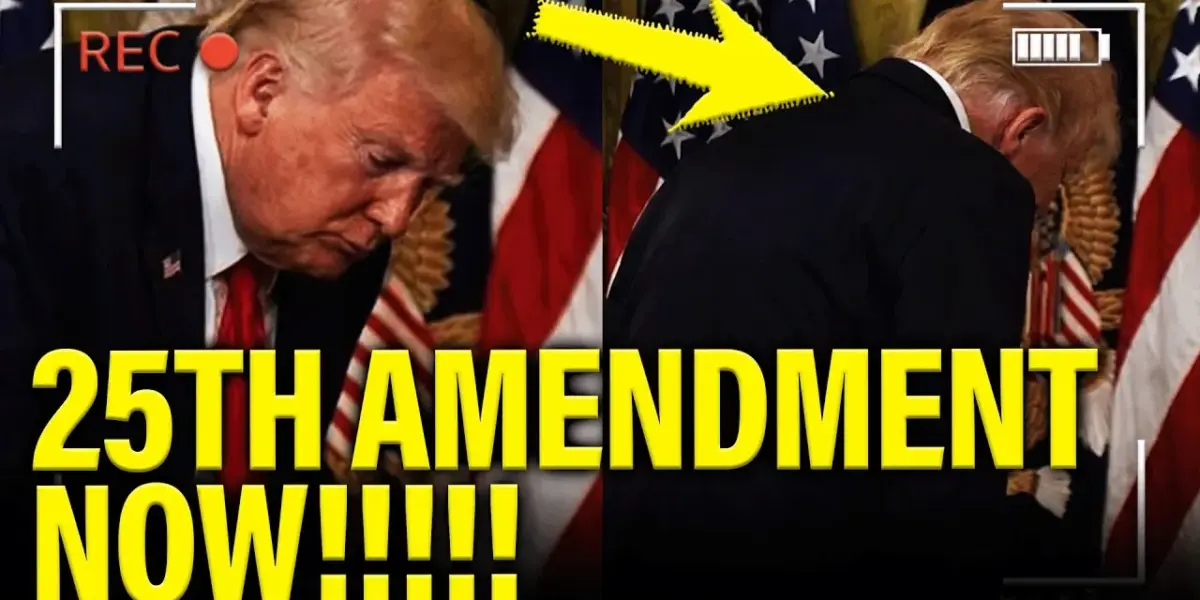
Concerns Mount Over Donald Trump’s Cognitive and Physical State
Recent calls from lawmakers on Capitol Hill to invoke the 25th Amendment highlight growing concerns about Donald Trump’s cognitive and physical well-being. Senator Murphy, speaking from Capitol Hill, expressed deep sympathy for military leaders who he believes are receiving directives from an individual he described as “a senile old man who is losing his mind.” This sentiment is amplified by the ongoing conflict with Iran, which is characterized as a “horribly wrong” and “unlawful war” that is proving to be a “total and utter disaster.”
Evidence of Decline or Political Rhetoric?
The argument for invoking the 25th Amendment is supported by observations of Trump’s public appearances. Critics point to instances where he struggles to articulate complete sentences, particularly during a recent speech for Women’s Month. One notable example involved his repeated utterance of “300,000 jobs. 300. Take a listen to this number. 300,000 jobs. 300.” This is contrasted with his administration’s economic policies, with the transcript asserting record job losses and a “jobs recession.” The speaker in the video also noted similar speech stumbles weeks prior, stating, “I’m a proud to officially and he struggles to get the words out.”
Beyond speech impediments, other physical observations are cited as potential indicators of decline. These include a “droopy face,” “discolored hands,” “rashes that are appearing on his neck,” and a “struggle to walk in straight lines.” These observations, combined with the perceived cognitive difficulties, lead some to believe that Trump may be experiencing a significant decline. The speaker, drawing on personal experience with individuals who have suffered strokes and dementia, states, “in my opinion this is a sign of that.”
Foreign Policy and War Rhetoric Under Scrutiny
The concerns about Trump’s health are inextricably linked to his foreign policy decisions, particularly the escalation of tensions with Iran. Critics argue that the administration lacks a clear strategy, with goals shifting daily. Major General Paul Eaton (Ret.) voiced his opinion that Trump has “dementia” and should not be in a leadership role, especially during wartime. He specifically questioned the wisdom of deploying ground troops into Iran, a country described as “bigger than Texas” with a history of “extraordinary bravery in combat.” Eaton warned that such a move could lead to an “Iraq 2.0,” a scenario with “much bigger and much more problematic” implications due to a “failure to plan for the next step.”
The transcript also highlights instances where Trump’s public statements are seen as incoherent or out of touch. During a speech, he reportedly said, “I didn’t read. I can’t prep. I prepare speeches. I won’t get things done.” He then recounted an anecdote about walking into a room and seeing a “beautiful woman with the blonde hair,” identifying her as “Kaylee,” a “star of the Olympics” and a “six-time Olympic medalist.” This is followed by his own admission, “I’m not allowed to use the word beautiful, but I’m using it anyway. Usually it’s the end of your political career if you say a woman’s a beautiful woman.” He later stated, “I’m not allowed to say that. I’ll get cancelled.”
Historical Context and Draft Evasion
The discussion of Trump’s fitness for office also touches upon his past. The transcript references his attendance at a military academy, suggesting that he was sent there due to his father’s observations, rather than a personal desire for military training. It is also noted that Trump “was never actually in the military” and “lied and said that he had bone spurs and dodged the Vietnam draft on five separate occasions.”
Inconsistent Statements and Perceived Caretaker Role
Further examples are provided to illustrate perceived cognitive lapses. The transcript notes Trump’s continued belief that Kellyanne Conway was still working for him, praising her as “fantastic” and “in there fighting.” He also reportedly expressed admiration for her ability to “scream at those people” (referring to the media). His repeated emphasis on how much he “loves women” and that “women are the whole deal” is presented as ambiguous and potentially inappropriate.
His remarks during a radio interview about navigating the Strait of Hormuz are also questioned. He is quoted as saying, “Go through it, ships. Go through the straight. Show some guts. Just do it. Do it. Go through the straight of her moose. There’s nothing to be afraid of. They have no navy. We sunk all their ships. Do it. Go through it.” This is contrasted with reports of ships being attacked in the region, leading to the assessment, “Are you out of your mind?”
The transcript also mentions an incident where Trump, after calling oil executives to the White House, was observed looking out the window and exclaiming, “Wow. What a view. This is the door to the borrow.” This is presented as an example of distraction and detachment.
Another anecdote describes Trump’s alleged obsession with guessing the shoe size of his cabinet members and buying them ill-fitting shoes. This behavior is characterized as “utterly deranged.”
Response to Domestic Terrorism and Economic Claims
The transcript concludes by referencing Trump’s response to two domestic terrorism incidents: an attempted attack on a Michigan synagogue and an incident at Old Dominion University. His reported statement, “It’s a terrible thing, but it goes on. It’s a terrible thing, but but but I guess it just goes on,” is presented as a dismissive and inadequate reaction.
Economically, the transcript refutes Trump’s claims of taking in “$18 trillion plus” and jobs being “through the roof.” It states that the economy is “horrible right now” and questions the source of such alleged revenue, asserting that the United States cannot even protect its allies. The transcript claims that in the last administration, less than $1 trillion was taken in over four years, a stark contrast to the $18 trillion figure cited by Trump.
Why This Matters
The allegations and concerns raised in this transcript, if substantiated, have profound implications for national security, international relations, and the stability of democratic institutions. The potential for a leader to be cognitively impaired while holding the reins of power, especially in a volatile geopolitical climate, is a grave concern. The calls for the 25th Amendment, while politically charged, reflect a genuine anxiety about the decision-making capacity of the individual in the highest office. The perceived incoherence in foreign policy pronouncements, coupled with a lack of strategic clarity, could lead to miscalculations with devastating consequences. Furthermore, the erosion of public trust due to inconsistent statements and a perceived detachment from reality can undermine the effectiveness of government and the nation’s standing on the global stage.
Implications, Trends, and Future Outlook
The discourse surrounding a leader’s health and fitness for office is not new, but it has become increasingly prominent in the digital age. Social media and readily available video clips allow for rapid dissemination of observations and interpretations, fueling public debate. This trend suggests a heightened public expectation for transparency and accountability regarding the well-being of elected officials. The future outlook may involve increased scrutiny of leaders’ public appearances and a greater demand for medical transparency. The politicization of health concerns, however, remains a significant challenge, as such discussions can easily be dismissed as partisan attacks, making objective assessment difficult.
Historical Context and Background
The 25th Amendment to the U.S. Constitution, ratified in 1967, provides a mechanism for presidential succession and disability. It outlines procedures for removing a president from office temporarily or permanently if they are unable to discharge the powers and duties of their office. This amendment has been invoked or discussed in various contexts throughout American history, often during times of presidential illness or perceived incapacitation. The debate over Trump’s health echoes past instances where the physical and mental fitness of leaders has been a subject of public and political discussion, though the current media landscape amplifies the speed and reach of these conversations.
Source: 🚨Trump’s HEALTH COLLAPSES as 25th AMENDMENT NEEDED!!! (YouTube)

Related Articles

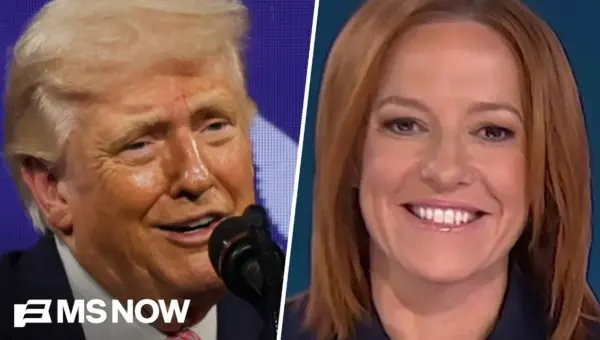
CPAC Crowd Cheers Impeachment, Stuns Trump Allies
At the recent CPAC conference in Texas, attendees surprised many by cheering for impeachment hearings, signaling potential divisions within the conservative base. The event also highlighted voter frustration over issues like ongoing wars and affordability, with some considering not voting.
Protesters Challenge Presidential Power, Ignite Debate
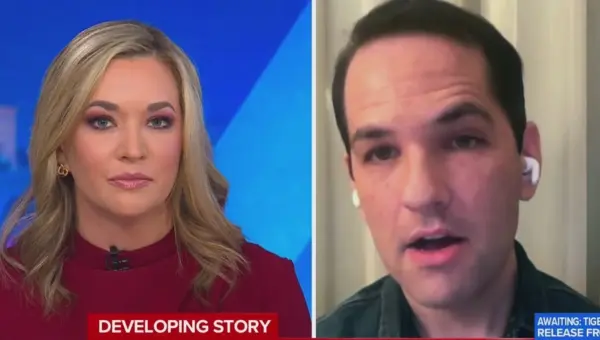
Millions are protesting nationwide under the "No Kings" banner, challenging presidential authority and policies they deem unconstitutional. Organizers emphasize First Amendment rights while debating foreign policy, immigration, and the balance of power.

Polls Spell Doom: Republicans Face Voter Backlash
New polling data reveals a sharp decline in public confidence regarding the economic impact of Republican policies, particularly under Donald Trump. A significant majority now feel financially worse off, a trend that is especially pronounced among independent voters. This economic discontent poses a major challenge for the Republican party heading into future elections.