Iran’s War Survival: Expert Weighs US Military Might vs. Political Strategy
Defense expert Bilal Saab analyzes Iran's strategy in a potential war with the U.S., emphasizing political manipulation over military might. He highlights how Iran might exploit American aversion to casualties and prolonged conflicts, contrasting it with the U.S. democratic system's reliance on public opinion.

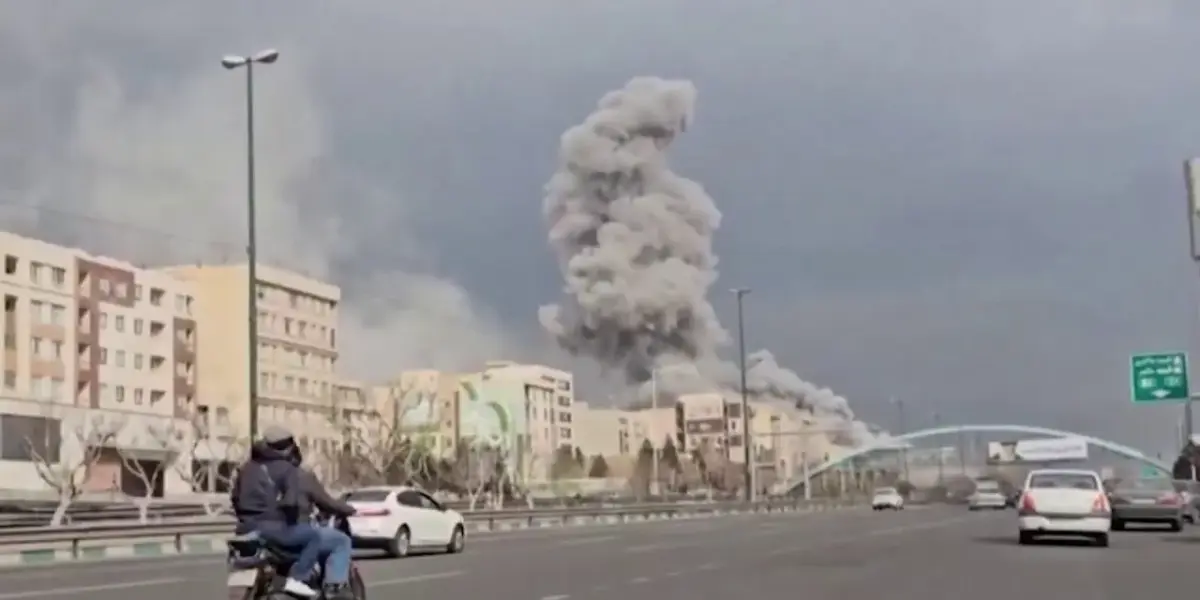
US-Iran Conflict Dynamics Explored by Defense Expert
In a recent analysis, Bilal Saab, Senior Managing Director at Trends USA and an Associate Fellow at Chatham House, has shed light on the complex calculations Iran would undertake in the event of a war with the United States. Saab, a former Pentagon senior advisor, argues that Iran’s survival strategy hinges not on military parity, but on manipulating the political landscape and exploiting American aversion to prolonged conflicts and casualties. This perspective gains particular poignancy following the recent confirmation of six American soldiers killed, underscoring the potential human cost of escalating tensions.
Iran’s Strategic Calculus: A Political Battlefield
Saab posits that Iran, recognizing its position as the weaker party in a direct military confrontation, prioritizes its survival above all else. “They understand that there’s no way they can survive, which is their top priority, without manipulating the politics of it all and without trying to exact some kind of a political price,” he stated. The Iranian strategy, according to Saab, involves prolonging any conflict to test the patience of the U.S. President and to inflict political costs on the American administration. This includes aiming to generate American casualties, which would be broadcast on screens and potentially sway public opinion against continued military operations.
“A direct engagement between the two sides heavily favors the United States. And so try to get lucky by going after American casualties every now and then to, you know, show on American screens that we are losing men and women, expand the conflict geographically, extend it also so that they can test the patience of the President, whether he wants to be really in it for the long haul. That’s the Iranian strategy.”
The Achilles’ Heel: Public Opinion vs. Dictatorial Control
When questioned about the Iranian regime’s equivalent of an “Achilles’ heel,” Saab drew a stark contrast with the American political system. He suggested that in a virtually dictatorial system like Iran’s, public opinion holds significantly less sway. While acknowledging that the regime doesn’t govern in complete isolation, Saab anticipates that in times of crisis, a “rally around the flag” effect would likely subdue any internal opposition. This allows the Iranian regime to prosecute a conflict with “virtually no accountability,” a luxury not afforded to American presidents in a democratic system where public opinion is a critical factor.
“Of course, there is a constituency for the Iranian regime. They don’t, you know, govern in isolation. But at a moment like that, you can expect rallying around the flag and therefore any kind of opposition is subdued if not muted,” Saab explained. This fundamental difference in political structures, he argues, shapes the strategic calculations of both nations.
The Question of Internal Uprising and Small Arms
The discussion also touched upon the possibility of internal dissent and the Iranian public’s access to small arms as a means to overthrow the government. While Saab expressed a preference for credible information, he offered his assessment from Vienna, Virginia. He stated that he does not believe the Iranian public has access to sufficient small arms to generate a sizable military force capable of challenging the regime, especially in the context of a U.S.-led initiative to topple the government.
“I would just wager to say that I don’t think it would be sufficient to, you know, generate a sizable enough military force. Coherent. Also opposition to take on this incredibly challenging mission that President Trump is calling for, which is to take over and topple the regime,” Saab commented. He concluded that such an internal uprising is unlikely in the foreseeable future, cautioning against simplistic suggestions for regime change that overlook the complexities on the ground.
Broader Implications and Future Outlook
Saab’s analysis highlights the critical role of political strategy and public opinion in modern warfare, particularly in the context of U.S. foreign policy. The U.S. public’s historical aversion to protracted wars and significant troop losses serves as a key vulnerability that adversaries like Iran may seek to exploit. Conversely, the Iranian regime’s ability to suppress internal dissent provides it with a degree of resilience against domestic pressure during a conflict.
As regional tensions remain high, the interplay between military capabilities and political will will continue to be a defining factor in potential future confrontations. The U.S. faces the challenge of balancing its military objectives with the domestic political realities of sustained engagement, while Iran’s strategy will likely continue to focus on asymmetric tactics and political maneuvering to offset its conventional military disadvantages.
What to Watch Next
Moving forward, observers will be closely monitoring any shifts in public sentiment within the United States regarding military interventions abroad. Additionally, the effectiveness of Iran’s strategy in leveraging political pressure and managing domestic stability in the face of potential conflict will be crucial to understanding the long-term dynamics of the U.S.-Iran relationship.
Source: Can Iran survive a war with the United States? (YouTube)

Related Articles
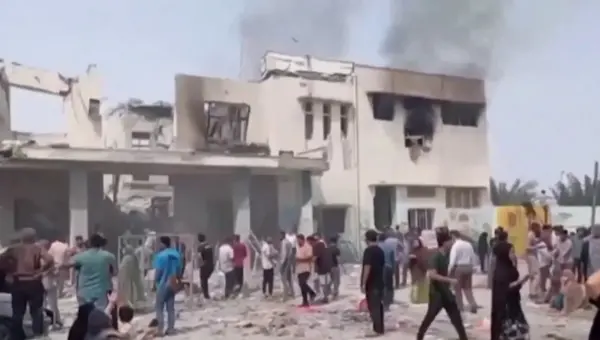
Iran School Strike Kills Over 160, Mostly Children
An airstrike on an elementary school in Iran has killed over 160 people, mostly children, according to state media. The Qasir Tayyeb school, which housed 264 students, was devastated in the attack. Iran's foreign minister has accused the U.S. and Israel, though both deny awareness of operations in the area.
US Strikes Iran, Jolting Beijing’s Grand Bargain Dreams
Recent U.S. military actions in Iran, termed 'Operation Epic Fury,' are analyzed as a pivotal moment that may have disrupted Beijing's geopolitical strategy. The author posits that these strikes signal a shift to an 'enforcement through strength' global order, undermining China's reliance on Iran and its hopes for a 'grand bargain' with the U.S.

Hayes: Trump’s Iran War Plans Are Morally Wrong
Chris Hayes has strongly condemned potential US military action against Iran, labeling it morally reprehensible and illegal. He argues that such a conflict violates international law and ethical principles, urging for public opposition. Hayes's commentary highlights the critical need for discourse and accountability in foreign policy decisions.