Iran’s War Chest Drains Amid Global Power Play
An analysis of geopolitical tensions surrounding Iran's war efforts, US domestic policy struggles including a government shutdown, and the legal accountability of social media platforms. The piece examines the complex interplay of international interests, economic leverage, and shifting power dynamics in a volatile global environment.

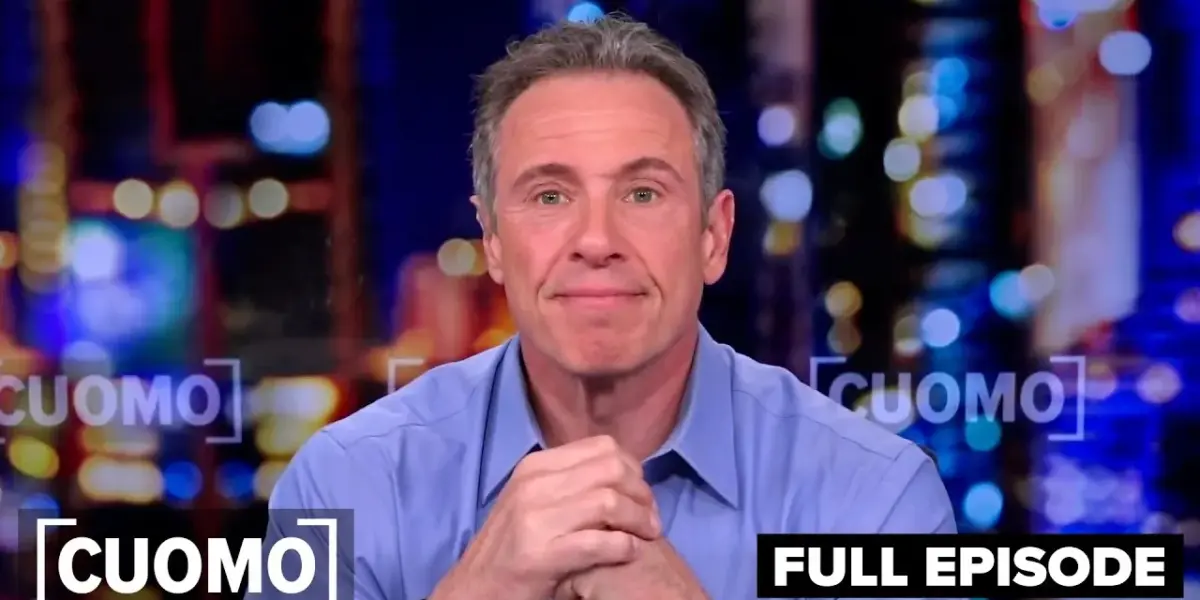
Iran’s War Chest Drains Amid Global Power Play
The ongoing conflict involving Iran has entered a critical phase, with conflicting reports emerging about its capabilities and the intentions of global powers. While former President Trump claims victory, the reality on the ground appears more complex, suggesting a significant drain on Iran’s resources despite its continued resistance. The situation is further complicated by shifting alliances and the strategic interests of major world players, all vying for influence in a region vital to global energy supplies.
Conflicting Narratives on the Battlefield
Reports from the front lines paint a confusing picture. The United States and its allies have reportedly inflicted heavy damage on Iran’s military infrastructure, including thousands of bombs dropped on various communities. Official statements suggest Iran’s leadership and weaponry have been significantly weakened. However, the Iranian regime continues to fight back, with analysts noting its persistent ability to control key energy routes, particularly the Strait of Hormuz. This control over a significant portion of the world’s energy flow grants Iran considerable leverage.
Adding to the confusion, former President Trump has made contradictory statements, claiming victory in the war while also suggesting the regime is seeking a deal. He has indicated a willingness to stop fighting to talk, but Iran has reportedly rejected a ceasefire. Trump’s assertion that Iran has been ‘begging for a deal’ clashes with the regime’s public stance. He has also made comments about taking control of streets whenever he wants, followed by seemingly contradictory remarks that appear to celebrate Iran’s decision to allow certain non-American ships passage through the Strait of Hormuz, calling it a ‘gift’.
US Domestic Strife and the DHS Funding Crisis
Meanwhile, the United States faces its own internal struggles, highlighted by a government shutdown that has impacted critical services. Reports emerged of Transportation Security Administration (TSA) officers being forced to sleep in their cars and sell blood plasma due to missed paychecks, while Immigration and Customs Enforcement (ICE) agents are reportedly struggling to manage airport security lines. Senator John Fetterman, a Democrat who voted against his party on a key funding bill, discussed the shutdown’s impact.
Senator Fetterman emphasized that shutting down the government is always wrong, regardless of which party initiates it. He pointed out that such actions punish ordinary citizens and government employees, leading to food insecurity and unpaid wages. He specifically cited the struggles of TSA agents earning around $50,000 a year, questioning the logic of denying them paychecks while discussing affordability issues. Fetterman also noted that the shutdown of the Department of Homeland Security (DHS) had little impact on forcing policy changes at ICE, as anticipated.
Debate Over Leadership and Strategy in Iran
The discussion then turned to the leadership within Iran and the effectiveness of US strategy. Bill O’Reilly, a political commentator, suggested that the United States desires dialogue with Iran but faces difficulties due to a lack of clear leadership within the Iranian regime. He mentioned potential mediators like Pakistan and figures such as Jared Kushner being ready to engage in talks. O’Reilly highlighted the ‘chaos’ on the Iranian side, with much of their reporting and troop movements being unclear.
He also pointed to the Revolutionary Guard’s continued missile and drone activities, though he believes they are nearing depletion of their ordinance. The role of China is seen as significant, especially with former President Trump’s upcoming visit in May. O’Reilly criticized the simplistic analysis often presented in mainstream media, calling it ‘insulting’ and stating that the administration is waiting for a deal.
Cuomo questioned the narrative, contrasting it with President Trump’s claims of ongoing negotiations and having ‘the right people’ to talk to. O’Reilly suggested that Trump, like many politicians, exaggerates events for effect. Cuomo raised the issue of trust, questioning whether the American public can believe President Trump, drawing parallels to historical political communication from figures like Thomas Jefferson and John Adams. He specifically criticized Senate Majority Leader Chuck Schumer, calling him a ‘coward’ for not appearing on his show and holding him responsible for the TSA employees not being paid. O’Reilly argued that Schumer is a powerful figure in the Democratic party and that his avoidance of critical interviews is a sign of weakness.
The Filibuster Debate and Political Candor
Senator Fetterman also weighed in on the Senate filibuster, admitting that his previous stance advocating for its elimination was a mistake. He stated that Democrats now appreciate the filibuster as a tool to prevent the majority from overwhelming the minority, comparing the Senate to a smaller version of the House of Representatives if the filibuster were removed. Fetterman acknowledged that many Republicans share this view, making its abolition unlikely. He expressed that admitting past errors is crucial for effective governance.
Cuomo praised Fetterman’s candor, finding his admission of being wrong about the filibuster refreshing. He contrasted this with the typical political approach, where admitting mistakes is rare. Fetterman reiterated that both Senators Joe Manchin and Kyrsten Sinema were vindicated in their efforts to preserve the filibuster, and that most Democrats now value it as a safeguard against unchecked majority rule.
San Francisco’s Crisis and Media Responsibility
Bill O’Reilly shifted the focus to the severe social and economic issues plaguing San Francisco. He described the city as having ‘collapsed,’ with a lack of admission from those in power. O’Reilly highlighted a startling fact he discovered while reporting in the Tenderloin district: Honduran drug gangs, operating illegally, are reportedly selling narcotics and are protected by San Francisco’s sanctuary laws. He argued that these laws prevent federal intervention, allowing these gangs to operate with impunity and fuel a massive fentanyl crisis.
O’Reilly criticized Mayor London Breed, Governor Gavin Newsom, and prominent figures like Nancy Pelosi and Kamala Harris for allegedly doing nothing to address the situation. He painted a grim picture of children witnessing drug use and violent acts, contrasting it with the perceived insulated lives of political elites. O’Reilly presented his upcoming special report as an example of ‘old-time reporting’ that has become rare in the industry, aiming to expose the root causes of San Francisco’s decline.
Social Media Liability and Algorithmic Curation
The discussion concluded with a report on a significant legal development: a jury found social media platforms liable for knowingly creating products that lead to addictive behavior among young users. This ruling challenges Section 230 of the Communications Decency Act, a 1990s law that generally shields online platforms from liability for user-generated content. The jury’s decision suggests that the algorithms used by these platforms, which curate and promote content, are seen as a form of editorial control, making the platforms more akin to publishers.
The legal team involved expressed excitement about the ruling, noting the difficulty of holding social media companies accountable under existing law. The core argument is that platforms actively design their systems to foster engagement, even if it leads to harmful or addictive behavior, thereby overriding the protections typically afforded by Section 230.
Global Impact
The multifaceted discussions surrounding Iran, domestic US policy, and the legal accountability of social media platforms reveal a complex global landscape. The conflict in Iran, while potentially draining the regime’s resources, continues to disrupt energy markets and create regional instability. The US government shutdown highlights internal divisions and impacts public trust, potentially weakening its international standing. Meanwhile, the legal precedent set against social media giants could reshape the digital information sphere, with implications for free speech, content moderation, and the spread of misinformation worldwide. These interconnected issues underscore the challenges of navigating a world where geopolitical ambitions, domestic politics, and technological advancements constantly redefine power dynamics.
Historical Context
The debate over Iran’s military capabilities and its role in global energy echoes historical tensions. Iran’s strategic location, controlling the Strait of Hormuz, has long made it a critical player in the global oil market. Past US administrations have grappled with Iran’s nuclear program and its regional influence, leading to sanctions and diplomatic efforts. The current situation reflects a continuation of these complex dynamics, where military actions, economic pressures, and diplomatic overtures are used as tools of statecraft.
The discussion on the filibuster also has historical roots. The rule, designed to encourage deliberation and protect minority rights, has been a recurring point of contention in the US Senate. Its preservation or modification has significant implications for the pace and direction of legislative action, reflecting ongoing debates about the balance of power between the majority and minority parties.
Economic Leverage
Economic factors are central to the Iran conflict and the US domestic situation. Iran’s ability to control energy flows provides it with significant economic leverage, influencing global oil prices. Conversely, sanctions have historically been used by the US and its allies to pressure Iran’s economy and limit its resources. The government shutdown in the US directly impacts the economic well-being of federal employees, while also causing disruptions in critical sectors like air travel, affecting millions of Americans.
Regional Alliances and Power Balances
The ongoing events are reshaping regional alliances and power balances. The conflict involving Iran affects neighboring countries and draws in global powers with vested interests in the Middle East’s stability and energy resources. The US’s approach to Iran, whether through military pressure or diplomatic engagement, has ripple effects across the region, influencing relationships with countries like Saudi Arabia, Israel, and the UAE. The perceived strength or weakness of Iran, as well as the US’s commitment to the region, are key factors in these evolving dynamics.
Future Scenarios
Several future scenarios are possible regarding Iran. One scenario involves a negotiated settlement, potentially driven by Iran’s dwindling resources and international pressure, leading to a de-escalation of conflict and a potential easing of sanctions. Another scenario could see continued low-level conflict and proxy engagements, prolonging regional instability and maintaining high energy prices. A third possibility is a significant escalation, though this seems less likely given the potential for wider regional war and the current assessment of Iran’s reduced offensive capabilities.
Domestically, the resolution of the government shutdown will depend on political negotiations, with potential outcomes ranging from a full reopening to continued funding battles. The legal precedent against social media platforms could lead to significant changes in how these companies operate, potentially impacting user experience, content availability, and their business models. The long-term effects of these rulings will unfold over time, influenced by further legal challenges and regulatory responses.
Source: Meta-YouTube legal loss; O’Reilly, Fetterman debate Iran and DHS funding | CUOMO Full Show 3/25 (YouTube)

Related Articles


G7 Allies Clash Over Iran War Strategy, Urge Focus on Russia
G7 foreign ministers met in Paris, revealing deep divisions over the U.S. war with Iran. European allies urged the U.S. to pressure Russia, linking its actions to the conflict and fearing support for Ukraine will wane.

Iran Blocks China Ships, Exposing Beijing’s Weak Grip
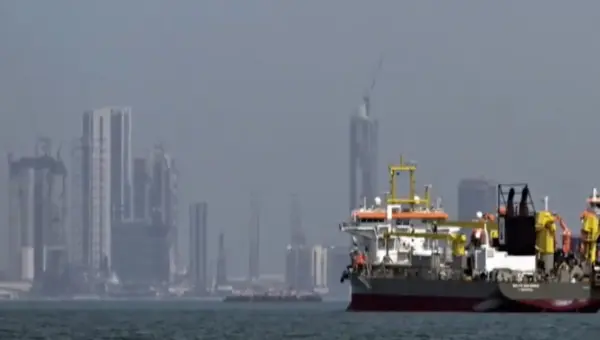
Iran's recent decision to block Chinese ships at the Strait of Hormuz is exposing the limits of Beijing's influence in the Middle East. This action is causing delays and cancellations for Chinese manufacturers, turning a perceived geopolitical win into an economic strain.
Rubio: US Can Achieve Iran War Goals Without Troops
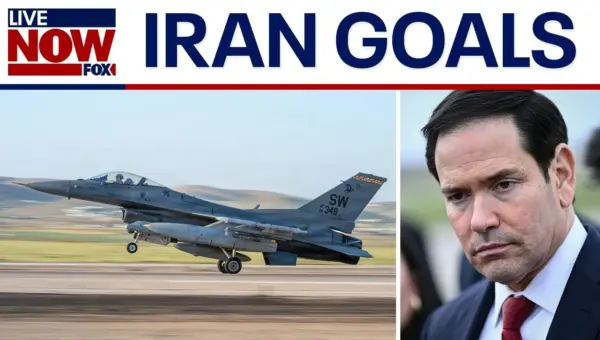
Senator Marco Rubio outlined a strategy to counter Iran without deploying U.S. ground troops, focusing on weakening the regime and enhancing maritime security. He also criticized Cuba's economic system and expressed concerns about West Bank violence.