Iran’s Uprising Tests Global Powers’ Resolve
Calls for continued international aid to the Iranian people underscore a critical juncture in the nation's struggle for change. The deep-rooted discontent fueling protests presents a complex challenge for global leaders, with the path to regime change fraught with difficulty given the government's entrenched power structure.

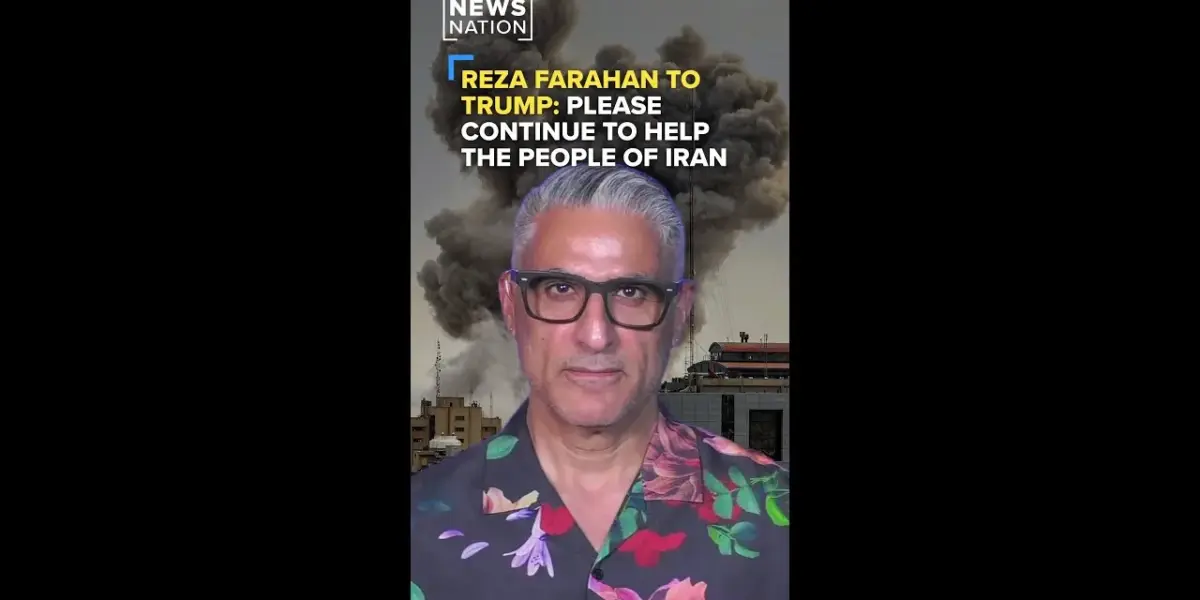
Iran’s Uprising Tests Global Powers’ Resolve
Recent calls for continued international support for the Iranian people highlight a critical moment in the nation’s struggle for change. The ongoing protests, fueled by deep-seated discontent, present a complex challenge for global leaders. The desire for regime change in Iran is palpable, but the path forward is fraught with difficulties. The current Iranian government has been in power for nearly five decades. During this time, it has built a strong system of control. This system includes powerful security forces like the Basij, the Islamic Revolutionary Guard Corps (IRGC), and the Quds Force, often referred to collectively as Sepah. These groups represent a significant portion of the nation’s military might, estimated to be around 10% of the population. They act as the backbone of the current regime, often described as a ‘terror machine’ by those who oppose it.
A Plea for Continued Support
For those who have escaped Iran, the message to international leaders, particularly former President Trump, is clear: continue to help the people of Iran. The plea is not just for the benefit of Iranians but for the safety of the world. The goal is to remove what are described as ‘terrorists’ from power. This would allow the Iranian people to reclaim their country. The vision of victory involves dismantling the current power structure so that citizens can freely determine their own future.
Motivations and Interests
The Iranian diaspora and supporters of the protests are motivated by a desire for freedom, democracy, and an end to human rights abuses. They see the current regime as oppressive and a threat to regional and global stability. Their interest lies in seeing a democratic Iran that is not a state sponsor of terrorism or a destabilizing force in the Middle East. They believe that international pressure and support are crucial for achieving this goal.
On the other hand, the Iranian government’s primary interest is self-preservation. It views the protests as foreign-backed attempts to destabilize the country and undermine its authority. The regime relies on its security forces to maintain control and suppress dissent. Its actions are aimed at consolidating power and resisting any external pressure that could lead to regime change. The government often frames international criticism as interference in its internal affairs.
For countries like the United States, the interest has historically been mixed. While advocating for human rights and democracy, U.S. policy has also been shaped by concerns over regional security, nuclear proliferation, and counter-terrorism. Past administrations have employed sanctions and diplomatic pressure, but the effectiveness and extent of intervention remain subjects of debate. The current U.S. administration, like others before it, faces the challenge of balancing support for the Iranian people with the risks of escalating tensions or unintended consequences.
Economic Leverage and Sanctions
Economic factors play a significant role in the dynamics surrounding Iran. International sanctions, particularly those imposed by the U.S., have had a considerable impact on Iran’s economy. These sanctions aim to pressure the government by limiting its access to global markets and financial systems. They target key sectors like oil exports and financial transactions. The effectiveness of these sanctions in forcing political change is debated. Critics argue they harm the general population more than the ruling elite. Supporters believe they are a necessary tool to curb the regime’s behavior and its support for proxy groups.
Iran’s economy is heavily reliant on oil revenue. Disruptions to this revenue stream, caused by sanctions or global market fluctuations, weaken the government’s ability to fund its programs and maintain popular support. The control of energy routes and resources is a major point of geopolitical contention in the region, with Iran playing a key role.
Historical Context
The current situation in Iran is rooted in decades of political history. The 1979 revolution overthrew the U.S.-backed monarchy and established the Islamic Republic. This event fundamentally altered Iran’s relationship with the West and its role in the region. Since then, Iran has faced periods of internal unrest and external pressure. The Iran-Iraq War (1980-1988) solidified the power of the IRGC and fostered a sense of national resilience, but also led to immense human and economic costs. U.S. policy towards Iran has oscillated between confrontation and attempts at engagement, with sanctions becoming a consistent feature in recent decades.
Global Impact: Why This Reshapes the World Order
The internal dynamics of Iran have significant implications for the global order. A stable, democratic Iran could lead to greater regional peace and security. Conversely, continued instability or a hardline crackdown could further entrench authoritarianism and regional tensions. The potential for Iran to become a nuclear power remains a major concern for the international community. The way the world responds to the current popular uprising could set precedents for how international powers engage with internal dissent in other authoritarian states. It tests the commitment to democratic values versus national interests and the principle of non-interference.
Future Scenarios
Several future scenarios are possible. One is a continued struggle with ongoing protests and government suppression, leading to a protracted period of instability. Another is a negotiated transition, though this seems unlikely given the current positions of the government and its opponents. A third scenario involves significant international pressure leading to concessions from the regime, or potentially, its collapse. The likelihood of each scenario depends on internal Iranian developments, the resolve of the protest movement, and the level of sustained international support and pressure. The coming weeks and months will be critical in determining the trajectory of Iran’s future and its impact on the global stage.
Source: Reza Farahan to Trump: Please continue to help the people of Iran | Katie Pavlich Tonight (YouTube)

Related Articles
U.S. Iran Tensions Rise Amid Shifting Alliances
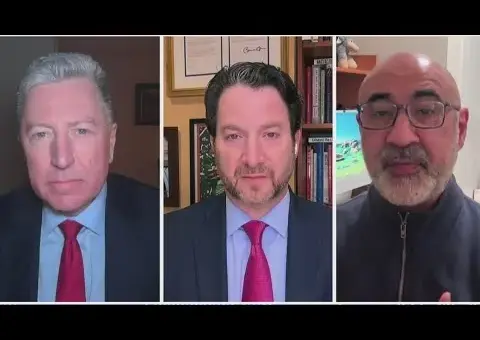
Rising tensions between the U.S. and Iran are creating a volatile geopolitical situation. With conflicting signals on de-escalation and potential shifts in alliances like NATO and U.S.-Israel relations, the path forward remains uncertain. The global economy and regional stability hang in the balance.

Iran Targets US With Cyberattacks, Escalating Digital Warfare
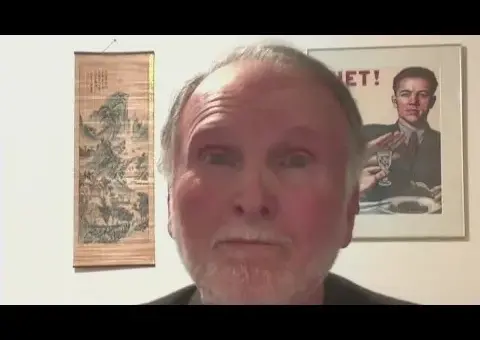
Iran is increasingly using cyberattacks to challenge the U.S., as seen in a recent hack of the FBI director's account. Experts say this is a strategic shift due to Iran's limitations in conventional warfare. The U.S. needs to strengthen its digital defenses, focusing on encryption and cloud computing, rather than solely relying on traditional security measures.

Ukraine Strikes Russian Oil Refinery, Eyes Iran Threat
Ukrainian forces struck a key Russian oil refinery, disrupting Moscow's war capabilities. Meanwhile, Finland's president urged continued U.S. support for Ukraine, as Kyiv shares its air defense expertise globally amid growing geopolitical complexities involving Iran and potential sanctions against Hungary.