Iran’s Unpredictable Future: Regional Strikes Fuel Instability
Ongoing regional strikes are fueling an unpredictable future for Iran, with analysts considering scenarios ranging from popular uprisings to civil war. The Pentagon's military focus remains on neutralizing threats, while the White House navigates the complex political landscape and potential succession plans.


Regional Strikes Intensify, Iran’s Future Uncertain
The geopolitical landscape surrounding Iran has become increasingly volatile, with ongoing strikes in the region creating an atmosphere of profound unpredictability regarding the nation’s future. As international pressure mounts and internal dynamics shift, analysts are exploring a range of potential scenarios, from popular uprisings to widespread instability, each carrying significant implications for both Iran and global security.
Scenarios of Instability Emerge
Commentators have outlined several potential directions Iran’s trajectory could take. One prominent scenario suggests a future where the Iranian populace, potentially emboldened by a cessation of external military actions, could rise up to overthrow the current government. This could theoretically lead to a democratic transition within a relatively short timeframe, though the path to such an outcome is fraught with uncertainty.
Conversely, another disturbing possibility is the descent of Iran into a full-blown civil war. Such internal conflict could result in widespread chaos and mayhem across the country. This level of internal breakdown, experts warn, would undoubtedly pose a direct threat to the national security interests of the United States and its allies in the region.
Pentagon’s Military Focus Amidst Uncertainty
From a military standpoint, the Pentagon’s immediate concern appears to be focused solely on neutralizing Iran’s capacity to threaten the United States and its regional partners. Official statements from the Department of Defense indicate a commitment to ensuring that Iran is militarily incapable of posing a threat. However, details regarding the specific strategies and decision-making processes behind these military objectives remain largely undisclosed.
When questioned about the potential for a power vacuum or leadership changes within Iran in the short to medium term – specifically, who might be in charge in two, four, or six weeks – military officials have consistently deferred such inquiries. These matters are reportedly being handled at a higher political level, with the White House taking the lead on addressing the complexities of Iran’s internal political future.
Presidential Confidence and Undisclosed Succession Plans
President Trump has expressed a notable degree of confidence in the existence of a succession plan within Iran, though the specifics of this plan have not been made public. This suggests a belief within the current U.S. administration that internal mechanisms are in place to manage potential leadership transitions, regardless of the external pressures being applied.
The military’s singular focus on degrading Iran’s offensive capabilities underscores a strategic priority to maintain regional stability by eliminating immediate threats. The decisions being made to achieve this objective are complex, and the precise actors involved in their formulation are not entirely clear, leaving open questions about the full scope of the U.S. strategy.
Broader Regional Implications
The escalating tensions and the unpredictable nature of Iran’s internal situation have far-reaching implications for the entire Middle East. The potential for internal conflict or a destabilized Iran could trigger new waves of refugees, disrupt global energy markets, and potentially draw neighboring countries into a wider conflict. The international community is watching closely, grappling with how to respond to a rapidly evolving crisis that could reshape the regional order.
The lack of transparency regarding Iran’s internal political machinations, coupled with the Pentagon’s focused military objectives, creates a challenging environment for diplomatic engagement. Understanding the intricate web of internal factions, potential opposition movements, and the government’s response to external pressures is crucial for developing effective strategies to manage the crisis and prevent further escalation.
Looking Ahead: A Watchful Stance
As regional strikes continue and the internal situation in Iran remains opaque, the international community will be closely monitoring developments. Key areas to watch include any signs of significant internal dissent or popular mobilization, the effectiveness of U.S. and allied military actions in neutralizing Iranian threats, and any further indications from the White House regarding its understanding of Iran’s potential political future. The coming weeks and months are likely to be critical in determining the long-term stability of Iran and its impact on the broader geopolitical landscape.
Source: Iran's future appears unpredictable as strikes in the region continue (YouTube)

Related Articles
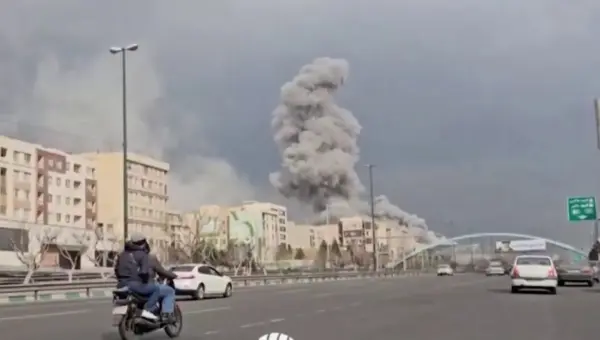
Iran’s War Survival: Expert Weighs US Military Might vs. Political Strategy
Defense expert Bilal Saab analyzes Iran's strategy in a potential war with the U.S., emphasizing political manipulation over military might. He highlights how Iran might exploit American aversion to casualties and prolonged conflicts, contrasting it with the U.S. democratic system's reliance on public opinion.
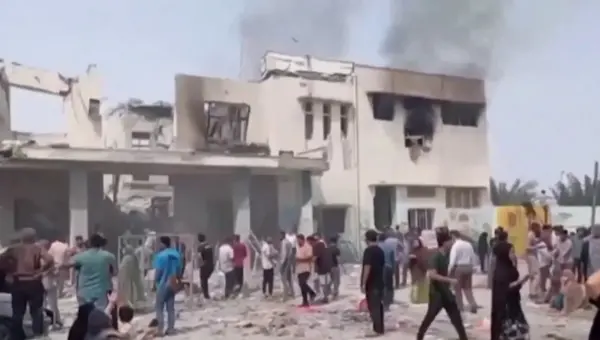
Iran School Strike Kills Over 160, Mostly Children
An airstrike on an elementary school in Iran has killed over 160 people, mostly children, according to state media. The Qasir Tayyeb school, which housed 264 students, was devastated in the attack. Iran's foreign minister has accused the U.S. and Israel, though both deny awareness of operations in the area.
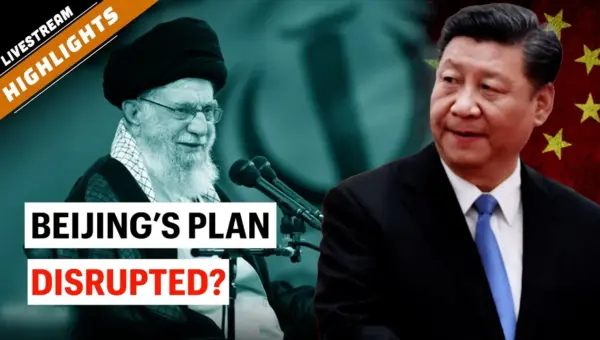
US Strikes Iran, Jolting Beijing’s Grand Bargain Dreams
Recent U.S. military actions in Iran, termed 'Operation Epic Fury,' are analyzed as a pivotal moment that may have disrupted Beijing's geopolitical strategy. The author posits that these strikes signal a shift to an 'enforcement through strength' global order, undermining China's reliance on Iran and its hopes for a 'grand bargain' with the U.S.