Iran’s Survival Strategy: Analyst Eyes Internal Rifts Amid Bombardment
Iran's strategy focuses on surviving initial bombardments, with analysts predicting internal rifts as pressure mounts. The selection of a new Supreme Leader and divergent war aims between the US and Israel add layers of complexity. Geopolitically, the actions may signal a broader message to China and Russia regarding international rules.

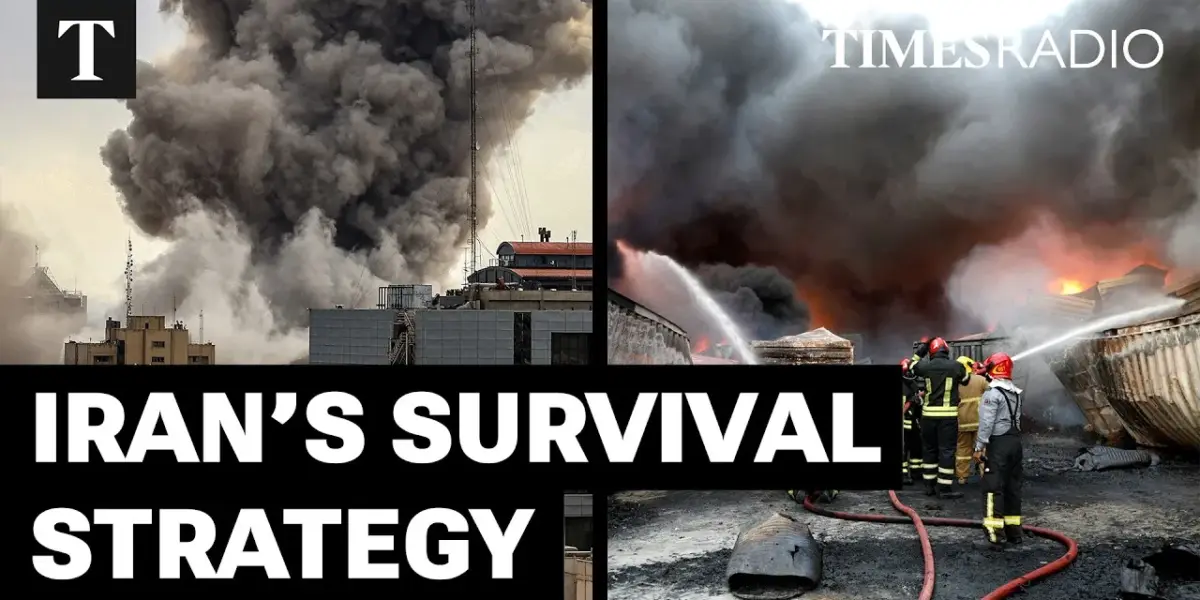
Iran’s Survival Strategy: Analyst Eyes Internal Rifts Amid Bombardment
In the face of sustained military pressure, Iran’s primary strategy appears to be one of sheer endurance, aiming to weather the initial onslaught from the United States and its allies. The critical question now, according to military analysts, is who possesses greater stamina – Iran or its adversaries – and how long this sustained pressure can be maintained. As the bombardment continues, analysts predict a potential increase in internal dissent and rifts within the Iranian system, with some dissenting voices already reportedly emerging.
Succession Question Looms Amidst Uncertainty
Amidst the ongoing conflict, reports have surfaced regarding the selection of a new Supreme Leader in Iran, a position that would follow Ruhollah Khomeini and Ali Khamenei. Professor Ali Ansari, a distinguished professor of Iranian history and director of the Institute for Iranian Affairs at the University of St. Andrews, weighed in on the significance of this development.
“I think it’s important for the regime itself to…reassure itself, shall we say, that there is continuity and that…the systems are all working,” Professor Ansari stated. “The question I think for everyone is who they choose…”
Commentary from within Iran suggests a need for a leader with greater flexibility and a willingness to engage with the international community. However, current indications suggest this may not be the path chosen. Former President Donald Trump has already expressed his views, describing Ali Khamenei’s son, widely considered a frontrunner for the position, as a “lightweight” and asserting he should be consulted on the matter.
Regime Security Questioned Under Duress
Professor Ansari expressed skepticism regarding the perceived security of Iran’s current power structure, suggesting it may not be as robust as commonly believed. He argued that no entrenched regime can emerge from such intense bombardment unscathed.
“I don’t think it’s as secure as people think it is,” he asserted. “I fail to see how any regime actually, however well entrenched it may be, can come out of this sort of type of bombardment in in good shape. I think it will at the very least be crippled going forward.”
Tactically, aggressors may have hoped to exploit divisions within Iran’s security forces. While Professor Ansari acknowledged early indications of disagreements, he cautioned against interpreting these as immediate signs of defection.
Divergent War Aims and Strategic Messaging
A notable aspect of the current conflict is the apparent divergence in war aims between the United States and Israel. Israel’s focus appears to be on dismantling Iran’s military and weapons capabilities, while the U.S. seems to pursue broader political objectives. Professor Ansari highlighted the importance of clear political objectives and messaging.
“I think there is a broader issue there…about what the ultimate political objective is,” he noted. “I think you’re quite right to highlight the fact that there’s an issue here certainly in terms of messaging to the Iranians themselves.”
He suggested that clarity from the U.S. regarding territorial sovereignty and a focus on regime transition, rather than outright change, could foster greater confidence about the endgame. Many Iranians, he observed, fear that the U.S. might withdraw its support, leaving the situation unresolved.
Conventional Warfare and Evolving Tactics
Regarding the nature of the military operations, Professor Ansari indicated that while he is not the primary expert on military tactics, the U.S. appears to be leveraging a wide range of its capabilities against Iran. From Iran’s perspective, the strategy has been described as “eclectic,” with the range and targeting of economic infrastructure early in the conflict potentially surprising observers.
“It’s not an unusual tactic certainly or it’s not an unusual sort of approach in terms of conventional warfare,” he commented, while acknowledging the shock value of the attacks on infrastructure.
Geopolitical Undercurrents: A Message to China and Russia?
Some scholars and observers posit that the current actions against Iran are intrinsically linked to the United States’ strategic “pivot to the Pacific” and a desire to counter China’s growing alliance with Iran and its acquisition of Iranian energy resources. Professor Ansari found merit in this perspective.
“I think there’s something to it that actually what the Americans are have been doing even if you look at Venezuela is to basically serve notice to the Chinese that they’re not going to be effectively constrained…and be that they have the capacity to do damage if they so choose to do it,” he explained.
He suggested that this serves as a message to both Russia and China, who may have perceived the West as constrained by the international rules-based order. The perceived collapse of this order over the past two decades has, in his view, emboldened these nations. The conflict, from a Western perspective, could offer a strategic benefit by signaling that the West will not passively accept violations of international norms, particularly from actors like China and Russia, who he contends do not consistently adhere to these rules.
A Call for Adherence to Rules
Professor Ansari concluded by emphasizing the importance of a global adherence to rules, irrespective of national interests. He pointed to Iran’s own history of rule-breaking since 1979, including embassy seizures and attacks, as a counterpoint to their claims of being peace-loving.
“It’s you know there is an element here where the Trump administration and the Americans in general by the way are saying that you know if we’re going to have a rules-based order everyone has to play by the rules.”
The current situation underscores a broader message from the U.S. that in a globalized world, adherence to established international norms is paramount for all nations. The long-term implications of this stance on geopolitical dynamics, particularly concerning China and Russia, remain a critical area to watch.
Source: Iran’s Only Priority Is Survival Under Bombardment, Says Military Analyst (YouTube)

Related Articles
Israel’s Two-State Solution Hopes Fade Amidst Conflict
The two-state solution for the Israeli-Palestinian conflict is reportedly no longer a serious consideration in Israeli politics, according to Josh Glancy of The Sunday Times. Recent events and political shifts have accelerated this trend, while economic concerns mount over potential energy price shocks.
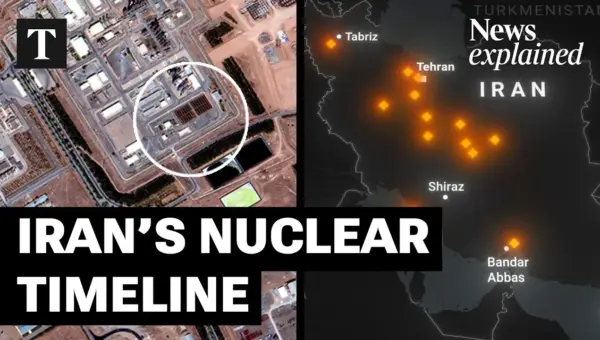
Iran Nears Nuclear Threshold Amid Heightened Global Tensions
Iran is closer than it has been in decades to acquiring a nuclear weapon, having mastered uranium enrichment technology and stockpiled significant amounts of 60% enriched uranium. While intelligence suggests no current order to weaponize, Tehran's capability poses a growing concern amid heightened global tensions.
Trump’s Iran Attack: Legal or Illegal War? Experts Weigh In
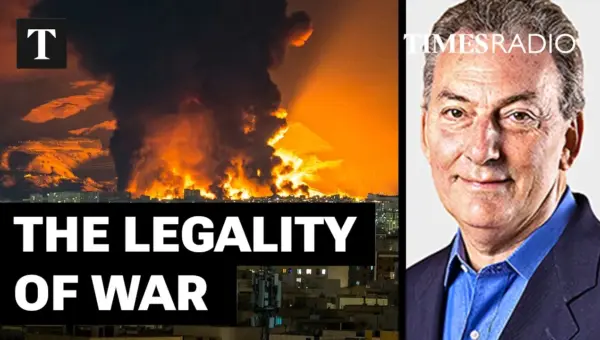
Experts are questioning the legality of the US-led offensive in Iran, noting that true 'legal gold standard' wars, authorized by UN Security Council resolutions, are exceptionally rare. The conflict's objectives, potential for internal unrest in Iran, and the differing strategies between the US and Israel are under intense scrutiny as the situation develops.