Iran’s Supreme Leader Succession: A Nation Holds Its Breath
Iran is navigating the complex and secretive succession of its Supreme Leader following Ayatollah Ali Khamenei's death. The process, complicated by wartime pressures and the IRGC's influence, is fraught with uncertainty as potential candidates emerge.

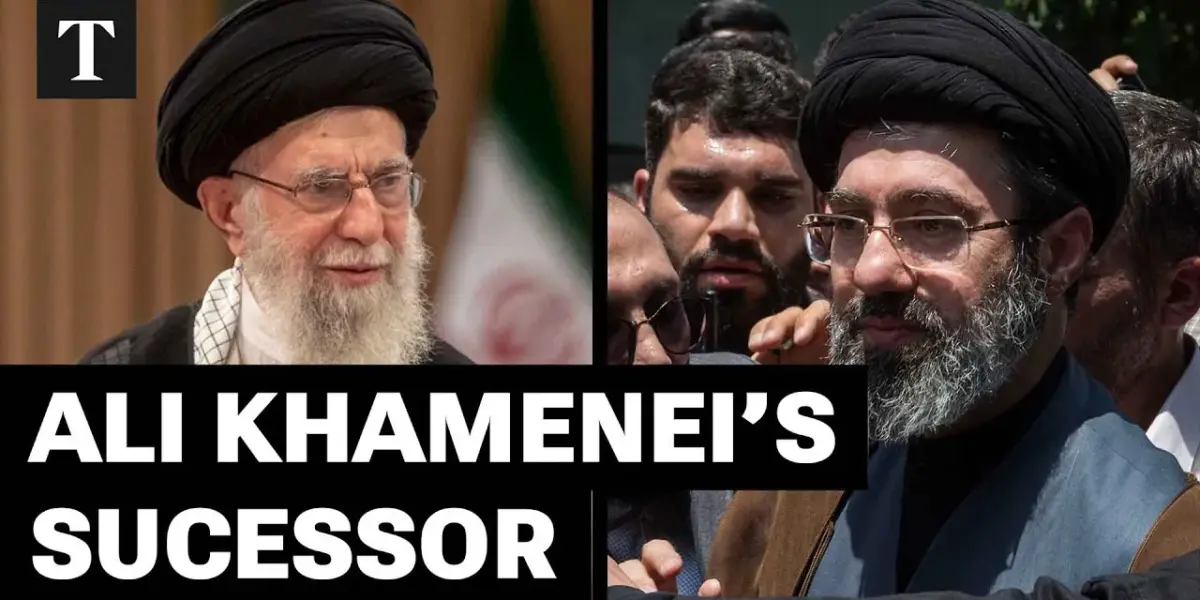
Iran Navigates Treacherous Succession Amidst Wartime Uncertainty
In the wake of Supreme Leader Ayatollah Ali Khamenei’s death on February 28th, the Islamic Republic of Iran has entered its most perilous phase since the 1979 revolution. The process of selecting a successor, typically shrouded in secrecy, is now further complicated by the ongoing regional conflicts and the heightened geopolitical tensions. This critical transition has ignited intense speculation about who will ascend to the highest position of power in Iran and what it means for the nation and the wider Middle East.
The Council of Experts: A Constitutional Framework in Uncharted Territory
The framework for choosing a new Supreme Leader is constitutionally defined by the Council of Experts, a body tasked with both governing the succession process and electing a successor in cases of incapacitation or death. This council was established in 1989 following the death of the revolution’s founder, Ruhollah Khomeini.
However, the council’s role in actually selecting a leader has never been tested. “The last Supreme Leader, Rouhalla Khomeini, chose his successor and then put the council of experts into motion,” explains Ross Harrison, Senior Fellow at the Middle East Institute and author of “Decoding Iran’s Foreign Policy.” “So, it’s a machinery that operates but really has never been tasked with the duty of actually choosing a new supreme leader.”
Unlike previous successions, which occurred during peacetime, the current transition is unfolding under the immense pressure of active conflict. “This is coming about during an active kinetic action, under the pressure of war,” Harrison emphasizes. This wartime context adds a layer of volatility and uncertainty to a process that is inherently opaque.
The IRGC’s Shadowy Influence and Potential Candidates
While the Council of Experts is the official body, the powerful Islamic Revolutionary Guard Corps (IRGC) is widely expected to play a pivotal role behind the scenes. “My hunch is, knowing a good bit about how the Islamic Republic works, that the Iran the Revolutionary Guards, the IRGC… will be instrumental in choosing the next Supreme Leader,” Harrison notes.
The late Supreme Leader, Ali Khamenei, did not explicitly designate a successor. Notably, he appears to have disqualified his own son, Mojtaba Khamenei, from the running. “Because his view was he didn’t want a like a monarchal dynasty. He didn’t want to have a repeat of the the dynasties of the Shah which were in effect a dynasty,” Harrison suggests as a possible reason, though he cautions that “it’s fairly opaque.”
Mojtaba Khamenei is now considered the frontrunner, despite his father’s apparent reservations. His potential candidacy is bolstered by his wife and mother being killed alongside his father, suggesting a potential hardline alignment favored by the IRGC. “He’s more than likely since his wife and his mother were killed along with his father… he’s likely to be the hardline a hardline candidate. And that’s probably why during wartime he is favored by the revolutionary guards,” Harrison explains.
Other potential candidates include more pragmatic figures like former President Hassan Rouhani and Ayatollah Mohammad Yazdi. However, Harrison cautions that information is scarce and speculation is rampant. “I have to caution your listeners and your viewers that we can only speculate that what the information we’re getting is accurate. If we believe what we’re hearing, Mojtaba is the um is the designated one. How or the favored one. But that could be a ruse. That could be a ruse and we might see in the coming days somebody else emerge because of the the threat of assassination.”
Key Figures in the Political Landscape
Beyond the direct contenders for Supreme Leader, other powerful figures are navigating this uncertain period. Ali Larijani, Secretary of the Supreme National Security Council, is a veteran politician who has worked closely with Khamenei and the IRGC. While not qualified to be Supreme Leader himself due to not being a cleric, he remains an influential player.
President Ebrahim Raisi, elected on a reformist slate, is also involved in the interim governance. Harrison describes Raisi not as a true moderate, but as a pragmatist. “He was considered a a a pragmatic leader and my my sense of work having met with him and having operated seen him and seen him operate during the last few months. Yeah I wouldn’t call him a moderate I would call him a pragmatist,” Harrison states. The effectiveness and longevity of this interim leadership remain highly uncertain amidst the ongoing crisis.
The Long Shot: Reza Pahlavi and the Prospect of Regime Change
The possibility of Reza Pahlavi, the son of the former Shah, returning to Iran and playing a role in its future has been a recurring topic of discussion, particularly among the diaspora. Pahlavi has expressed a desire to serve as an interim leader before democratic elections could be held.
However, Harrison views this scenario as highly improbable under current conditions. “In terms of the process that we’ve been talking about up to this point, which is basically what’s the choreography going to be within the current regime. He’s not a player obviously,” he states. Pahlavi’s return would necessitate a complete implosion of the existing regime, a scenario Harrison deems unlikely.
Pahlavi’s support base is primarily within the Iranian diaspora in the United States and Europe. Without a significant, organized movement on the ground within Iran, or external military intervention – which Harrison does not foresee – his path to leadership appears exceedingly narrow. “So, is it a possibility? Any scenario right now is a possibility, but it’s probably the mo the least likely scenario,” he concludes.
Looking Ahead: A Future Fraught with Uncertainty
As Iran grapples with the monumental task of selecting a new Supreme Leader, the nation stands at a critical juncture. The confluence of internal political maneuvering and external regional pressures creates a volatile environment. The decisions made in the coming days and weeks will not only shape Iran’s domestic future but also have profound implications for regional stability and international relations. The world watches closely as the Islamic Republic navigates this unprecedented period of transition, with the IRGC’s influence and the ultimate choice of a successor remaining key variables in this high-stakes geopolitical drama.
Source: Who Could Succeed Ali Khamenei? (YouTube)

Related Articles

Warren: Trump’s Iran War Lacks Plan, Fuels Debt
Senator Elizabeth Warren expresses deep concern over the Trump administration's Iran strategy, citing a lack of clear rationale and a dangerous precedent for unchecked executive power. She warns of the immense financial costs and the burden on future generations.

US Air Power Obliterates Iran: Tehran Burns in Unprecedented Assault
The United States has launched a massive air campaign against Iran, devastating Tehran and crippling its military. With air superiority declared and key assets destroyed, the conflict signals a dramatic escalation with potential NATO involvement.

Targeting Iran’s Elite: A Risky Game of Leadership Decapitation
The US and Israel are reportedly targeting Iran's leadership cadre, a strategy that could destabilize the region. This analysis examines the risks, historical context, and implications of such 'decapitation' efforts, questioning their efficacy against a deeply entrenched system.