Iran’s Supreme Leader Killed in Airstrike; Regional War Escalates
Iran's Supreme Leader Ali Khamenei has been killed in a targeted airstrike, igniting a broader military conflict involving U.S. and Israeli forces. Coordinated operations, dubbed 'Operation Epic Fury' by the U.S., have commenced, with Iran launching retaliatory strikes across the region, including against civilian targets. Both sides have issued conflicting reports on casualties and damage.

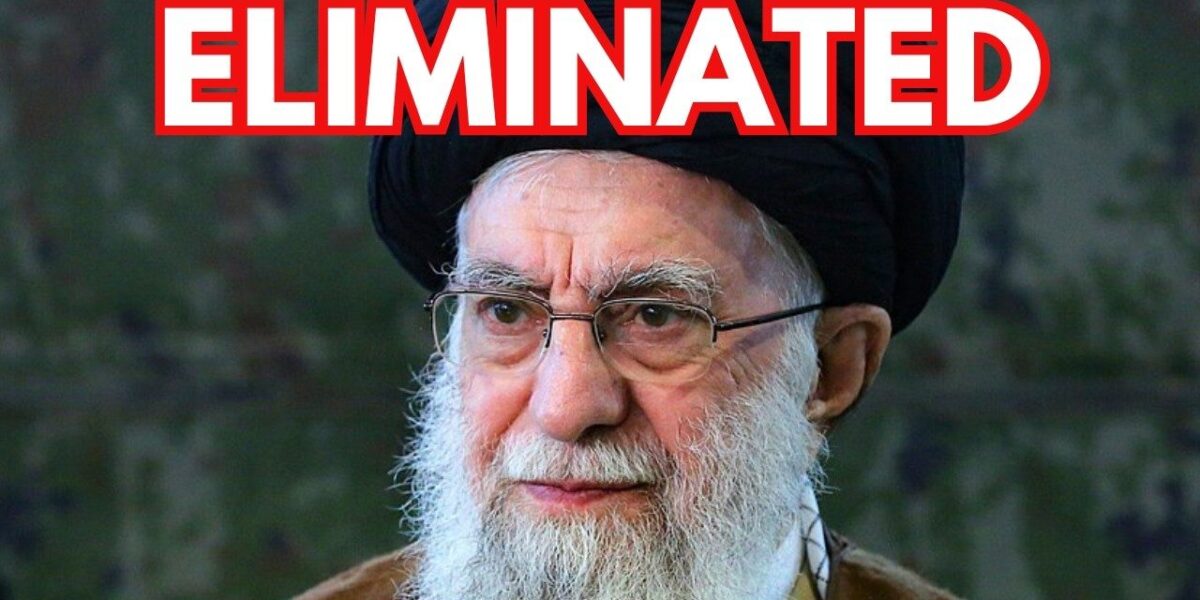
Top Iranian Leader Dead in Targeted Strike
Iran’s Supreme Leader Ali Khamenei was killed earlier today in a precision airstrike as U.S. and Israeli forces launched coordinated military operations within Iran. The strike, described as a “decapitation strike,” targeted key leadership figures within the Iranian regime. President Trump confirmed Khamenei’s death, stating, “Khamenei, one of the most evil people in history, is dead. This is not only justice for the people of Iran, but for all great Americans and these people from many countries throughout the world that have been killed or mutilated by Khamenei and his gang of bloodthirsty thugs.” He further asserted that this event presents the “single greatest chance for the Iranian people to take back their country.” Reports indicate that many within Iran’s Islamic Revolutionary Guard Corps (IRGC), military, and security forces are seeking immunity and may be unwilling to continue fighting.
Operation Epic Fury and Israeli Offensive Detailed
U.S. Central Command announced the commencement of “Operation Epic Fury” at 1:15 a.m. Eastern Time, aiming to dismantle the Iranian regime’s security apparatus by targeting elements that posed an imminent threat. The operation involved precision munitions launched from air, land, and sea, and for the first time in combat, utilized low-cost, one-way attack drones. Admiral Brad Cooper, Commander of U.S. Central Command, stated, “The president ordered bold action and our brave soldiers, sailors, airmen, marines, guardians, and coast guardsmen are answering the call.” Following the initial wave of strikes, U.S. and partner forces reportedly defended against hundreds of Iranian missile and drone attacks with minimal damage to U.S. installations and no reported U.S. casualties.
On the Israeli side, the IDF reported an extensive attack involving approximately 200 fighter jets targeting Iran’s missile and defense systems. Described as the largest military mission in the history of the Israeli Air Force, the operation coordinated hundreds of fighter jets to strike around 500 objectives, including aerial defense systems and missile launchers. The strikes are said to have expanded Israeli air superiority over Iranian territory and severely damaged offensive capabilities.
Details of Khamenei’s Death and Initial Casualties
According to The Times of Israel, initial Israeli strikes targeted around 30 key Iranian regime leaders and military chiefs during a meeting led by Supreme Leader Ali Khamenei. An unsourced report from Channel 12 News suggests Israel, in coordination with the United States, dropped approximately 30 bombs on Khamenei’s underground compound. While footage of the strike has not yet been released, Israel has a history of releasing such material from past operations against groups like Hamas and Hezbollah.
The Red Crescent Society reported over 200 fatalities and more than 740 injuries as of approximately three hours prior to this report, though these figures do not distinguish between military and civilian casualties. The IDF also claimed to have eliminated the secretary of Iran’s National Security Council, the commander of the IRGC, the head of intelligence, the head of the military bureau, the defense minister, and former officials involved in nuclear weapon production efforts. Notably, reports indicate that Iran’s nuclear facilities have not yet been targeted.
Iran’s Response and Civilian Impact
Iran’s Foreign Minister has been a key spokesperson, stating that Iran is exercising its right to self-defense under the UN Charter and will not stand idly by while the United States attacks its people. Iran has expressed regret that targets are located in friendly states and questioned the U.S. administration’s insistence on negotiations followed by military action. Iran has vowed to punish those responsible for the deaths of its children, distinguishing its enmity from the American people.
In response, Iran has launched drone and missile attacks across the Middle East, targeting not only Israel, with impacts reported in Tel Aviv, but also U.S. bases. The U.S. Fifth Fleet headquarters in Bahrain reportedly sustained significant strikes, along with other military facilities in Jordan and Kuwait. Iran has also targeted civilian areas, with drone impacts reported on apartment buildings and commercial zones in Bahrain, as well as strikes on Dubai International Airport and Kuwait Airport. The IRGC has claimed to have shut down the Strait of Hormuz, a critical shipping lane, though reports suggest some ships are still transiting the area.
U.S. Denies Iranian Claims of Casualties
The IRGC has claimed to have inflicted significant damage and casualties on U.S. forces, including disabling a ship at Jebel Ali port, destroying main infrastructure at a U.S. naval base in Kuwait with ballistic missiles and drones, and hitting a combat support ship in the Indian Ocean. However, U.S. Central Command has vehemently denied these claims, labeling them as lies. A U.S. Central Command statement asserted, “The Iranian regime claims to have killed 50 U.S. service members. That is a lie. There have been no reported U.S. casualties.” The command also refuted claims of a U.S. Navy ship being struck and stated that damage to U.S. installations has been minimal and has not impacted operations.
While U.S. officials maintain zero combat-related casualties, the extent of damage to installations remains a point of discussion, with visual evidence suggesting some impacts, though the operational impact is officially denied.
Looking Ahead: Proxies, Nuclear Facilities, and Continued Escalation
Attention is now turning to the potential involvement of Iranian proxies such as the Houthis, Hezbollah, and militias in Iraq and Syria. While these groups have expressed solidarity with Iran, coordinated attacks have not yet materialized, although an Iraqi resistance group claimed responsibility for drone attacks against U.S. forces in Iraq. The pace of Iranian missile attacks and their transition to more advanced weaponry will be closely monitored, as will Iran’s remaining missile stockpile.
Over the next 12 to 24 hours, an increase in U.S. air power over Iran is expected, with the potential targeting of nuclear facilities. Satellite imagery thus far shows no evidence of strikes against facilities like Natanz, Qom, Esfahan, and Kalaybar, though these remain potential targets given the escalatory nature of the conflict and intelligence suggesting Iran’s renewed pursuit of nuclear weapons.
Source: Iran's Supreme Leader Taken Out – Middle East War Escalates (YouTube)

Related Articles
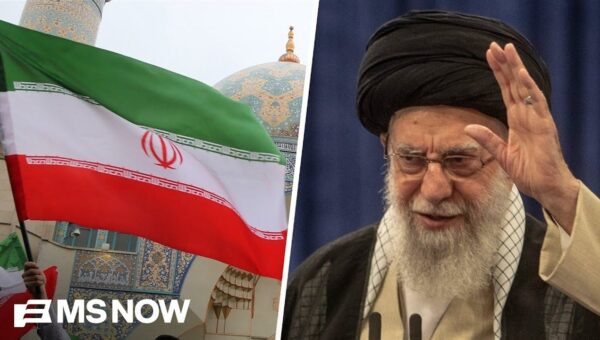
Iran Celebrates After Israeli Strikes Eliminate Top Leaders
Following Israeli airstrikes that reportedly killed Iran's Supreme Leader and top staff, celebrations have erupted among the Iranian diaspora. While a "monumental event," analysts caution against immediate expectations of a smooth democratic transition due to the IRGC's power and a divided opposition.


Dem Rep. Gomez: Trump Was Never Truthful About Peace
California Congressman Jimmy Gomez criticized the Trump administration's handling of intelligence regarding Iran, stating the President was "never truthful" about his intentions. Democrats plan to force a vote on a War Powers resolution, arguing the recent military actions lacked justification and congressional approval.

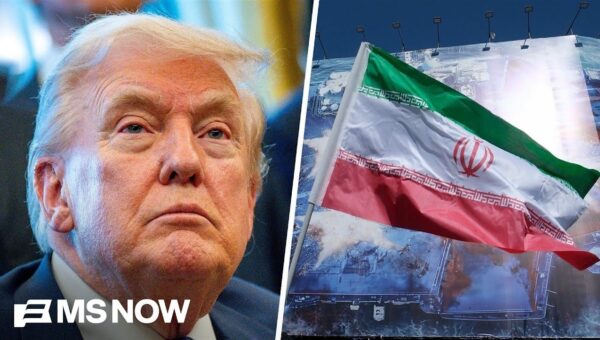
Trump Open to Iran Talks After Attacks, Shifts on Regime Change
President Trump has agreed to negotiate with Iran's new leadership following recent U.S. and Israeli attacks, signaling a potential shift from his regime change objective. The move has drawn scrutiny from former officials who question the strategic coherence of U.S. policy.