Iran’s Supreme Leader Eliminated in Bold US-Israel Strike
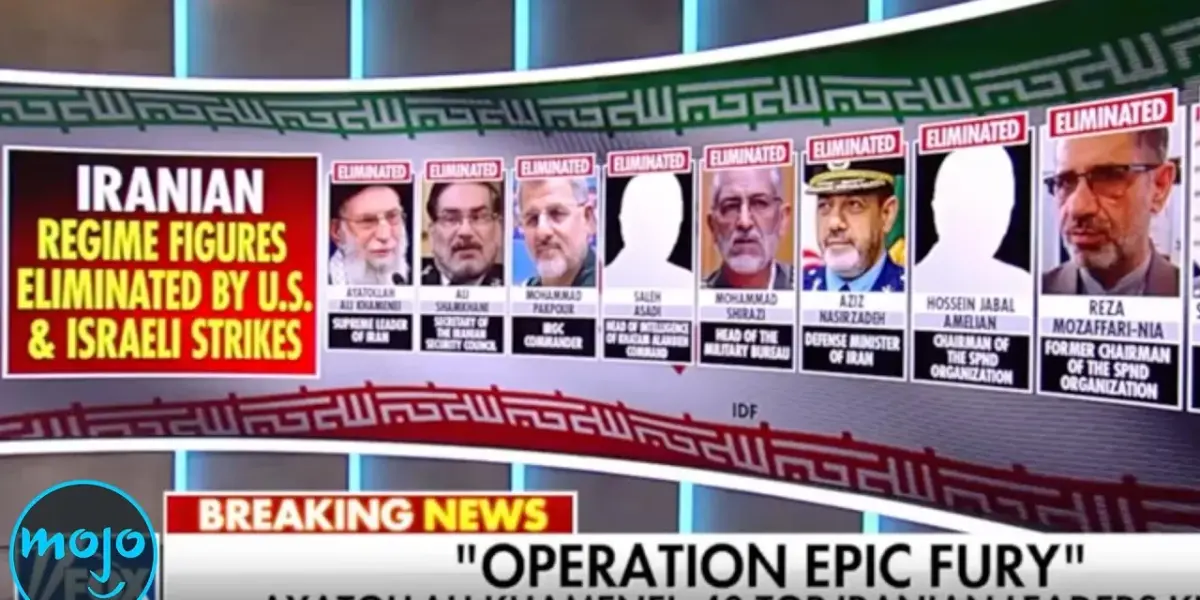
The world was shaken on February 28th, 2026, as Iran's Supreme Leader, Ayatollah Ali Khamenei, was reportedly killed in a joint US-Israeli strike. This event marks the end of an era defined by ideological warfare and proxy conflicts, leaving the future of the Middle East in a state of profound uncertainty.

Iran’s Supreme Leader Eliminated in Bold US-Israel Strike
The geopolitical landscape was irrevocably altered on February 28th, 2026, with the reported elimination of Ayatollah Ali Khamenei, the Supreme Leader of Iran, in a massive joint US-Israeli operation. This audacious strike marks a pivotal moment, ending the decades-long tenure of one of the most influential and polarizing figures in modern history and signaling a dramatic escalation in regional tensions.
A New Era Dawns After Decades of Ideological Warfare
While headlines understandably focus on the demise of Khamenei himself, this event is the culmination of a long and complex history of ideological conflict, proxy battles, and a regional strategy that has finally reached its breaking point. For years, Iran, under Khamenei’s leadership, positioned itself as a central player in a burgeoning counter-alignment against Western powers, fostering a network of proxies and challenging the post-Cold War unipolar world order.
The Strategic Flip: From Ally to Adversary
It’s a historical footnote easily overlooked, but prior to the 1979 Islamic Revolution, Iran was a key ally of the United States in the Middle East. The collapse of this alliance dramatically reshaped the regional map. Scarred by the Iran-Iraq War, where Western powers notably backed Saddam Hussein, Tehran began to invest heavily in what it termed the “Axis of Resistance.” This doctrine aimed to avoid direct confrontation by building a vast network of proxy groups across the region, designed to surround adversaries and project power through asymmetric means. This strategy has defined Middle Eastern dynamics for nearly four decades, allowing Iran to exert influence and threaten US interests or Israel without engaging in direct, large-scale warfare.
October 7th: The Catalyst for Change
The events of October 7th, 2023, proved to be a critical turning point, shattering the long-established regional equilibrium. The subsequent response saw significant degradation of Hamas, systematic targeting of Hezbollah leadership, and the eventual collapse of the Assad regime in Syria. This series of events dismantled the forward defense perimeter that Iran had meticulously constructed over decades, leaving Khamenei, for the first time in his lengthy leadership, appearing exposed and his deterrence architecture crumbling.
The Revolutionary Survivor: Ali Khamenei’s Rise and Reign
Ayatollah Ali Khamenei, born in 1939, was not always the obvious successor. A disciple of Ayatollah Ruhollah Khomeini, he rose to become Supreme Leader in 1989, a position secured partly through an amendment to the Iranian constitution that adjusted credential requirements. His nearly 37-year rule made him the longest-serving contemporary autocrat in the region. To his supporters, he was a stabilizing force and a defender of Iranian sovereignty. To his detractors, he represented the unyielding face of an oppressive theocracy. Regardless of perspective, his leadership solidified Iran’s hardline military wing, the Islamic Revolutionary Guard Corps (IRGC), into a formidable military and economic powerhouse.
Centralized Power and the IRGC’s Dominance
Under Khamenei’s watch, power in Iran became increasingly centralized. The Supreme Leader’s Office grew in influence, while the IRGC evolved from a paramilitary force into an economic behemoth. Overseeing foreign operations, the IRGC also wielded significant domestic political power, filtering elections and stifling reform movements. This shift transformed the regime from one of revolutionary populism to a system of institutional control, prioritizing durability over flexibility. The IRGC’s economic grip extends to key sectors like oil, construction, telecommunications, and finance, with estimates suggesting it controls up to 50% of the country’s oil wealth.
Proxy Power: A Double-Edged Sword
Khamenei’s signature foreign policy doctrine was the leverage of proxy forces to fight Iran’s battles. By funding and arming groups such as Hezbollah in Lebanon, various militias in Iraq, and the Houthis in Yemen, the Islamic Republic achieved strategic depth and a means of applying deniable pressure on its adversaries. However, this strategy proved to be a double-edged sword. When these proxies escalated beyond control, the sponsor inevitably faced the consequences. The fallout from the October 7th attacks, with Iranian proxies directly engaging Israel, ultimately brought this risk to a direct reality for Tehran.
Nuclear Brinkmanship: The Ultimate Flashpoint
Nothing defined Khamenei’s relationship with the West more than Iran’s controversial nuclear program. Khamenei framed the program as a “moral duty” and a symbol of anti-Western defiance, turning it into a critical bargaining chip and a major flashpoint. By early 2021, analysts estimated Iran could have been as little as 9 months to 2 years away from developing a nuclear weapon. As negotiations faltered and sanctions tightened, the program became a symbol of resistance for some, but a destabilizing threat to the US and Israel, effectively painting a target on the regime’s back. Reports indicate that US military forces carried out precision strikes on three key Iranian nuclear facilities, including Forozan, Natanz, and Isfahan, in the aftermath.
Internal Repression and a Crisis of Legitimacy
While defiant on the international stage, Khamenei faced mounting domestic pressure. From the Green Movement to the 2022 Mahsa Amini protests and subsequent economic unrest, the regime responded with increasing force, leading to a rise in executions and a constriction of civil society. This created a paradox: the regime appeared externally powerful and defiant, yet internally brittle. By 2026, the greatest threat to the Islamic Republic was not solely external invasion, but a profound crisis of legitimacy fueled by internal dissent.
Strategic Isolation and the Crumbling Perimeter
By early 2026, the walls were closing in on Iran. With Hamas and Hezbollah significantly weakened and the IRGC facing decapitation strikes, the regime’s previously untouchable status evaporated. The strategic buildup of firepower in the region, unprecedented since the 2003 invasion of Iraq, signaled a dramatic shift. Deterrence relies on credibility, and once Iran’s forward defense perimeter collapsed, its architect became its greatest liability. The decision to target Khamenei was not merely symbolic; it was a structural move aimed at dismantling the very head of the regional resistance network.
What Happens Next? The Muslim World’s Reaction
The most pressing question following the strike is: what comes next? Many predicted that Khamenei’s death would ignite a unified revolt across the Muslim world. However, historical precedent suggests a different outcome. The assassination of Qasem Soleimani in 2020, while met with threats and outrage, did not result in a widespread regional uprising. Khamenei, as a Shia theocrat, was also a figure despised by many Sunnis who resented the regime’s regional meddling. The Muslim world remains politically fragmented, with most governments prioritizing national stability and self-interest over avenging Iran. While escalation remains a possibility, a unified global revolt is considered unlikely.
An Era Ends, Uncertainty Remains
Ayatollah Ali Khamenei was more than just a religious leader; he was the architect of a geopolitical doctrine that profoundly reshaped the Middle East. Blaming external enemies like the US and Israel for unrest, as he consistently did, his death undeniably marks the end of an era. Whether this leads to the collapse of the Islamic Republic, a consolidation of power, or a complete recalibration of Iranian influence remains to be seen. The Islamic Republic’s greatest shield was always uncertainty, and now that this shield has been tested, the world watches to see what emerges from the dust.
Source: America Strikes Iran: 10 Things You Need to Know (YouTube)

Related Articles
US Strikes Iran: McMaster Explains Objectives Amidst Regional Tensions
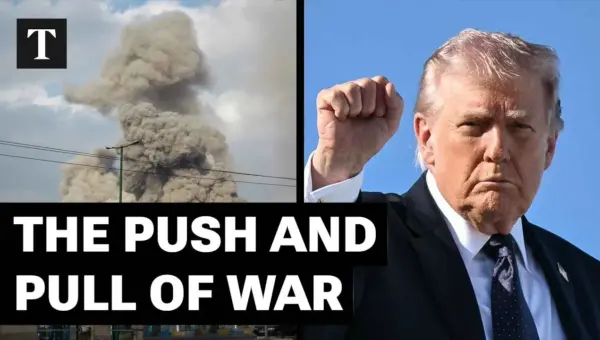
Former National Security Advisor H.R. McMaster detailed the U.S. military's immediate objectives in striking Iran, focusing on denying destructive weapons and countering proxy warfare. He indicated that lasting regional security may require a fundamental change in Iran's government, driven by its own people.

Iran Cyber Threats: US Faces Limited Retaliation Risk
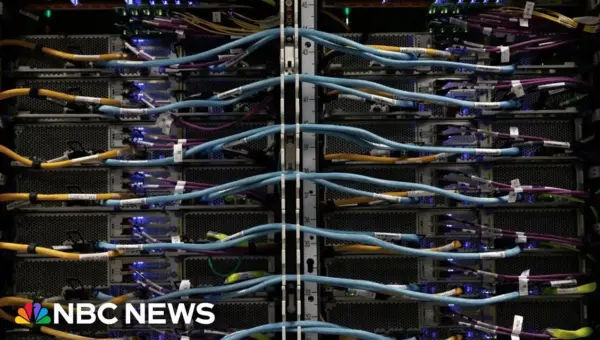
While Iran has issued threats of cyber retaliation against the U.S., analysts suggest their capabilities are limited, focusing instead on minor incidents. However, recent drone strikes on Amazon data centers in the Middle East highlight the broader risks to digital infrastructure.

Iran Crisis Spikes Oil Prices, Threatens Global Energy Supply
Millions of barrels of crude oil are being held back daily from global markets, pushing prices up and threatening an energy crisis. The prolonged disruption highlights the world's continued dependence on fossil fuels and the geopolitical risks involved.