Iran’s Supreme Leader ‘a joke’ amid growing global economic crisis
New reports reveal deep internal dissent within Iran, with one source calling the Supreme Leader "a joke" amid a worsening economic crisis. The blockade of the Strait of Hormuz is causing global economic pain, and the U.S. is struggling to build an international coalition to secure the vital shipping lane.


New Insight Reveals Deep Discontent Within Iran
New reporting from inside Iran paints a grim picture of widespread disillusionment with the current leadership, with one source describing the Supreme Leader as “a joke” and stating that “no one believes in him.” These revelations come amid a deepening global economic crisis, exacerbated by the ongoing blockade in the Strait of Hormuz.
Speaking to reporter Ines de la Quatera, a source within Iran, whose identity is being protected, expressed profound despair regarding the state of the nation and its leadership. “His selection process was a farce to begin with, so no one thinks he’s our true leader in any sense of the word,” the source stated, referring to the Supreme Leader. The sentiment extends to the perceived lack of any meaningful internal resistance, with the source lamenting, “Our resistance does not exist. It’s been forced into exile or locked away in prisons or buried six feet underground. We really don’t have any hope left.”
The frustration is palpable, with the source adding, “I want the world to know Iran is being destroyed with no real plan and this regime is not going anywhere. If all of this was to get rid of them, then it’s failing miserably now.” While acknowledging this is a single voice, the comments highlight a significant undercurrent of discontent that remains largely hidden due to the regime’s oppressive tactics.
Concerns are also mounting among Iranians in exile and international observers about the potential consequences should the current regime be overthrown without a viable plan for succession. There is a fear that the people of Iran could find themselves in a worse position than before the current crisis began.
Global Economic Repercussions from Strait of Hormuz Blockade
The disruption in the Strait of Hormuz, a critical chokepoint for global oil transport, is fueling significant economic pain worldwide. The White House is reportedly scrambling to assemble an international coalition to secure the vital waterway.
However, there appears to be a disconnect between the administration’s public statements and the complex reality of international security and economics. President, speaking on Air Force One, suggested that the U.S. might not need to be heavily involved in securing the Strait, stating the U.S. “doesn’t need the oil” that passes through it. This sentiment, however, has been met with skepticism, as global markets are intrinsically linked, and disruptions invariably lead to increased oil and gas prices for consumers globally, including in the United States.
The President has reportedly expressed frustration with a perceived lack of support from NATO allies and regional partners, who he believes are more reliant on the stable flow of fuel through the Strait. In remarks to the Financial Times, the President warned NATO allies of a “very bad future” if they do not support U.S. efforts to ensure the Strait remains open.
Military and Strategic Considerations
The situation raises critical questions about the military planning and strategic foresight of the current administration. Former senior administration officials have indicated that the current shutdown of the Strait of Hormuz should have been anticipated, given Iran’s long-standing strategy of leveraging the waterway as a point of pressure in potential conflicts with the U.S. and Israel.
“The Strait of Hormuz was always going to be their biggest point of leverage,” a former senior administration official told reporters, speaking on condition of anonymity.
Retired Army Major General James “Spider” Marks, a veteran of military operations, cautioned against underestimating the complexity of securing the Strait. He stated that while the military possesses the capability to counter such a blockade, it is “no small endeavor.” The operation would require a substantial commitment of naval assets, including mine countermeasure vessels, destroyers, and air defense capabilities, to protect shipping traffic and potentially strike inland targets in Iran.
General Marks emphasized that initiating such an operation would likely lead to a prolonged engagement, with no clear endpoint or definition of mission success. “This is a commitment of resources for quite some time,” he noted.
Allied Reluctance and Diplomatic Challenges
The call for international support in securing the Strait has met with significant reluctance from key allies. Australia has already declined to participate, and it remains uncertain whether the U.S. can convince European nations like France and Britain to join the effort. China’s role is particularly intriguing, with the President reportedly threatening to cancel a summit with President Xi if China does not provide the desired satisfaction regarding the Strait.
Aaron David Miller, a former State Department Middle East negotiator, highlighted the strategic missteps, stating, “This is what happens when you go to war based on false and unproven intelligence, underestimating the capacity and the defiance and resistance of the adversary, without any support from your allies and without a unified Congress and American public behind you.” He drew a parallel to the coalition-building efforts preceding the Gulf War, emphasizing the need to marshal allies well in advance of any military action.
The reluctance of allies to engage in a potential shooting war with Iran underscores the diplomatic challenges facing the U.S. The United Kingdom’s Shadow Foreign Secretary, Keir Starmer, has stated, “We will not be drawn into a wider war, saying we need a credible viable plan because this is, to say the least, not easy and not straightforward.”
Deployment of Marines and Future Operations
In response to the escalating situation, the U.S. is deploying approximately 2,500 Marines to the region. The rationale behind this deployment is multifaceted, with potential objectives including securing key infrastructure or conducting shore-based operations.
General Marks suggested possible scenarios for the Marines’ deployment, including taking control of an export terminal on Karg Island. However, he cautioned that such operations would be difficult and carry significant risks, especially if they involve pushing inland into Iran’s mountainous terrain. “This becomes a very, very difficult, long engagement,” he concluded.
The ongoing presence of Iranian drones and the potential for missile attacks on shipping traffic highlight the persistent threat and the complex, long-term commitment required to ensure the free flow of commerce through the Strait of Hormuz.
Looking Ahead
The coming weeks will be critical in determining the success of diplomatic efforts to form a coalition to secure the Strait of Hormuz and de-escalate tensions. The administration faces the dual challenge of reassuring global markets and allies while developing a clear, viable strategy that avoids a prolonged and costly military engagement. The internal situation in Iran, though difficult to ascertain definitively, will undoubtedly play a significant role in regional stability and the effectiveness of any international response.
Source: 'The new Supreme Leader is a joke': Mother details life inside Iran (YouTube)

Related Articles


Trump’s Iran Claims: Shocked or Deluded by War Games?
Donald Trump claimed surprise over Iran's actions in the Strait of Hormuz, but experts suggest retaliation was inevitable. Military war games likely predicted such a scenario, raising questions about the advice given to the President.

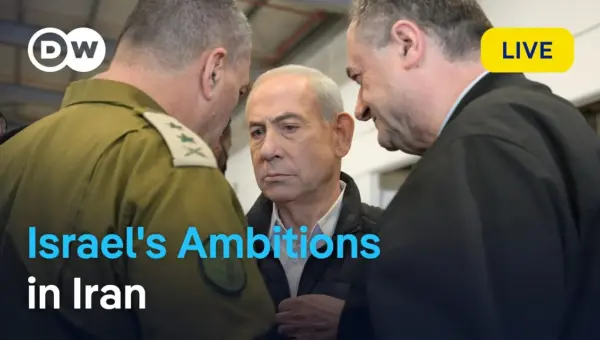
Israel’s Strategy Against Iran Revealed
Israel's strategy to counter Iran's nuclear ambitions and regional influence centers on containment, utilizing a mix of covert military actions, intelligence operations, and diplomatic pressure. Analysts highlight the growing urgency due to Iran's nuclear advancements, while also noting the persistent risk of escalation in the volatile Middle East.

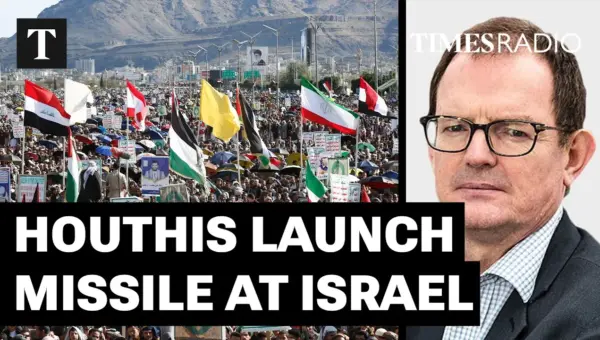
Houthis Fire Missile at Israel, Iran’s Guard Takes Center Stage
Yemen's Houthi group has fired a missile at Israel, signaling a potential escalation of the regional conflict. Meanwhile, Iran's powerful Islamic Revolutionary Guard Corps (IRGC) appears to be consolidating its control over the country's leadership following reported strikes. This shift places hardline figures at the forefront of decision-making.