Iran’s Strait of Hormuz Control Threatens US War Goals
Experts question the planning of the U.S. war against Iran, highlighting Iran's continued control over the vital Strait of Hormuz. Despite claims of American success, experts warn that if Iran retains control of this global trade route, it could be a strategic defeat for the U.S. The discussion explores potential escalation and the effectiveness of Trump's approach.

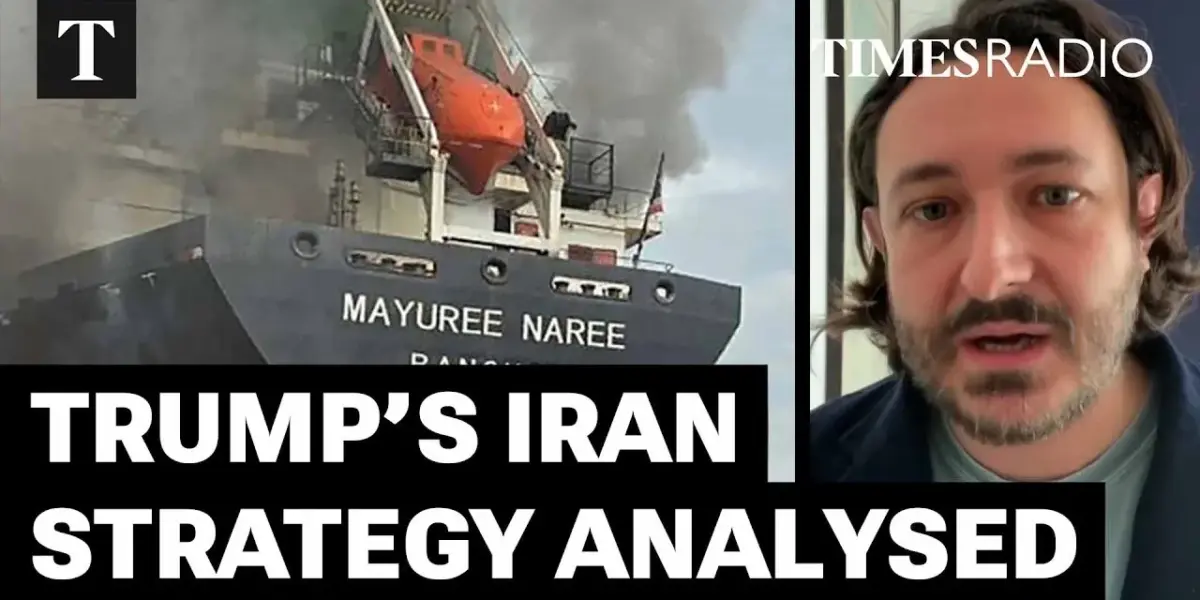
US War Plan Questioned Amid Iran’s Strait of Hormuz Control
In a recent discussion, former foreign office advisor Ben Judah and global affairs advisor Alan Mendoza debated the effectiveness and planning of the United States’ actions against Iran. The core of their concern centers on Iran’s continued control over the vital Strait of Hormuz. Despite potential damage inflicted on Iran’s leadership and economy, if the war ends with Iran still dictating terms in this crucial global waterway, it could be seen as a strategic defeat for the U.S.
Trump’s Optimism Contrasts With Ground Reality
President Trump expressed strong confidence about the situation, stating at a Republican fundraiser that America was “winning so big” and that Iran was eager to negotiate. “They want to make a deal so badly, but they’re afraid to say it because they figure they’ll be killed by their own people,” Trump remarked. He also suggested that leadership in Iran is undesirable. However, Iran has publicly stated it will not accept U.S. proposals, highlighting a significant gap between the President’s claims and Iran’s stance. The ability of Iran to control the flow of oil through the Strait of Hormuz means they could determine the end of any conflict.
Strategic Setbacks and Poor Planning Alleged
Ben Judah argued that the war has been “incredibly poorly planned.” He pointed to the U.S. being forced to move Marines from Asia and the Caribbean and air defenses from South Korea to the Gulf. “You’re not doing that if you have planned a war properly,” Judah stated. He emphasized that it was obvious Iran would attempt to disrupt global trade through the Strait of Hormuz. Judah noted that while significant damage may have been done to Iran’s internal structures, the failure to secure the Strait represents a critical weakness in the U.S. strategy.
Iran’s Economic Leverage Through Hormuz
The Strait of Hormuz is a narrow waterway, a critical chokepoint for global oil supplies. Iran’s ability to threaten or block shipping through this strait gives it significant economic leverage. Judah explained that Iran is currently claiming “complete control over the straits of Hormuz,” which he described as “totally unprecedented.” This situation, he warned, places President Trump in a crisis similar to the Suez Crisis of 1956, where major powers were exposed for failing in their plans. The disruption to shipping rates has already caused a “wave of pain” for economies in Britain, Europe, and Asia.
Arguments for Action vs. Strategic Failure
Some argue that decades of trying to contain or negotiate with Iran have failed, and President Trump’s actions, however chaotic, are at least doing something. They point to Iran’s continued oppression of its own people and its regional destabilization efforts, even without nuclear weapons. Judah acknowledged that significant damage has likely been inflicted on Iran’s military and internal security apparatus, and he doesn’t rule out the possibility of the regime collapsing after the war. However, he maintained that the failure to plan for controlling the Strait of Hormuz is a major oversight that even a junior foreign office official could have predicted.
Potential Escalation and Control of Islands
Alan Mendoza suggested that a logical next step for the U.S. would be to take control of strategic islands along the Strait of Hormuz, such as Qeshm Island. “You have to somehow remove Iran’s ability to interdict vessels that are going through the waterway,” Mendoza explained. By securing these islands, the U.S. could gain leverage to negotiate an end to the conflict or to exert greater pressure on Iran. However, he cautioned that taking and holding such territory would require a substantial military commitment, potentially larger than what is currently visible.
Chaos Theory or Calculated Strategy?
Mendoza also addressed the idea that Trump’s approach might be characterized by “chaos theory” – throwing everything up in the air to see where it lands. He admitted there is merit to this, given Trump’s known operating style. Mendoza agreed that decades of diplomacy had not curbed Iran’s ambitions and that its behavior without nuclear weapons is already concerning. He posited that it’s possible there is either “absolute chaos” within the Pentagon or a deliberate “confuse everyone” maneuver. “It’s a mistake to judge the war until it’s over,” Mendoza concluded, stressing that the ultimate success will only be known at the conflict’s end.
Looking Ahead: The Strait’s Fate
The critical question moving forward is whether the United States can secure the Strait of Hormuz and prevent Iran from using it as a bargaining chip or a tool of economic warfare. The success of any U.S. strategy will likely hinge on its ability to control this vital chokepoint, a goal that appears to have been underestimated in the initial planning stages. Observers will be watching closely to see if military actions shift to directly address Iran’s control over the strait and what the eventual outcome means for global trade and regional stability.
Source: Trump’s War Will Be A Strategic Defeat If Iran Retains Control Of The Strait Of Hormuz | Ben Judah (YouTube)

Related Articles

China Fights Back: Tariffs Loom Ahead of Trump Visit
China is retaliating against US trade investigations that could lead to higher tariffs. This escalating trade tension occurs just before a planned visit by President Trump. The dispute involves accusations of unfair practices and impacts global supply chains.


Israelis Forge Resilience Amidst Constant Bomb Shelter Drills
Life in Israel is a blend of resilience and constant vigilance, with many families adapting to frequent bomb shelter drills and even sleeping in makeshift shelters. Despite ongoing missile attacks, Israelis strive to maintain normalcy, though businesses face disruption and emotional fatigue is a growing concern.


Israel Escalates Iran Strikes, Warns of Wider War
Israel has launched significant strikes inside Iran following continued missile fire, warning of further escalation. The conflict risks wider regional instability and economic disruption, especially concerning the Strait of Hormuz.